
AI De-Extinction Revolution: How a Billion-Dollar Startup Is Engineering Nature's Comeback at TechCrunch Disrupt 2026
TL;DR
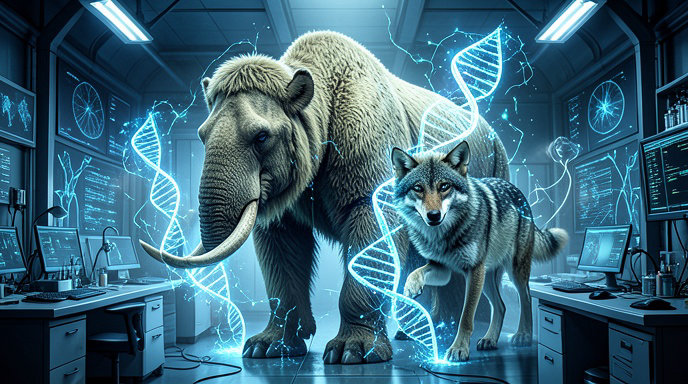
- Colossal Biosciences, the $10.2 billion de-extinction startup founded by Ben Lamm and George Church, will take center stage at TechCrunch Disrupt 2026 to detail how AI-driven genomics has moved species revival from theory to live animals.
- After creating woolly mice and dire wolf pups in 2025, the company is now using AI models for ancient DNA reconstruction, multiplex gene editing, and synthetic surrogacy to target the woolly mammoth, dodo, and thylacine within the next few years.
- The breakthrough raises massive questions for biodiversity, biotech investment, and conservation ethics, positioning de-extinction as both a climate tool and a commercial platform for genetic engineering.
From Science Fiction to Lab Reality
For decades, de-extinction lived in the realm of Jurassic Park fantasies. That changed this past year. Colossal Biosciences, the Dallas-based startup now valued at over $10 billion after its $200 million Series C in January 2025, has produced living, breathing proof points that extinct traits can be re-engineered into modern animals.
In March 2025, the company unveiled the woolly mouse, a mouse engineered with mammoth-like hair and cold-adapted fat metabolism. Just weeks later in April, it revealed Romulus, Remus, and Khaleesi — three dire wolf pups carrying revived genes from the extinct Aenocyon dirus, an animal that vanished more than 10,000 years ago. The announcements went viral globally and instantly turned Colossal's co-founder and CEO Ben Lamm into biotech's most unconventional celebrity founder.
Lamm, a serial entrepreneur known for gaming and AI startups before pivoting to synthetic biology, is slated to speak at TechCrunch Disrupt 2026 in San Francisco this October. The previewed session promises a candid look at how the company scaled from a moonshot idea in 2021 to a sprawling genetic engineering platform with more than 170 scientists and labs across Texas, Massachusetts, and Australia.
The Unconventional Founder Leading The Charge
Ben Lamm doesn't look or talk like a typical biotech CEO. No lab coat, no cautious pharma-speak. His pitch is pure Silicon Valley disruption: make extinction reversible, build the software stack for life itself, and spin out billion-dollar companies along the way.
Backed by investors including In-Q-Tel, Breyer Capital, WestRiver Group, and actor Chris Hemsworth, Colossal has raised over $615 million to date. Lamm's strategy has been to treat de-extinction like a tech platform problem, not just a conservation project. At Disrupt 2026, he is expected to discuss fundraising at massive scale during a biotech downturn, managing public hype versus scientific timelines, and why he believes bold, story-driven science is essential to attract top AI and CRISPR talent.
Joining him in spirit, if not on stage, is co-founder George Church, the Harvard and MIT geneticist whose lab pioneered multiplex CRISPR editing. Together, the duo paired Church's academic depth with Lamm's aggressive commercial execution.
How AI Cracked The Ancient DNA Code
The real revolution isn't just CRISPR — it's AI. Ancient DNA is fragmented, degraded, and incomplete after thousands of years in permafrost or cave fossils. Reconstructing a full woolly mammoth or dodo genome by hand would take decades.
Colossal's computational biology team now uses deep learning models trained on modern elephant, wolf, pigeon, and marsupial genomes to predict and fill in missing ancient sequences, identify functional gene variants linked to cold tolerance, skull shape, coat color, and metabolism, and model off-target effects before any cell is edited.
The company has built proprietary pipelines for paleogenome assembly, AI-guided guide-RNA design for multiplex editing — editing dozens of genes at once — and embryo modeling to reduce reliance on animal surrogates. The same AI stack is now being commercialized for human healthcare, agriculture, and conservation through spinouts like Breaking, focused on plastic degradation, and Colossal's dire wolf cloning tech adapted for endangered red wolves.
From Dire Wolves To Mammoths, Dodos, And Thylacines
So where does the science actually stand ahead of Disrupt 2026?
Dire Wolf: Colossal's most advanced program. Using gray wolf cells edited with 20 dire wolf traits related to size, musculature, and coat, then cloned via somatic cell nuclear transfer, the three live pups are now over a year old and thriving in a 2,000-acre preserve.
Woolly Mammoth: The flagship goal. The team has edited over 25 mammoth-specific genes into Asian elephant cells and demonstrated successful elephant iPSC generation, a major hurdle cleared in 2025. First mammoth calves are still targeted for 2028.
Dodo and Thylacine: The avian genomics program completed a high-quality dodo reference genome using DNA from a 17th-century specimen, while the thylacine program in Melbourne has produced edited fat-tailed dunnart cells, a marsupial proxy. Both are positioned as tests for bird and marsupial reproductive engineering.
Moas and others from Colossal's expanded extinction list, plus partnerships with Indigenous groups and rewilding projects in North America, Mauritius, and Tasmania, signal a shift from lab demos to field deployment.
What It Means For Biodiversity And Biotech
Supporters argue de-extinction could be a powerful conservation tool. Reintroducing mammoth-like grazers to the Arctic could slow permafrost thaw, rewilded dire wolf proxies could restore predator balance, and the gene-editing tools developed could save critically endangered species like the northern white rhino, vaquita, and pink pigeon.
Critics warn of ecological risks, animal welfare concerns around surrogacy and cloning, and the moral hazard of suggesting extinction is fixable. Conservation biologists also question whether hundreds of millions should fund revived icons while thousands of living species face imminent loss.
Lamm has countered that it's not either-or. Colossal says it has donated tech and funding to traditional conservation and that its biobanking and cloning advances already helped produce two cloned red wolf pups in 2025 using a less-invasive blood-cloning technique.
The Road To Disrupt 2026 And Beyond
TechCrunch Disrupt 2026 comes at an inflection point. With a potential IPO or large private raise rumored, increasing regulatory scrutiny around engineered animals, and growing competition from startups like Loyal, Ginkgo Bioworks, and Chinese BGI-affiliated labs entering paleogenomics, all eyes will be on Lamm's live Q&A.
Expect tough questions: When will we see a baby mammoth? Who owns a revived species? How do you rewild an animal with no herd, no culture, and a changed climate? And can AI-designed genomes ever truly recreate an extinct mind, not just its body?
Whatever the answers, one thing is clear heading into October: AI-powered genetic engineering has turned de-extinction from science fiction into a funded, staffed, and rapidly advancing industry. Nature's comeback is no longer a question of if, but how, when, and at what cost.

Get All The Latest Updates Delivered Straight To Your Inbox For Free!