
AI Detection Is Harder Than Real vs Fake: Pangram's Max Spero on Solving the Internet's Trust Problem
TL;DR
- Pangram CEO Max Spero says effective AI detection can't be a simple "real vs. fake" binary, arguing the future requires nuanced analysis that identifies how much AI was used, where, and whether it was deceptive.
- AI-generated content is already overwhelming critical trust-based systems, from flooded job applications and fake product reviews to fraudulent insurance claims and doctored images.
- As the internet faces a systemic trust crisis, startups like Pangram are racing to build enterprise-grade detection tools that go beyond a single score to help businesses verify authenticity without falsely accusing humans.
Beyond the Binary: Why "Real or Fake" Is the Wrong Question
For the last two years, the public conversation around AI detection has been stuck on a single, seemingly simple question: Is this real or is it fake? According to Max Spero, CEO and co-founder of AI detection startup Pangram, that framing is not just oversimplified — it's actively unhelpful.
In a recent discussion on the future of online trust, Spero argued that treating AI detection as a binary label misses the reality of how people actually use generative AI today. Few pieces of content are now 100% human or 100% machine. Instead, most exist on a spectrum.
"People don't just generate an entire essay with ChatGPT and submit it," Spero explained. "They use AI to brainstorm, to outline, to polish their grammar, to rewrite a single paragraph. A good detector shouldn't just yell 'AI!' — it needs to tell you what happened."
Pangram, which has become one of the most widely cited detectors for its accuracy in independent benchmarks, is pushing for what Spero calls nuanced detection. That means analyzing text at the sentence and paragraph level, estimating the extent of AI involvement, and distinguishing between assistive use and deceptive automation. For an enterprise, the difference between a candidate who used AI to fix typos on a cover letter and one who fabricated their entire work history with AI is critical.
The Flood Is Already Here
That nuance is urgently needed because the flood Spero warned about is no longer theoretical. It’s already clogging the systems we rely on to make economic decisions.
Job Applications: Recruiters and hiring managers report being buried under a wave of AI-generated resumes and cover letters. Platforms like LinkedIn have seen a massive spike in applications per role, with many candidates using AI to mass-apply and tailor applications at scale, and even to generate fake work portfolios and answers to take-home assignments. The result is that hiring teams are struggling to identify genuine candidates.
Product Reviews and Marketplaces: E-commerce and review sites are facing an epidemic of synthetic reviews. AI-generated five-star reviews for products, books, and apps — and targeted one-star attacks on competitors — are eroding consumer confidence. What was once a signal of social proof is becoming noise.
Insurance and Fraud: Perhaps most costly is the rise in AI-assisted fraud. Insurers are reporting a surge in claims supported by AI-generated photos, damage reports, and documents. A dented bumper or a water-damaged kitchen can now be convincingly fabricated with image generators, making it harder and more expensive to verify legitimate claims.
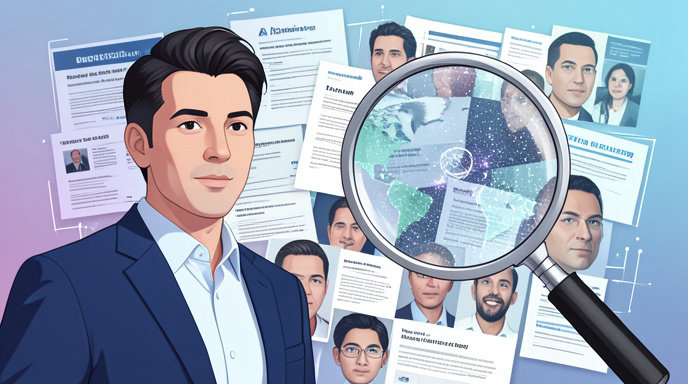
Together, these trends are creating what Spero describes as the internet's trust problem. When every inbox, feed, and application portal could be filled with synthetic content, the default assumption shifts from trust to suspicion.
Inside Pangram's Approach to the Trust Crisis
Startups racing to solve this problem are learning that accuracy alone isn't enough. A detector that is 99% accurate but offers no explanation will still fail in the real world, where a false positive can mean wrongly accusing a student of cheating or rejecting a qualified job applicant.
Pangram's strategy has been to build for the enterprise use case from the start, focusing on low false-positive rates and explainability. Rather than returning a single percentage score, its models highlight which sections of a document are likely AI-generated, flag inconsistencies in writing style, and provide calibrated confidence levels.
This approach acknowledges that different customers have different thresholds for AI use. A university might allow AI for brainstorming but not for final drafts. A publisher might ban fully AI-generated articles but permit AI-assisted translation. A detector needs to enforce a policy, not just deliver a verdict.
Spero has been particularly vocal about the dangers of detectors that over-flag non-native English speakers, a well-documented flaw in early detection tools that tended to misclassify simpler, more formulaic writing as AI. Pangram says it has trained its models on a diverse dataset to mitigate that bias, a key factor in its adoption by schools and businesses.
Why Startups Are Racing to Build Better Detectors
The market for detection is exploding precisely because generative AI has become so good, so fast, and so cheap. As open-source models and multimodal generators for text, images, and video become widely accessible, the cost of creating convincing fakes has dropped to near zero, while the cost of verifying authenticity has skyrocketed.
That asymmetry has created a major business opportunity. Investors are pouring money into trust and safety infrastructure, with Pangram, Originality AI, GPTZero, and a host of image and video verification startups all competing to become the authenticity layer of the internet.
But Spero cautions that the race won't be won by whoever builds the strictest detector. It will be won by whoever builds the most useful one.
"The goal isn't to catch every piece of AI text on the internet," he said. "The goal is to restore trust where it matters. We need to give a hiring manager, a teacher, or a claims adjuster the context to make a fair, informed decision. A simple real-or-fake label will never do that."
As AI-generated content continues to blur the line between human and machine, that context may be the only thing keeping the internet usable.

Get All The Latest Updates Delivered Straight To Your Inbox For Free!