
Florida and Texas Block Flock License Plate Cameras as 130,000-Camera Network Fuels Privacy Debate
TL;DR
- Florida and Texas have moved to restrict or ban Flock Safety's automated license plate readers, challenging the company's rapidly expanding 130,000-camera nationwide network.
- Lawmakers from both parties are raising alarms over Flock's centralized, searchable database that can track vehicle movements for weeks, warning of mass surveillance without a warrant.
- The crackdown could set a national precedent, forcing Flock to change how it stores and shares data and reshaping the balance between AI-powered policing and Fourth Amendment privacy rights.
A Nationwide Camera Network Hits a Red-State Roadblock
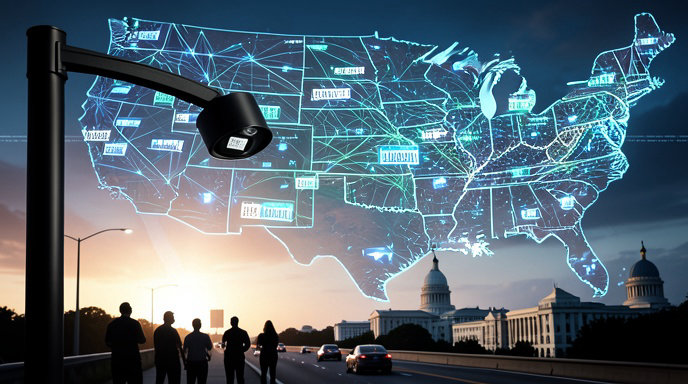
In just a few years, a network of small, solar-powered cameras on street poles and neighborhood entrances has quietly become one of the largest surveillance systems in American history. Flock Safety, the Atlanta-based startup behind the cameras, now operates more than 130,000 automatic license plate readers (ALPRs) in over 5,000 communities across the United States.
Now, two of its biggest markets are pushing back hard. In recent weeks, officials in Florida and Texas have taken coordinated action to block, remove, or severely limit Flock cameras, arguing the system has grown too powerful, too pervasive, and too unregulated.
The moves mark the most significant political challenge yet to Flock's business model and signal a growing bipartisan consensus that unregulated license plate tracking has crossed a line.
How Flock's Searchable Database Actually Works
Unlike a traditional traffic or security camera, Flock's Falcon cameras don't just record video. Each device uses computer vision and AI to capture the license plate, make, model, color, and distinguishing features of every vehicle that passes, day or night.
That data is instantly uploaded to Flock's cloud platform, called FlockOS, where it is stored for 30 days by default and made searchable for law enforcement customers. An officer can type in a plate number, or even a partial description like "red pickup truck," and see a timeline of where that vehicle has been spotted, complete with time stamps and location maps.
Flock also allows participating agencies to share data with each other nationwide. That means a search in Miami could pull hits from cameras in Austin, Denver, or Los Angeles if those departments have opted into the national lookup network. The company says this helps find stolen cars, missing persons, and violent crime suspects within minutes, and credits its system with thousands of arrests.
Critics say it creates a retroactive, warrantless tracking system for every driver, regardless of whether they are suspected of a crime.
Why Florida and Texas Are Taking Action
The pushback in Florida and Texas has been driven by different mechanisms but similar concerns over civil liberties and government overreach.
In Florida, the state has moved to enforce existing laws that prohibit private companies from operating license plate readers on public rights-of-way and from sharing that data across jurisdictions without strict oversight. State officials have ordered audits of Flock installations and directed some cities and homeowners associations to remove cameras that were installed without proper Department of Transportation permits. Attorney General James Uthmeier has framed the issue as protecting Floridians from a private surveillance dragnet operating on public roads.
In Texas, the resistance has come from the legislature and local city councils. Lawmakers have advanced bills that would ban the use of taxpayer funds for Flock contracts that store data out-of-state or allow warrantless federal access, while cities like Austin and Fort Worth have voted to pause or cancel new Flock contracts pending privacy reviews. Texas officials have cited concerns about data retention, lack of judicial oversight, and the potential for the database to be used to track people seeking abortions or traveling across state lines.
A Rare Bipartisan Privacy Revolt
What makes the Flock debate unusual is who is opposing it. The backlash is not falling along traditional party lines.
Conservative Republicans have raised Fourth Amendment concerns, warning that constant location tracking amounts to an unreasonable search and gives the government and a private corporation too much power to monitor citizens' movements. Progressive Democrats and civil liberties groups like the ACLU have echoed those warnings, adding that ALPR data disproportionately impacts communities of color and can be used to chill protests and political activity.
Civil liberties advocates point to recent incidents that fueled the fire, including reports that Flock data was used by police to search for women who had crossed state lines for reproductive healthcare and to monitor immigration-related enforcement, as well as audits showing officers had conducted thousands of searches without a clear criminal predicate.
Flock has defended its system, saying it requires agencies to have a legitimate reason for every search, audits usage, and deletes data after 30 days. The company argues its cameras only capture vehicles in public, where there is no expectation of privacy, and that it has never sold data to third parties.
What the Crackdown Means for Privacy and Policing
The actions in Florida and Texas are more than symbolic. Together, the two states account for tens of thousands of Flock cameras. If removals and bans proceed, it would significantly shrink the company's coverage and create gaps in its vaunted nationwide network.
More importantly, it could create a blueprint for other states. Lawmakers in at least a dozen other states are now considering similar ALPR regulations, including requirements for warrants to search historical location data, shorter data retention periods of 72 hours or less, mandatory public disclosure of camera locations, and outright bans on private companies building centralized plate databases.
For law enforcement, the outcome is critical. Police chiefs and sheriffs argue Flock is one of the most effective crime-solving tools they have ever had, helping them solve homicides, carjackings, and retail theft rings that would have otherwise gone cold. Losing access, they say, would make communities less safe.
For privacy advocates, the Florida and Texas revolt is a long-overdue correction. They argue that American drivers never consented to having their movements logged and stored in a private database that can reconstruct their daily lives with a single search.
Whether Flock can adapt its model to satisfy this new wave of regulation — or whether other states will follow Florida and Texas in pulling the plug — will determine the future of AI-powered surveillance policing in the U.S.

Get All The Latest Updates Delivered Straight To Your Inbox For Free!