
Meta Connect 2026: Everything New Coming to Muse AI Agent and Smart Glasses
TL;DR
- Mark Zuckerberg opened Meta Connect 2026 in Menlo Park by declaring Muse as Meta's all-in bet for personal superintelligence, replacing Meta AI as the default agent across apps and glasses.
- Muse is getting a major upgrade with proactive, voice-first memory, live multimodal vision, task completion across Instagram, WhatsApp and third-party apps, plus a new developer platform for custom Muses.
- Ray-Ban Meta Gen 2, Oakley Meta, and Ray-Ban Display glasses are becoming Muse-first devices with live captions, real-time translation, messaging, music, and hands-free creative tools powered by the new Neural Band.
Zuckerberg Goes All-In
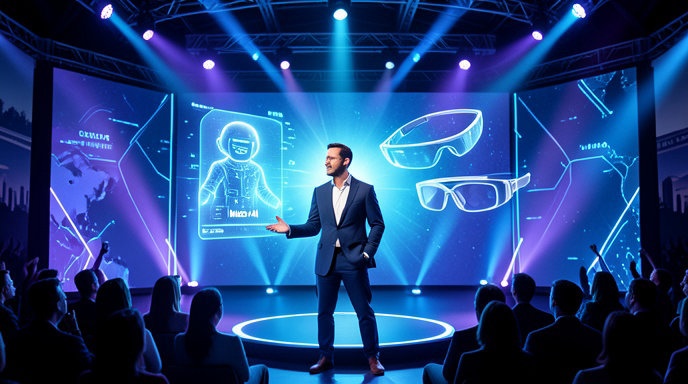
Mark Zuckerberg kicked off Meta Connect 2026 in Menlo Park with a clear message: the future of Meta is not chatbots, feeds, or even phones. It's Muse. Wearing his now-signature Ray-Ban Meta glasses, Zuckerberg called Muse Meta's next-gen AI agent for personal superintelligence, describing it as an assistant that doesn't just answer questions but sees what you see, remembers what matters, and gets things done for you. The keynote positioned Muse as the connective tissue across all of Meta's hardware and software, from smart glasses to WhatsApp, Instagram, Facebook, and Quest.
What Is Muse, Really
Muse is the evolution of Meta AI, rebuilt from the ground up on Meta's latest Llama models. Unlike the previous assistant that waited for prompts, Muse is designed to be proactive, persistent, and deeply personal. Zuckerberg demoed Muse initiating conversations based on context, like reminding you to leave for a flight after scanning an email, suggesting a restaurant after overhearing friends discuss dinner plans, or automatically compiling highlights from your day. Meta says Muse has long-term memory with full user control, meaning you can view, edit, or delete what it remembers at any time.
A Voice-First, Multimodal Agent
The biggest leap for Muse is voice and vision. Meta showed Muse holding natural, interruptible, full-duplex voice conversations with almost no latency, with new personality-driven voices including creator-inspired options. With multimodal understanding, Muse can interpret live video from your glasses or phone camera, describe landmarks, read menus, troubleshoot a broken bike, help style an outfit, or walk you through a recipe step-by-step while you cook. On stage, Zuckerberg had Muse watch a live skateboarding demo and provide real-time commentary and tips, all hands-free.
Muse Gets Things Done
Meta Connect 2026 pushed Muse beyond answers into agentic actions. Muse can now book reservations, order groceries, edit photos and Reels with simple voice commands, summarize unread WhatsApp chats, draft Instagram captions, create event invites, and coordinate across friends. New integrations announced include Spotify, Apple Music, Audible, Google Calendar, Outlook, Strava, and Uber, plus partnerships with restaurants and retailers for in-chat purchases. Developers also get the Muse SDK to build custom agents, plugins, and business versions for customer support and shopping inside WhatsApp and Messenger.
Muse Comes to AI Glasses
Glasses were the star of the show, and every pair is now Muse-first. The new Ray-Ban Meta Gen 2 with 2x battery life and 4K video, the sport-focused Oakley Meta HSTN, and the Ray-Ban Meta Display with a full-color in-lens monocular display all run Muse by default. Just say Hey Meta or tap to talk, and Muse overlays answers, live captions, turn-by-turn navigation, real-time translation for conversations, teleprompter text, and music controls directly in your field of view. Meta demoed live messaging on Display, where you can read and reply to WhatsApp and Instagram DMs, see who is calling, and preview photos without pulling out your phone.
Neural Band and Hands-Free Control
To control it all, Meta unveiled updates to the Meta Neural Band, the EMG wristband that reads muscle signals to let you swipe, click, and type with subtle finger movements. Paired with Display glasses, you can silently accept calls, scroll through Muse responses, adjust volume, or send a text without speaking. Zuckerberg called it the first mainstream neural interface, and positioned the glasses plus band plus Muse combo as a true phone replacement for everyday tasks.
Privacy, Safety and Availability
With an always-on agent that sees and hears, Meta spent a large portion of the keynote on privacy. Muse on glasses requires an LED indicator when recording, on-device processing for wake-word and sensitive tasks, and encrypted storage for memories. Meta said personal data is not used to train models by default, with explicit opt-ins and a new Privacy Center for Muse. The new Muse features start rolling out in the US this fall to Ray-Ban Meta and Oakley Meta owners via free software update, with Display features, UK, Canada, EU, and developer tools expanding into early 2027.
Why It Matters for Personal AI
Zuckerberg closed by framing Muse plus glasses as the end of the smartphone era and the start of personal superintelligence for everyone. While Google, Apple, OpenAI, and Anthropic race to build agents, Meta is betting that the winner won't live in a phone app, but on your face, in your ears, and across your social graph. If Meta can deliver on speed, usefulness, and trust, Muse could turn its 3 billion daily users and hit glasses lineup into the largest AI agent deployment in the world.

Get All The Latest Updates Delivered Straight To Your Inbox For Free!