
Meta Unveils Tamagotchi-Like Wearable to Give Muse AI a Pocket-Sized Home
TL;DR
- Meta has revealed a pocket-sized, Tamagotchi-style wearable that gives its Muse AI assistant a standalone body outside your phone.
- The clip-on device is voice-first with a tiny expressive display, camera and sensors, designed as an always-on AI companion you can carry, pet and talk to.
- The launch signals Meta's bigger push to own AI hardware beyond phones and smart glasses, building a family of personal superintelligence devices.
A Pocket Pet For The Age Of AI
Meta wants its AI to live with you, not just in you. At Connect this week, the company pulled back the curtain on one of its most playful hardware experiments yet: a tiny Tamagotchi-inspired wearable built specifically for Muse, Meta's personal AI agent.
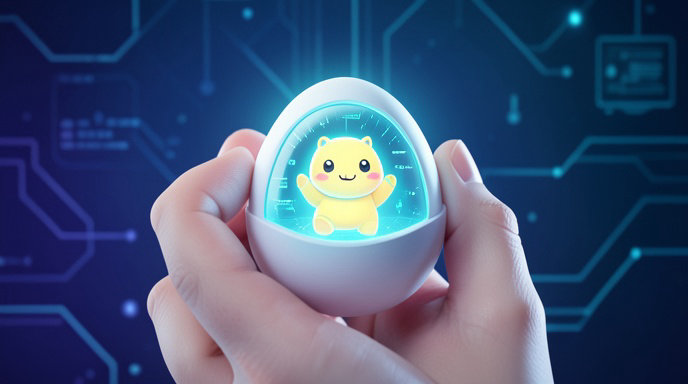
About the size of a key fob or a classic '90s digital pet, the device is meant to be clipped to a bag, jacket or pocket and carried everywhere. Instead of opening an app, you just talk to it. Muse listens, responds, remembers, and reacts with an animated personality that lives on its small front screen.
CEO Mark Zuckerberg framed it as another step toward personal superintelligence — AI that isn't trapped behind a phone screen, but present in the physical world with you all day.
How The Muse Wearable Works
Unlike a phone or smart speaker, the Muse wearable is voice-first and intentionally screen-light. There's no keyboard, no feed, no apps to doomscroll.
You wake it by voice, by squeeze, or by picking it up. Built-in microphones and on-device wake-word detection listen for commands, while Wi-Fi and cellular via your paired phone keep it connected to Meta's Muse models in the cloud.
Ask it to summarize your messages, set reminders, translate a conversation, identify what you're looking at, or brainstorm ideas out loud, and it answers back in natural voice. It can also proactively nudge you — vibrating gently and lighting up when you have a meeting, when your ride arrives, or when it thinks you should leave for the airport.
Meta says much of the lightweight processing happens on-device for speed and privacy, with more complex reasoning offloaded to the cloud. It works as a companion to your phone, not a replacement, syncing with Instagram, WhatsApp, Messenger, Facebook and Meta's broader Muse app ecosystem.
Design And Features: Nostalgia Meets Next-Gen
The design is pure nostalgia bait. The pebble-shaped case, soft-touch finish, carabiner clip and low-power color display immediately recall the Tamagotchi and Digivice era, complete with a blinking, googly-eyed avatar that represents Muse itself.
But inside, it's thoroughly modern:
Always-On Companion Display: The tiny screen doesn't show apps — it shows mood. Muse blinks, sleeps, gets excited, and changes expressions based on context. Pet it via the touch-sensitive back and it purrs with haptic feedback.
Camera And Sensors: A small front-facing camera lets Muse see what you see for visual Q&A, from reading menus to identifying plants. An accelerometer, barometer and ambient light sensor help it understand if you're walking, riding, or sitting in a meeting.
Expressive Voice Personality: Meta has given Muse a playful, evolving personality on this device. It levels up the more you use it, remembers inside jokes, your routine and preferences, and develops mannerisms. Meta calls it a digital sidekick, not just an assistant.
All-Day Battery And Privacy Controls: Meta promises all-day battery life thanks to the low-power display and efficient chip. A physical shutter switch cuts the mic and camera, and an LED clearly signals when it's recording or listening.
Color options at launch include Charcoal, Clay, Seafoam and a translucent Creator Edition that shows off the internals.
Why A Tamagotchi? Meta's Bet On Emotional AI
The Tamagotchi comparison isn't an accident. Meta is betting that people won't want to wear AI unless they bond with it.
After years of utilitarian smart speakers and glasses that look like tech, the Muse wearable leans into cuteness, tactility and companionship. You don't just use it — you carry it, check on it, talk to it on walks. That emotional hook, Meta hopes, will make always-on AI feel less creepy and more comforting, especially for younger users who never owned the original digital pets.
It's also deliberately non-intimidating. No augmented reality overlay, no face computer, no phone screen demanding attention. Just a little creature in your pocket that happens to be powered by one of the world's most advanced AI models.
What It Means For Meta's AI Hardware Ambitions
The Muse wearable is small, but the strategy behind it is huge.
Meta has made clear it doesn't want to depend on Apple and Google phones as the sole gateway to its AI. With Ray-Ban Meta smart glasses already a breakout hit, the Oakley Meta line expanding into sports, and its Orion AR glasses prototype in development, Meta is building a full family of post-phone devices.
This new wearable fills a different slot: cheaper than glasses, more portable than a headset, more personal than a speaker. Priced as an impulse-buy accessory rather than a flagship gadget, it's designed to put Muse in millions of pockets quickly and gather real-world voice and context data to train future models.
In short, Meta envisions Muse living everywhere — on your face with glasses, on your wrist, in your pocket as this Tamagotchi-like pet, and in your apps. If the phone was the home for the last era of computing, Meta wants Muse to be the tenant that moves freely between them all.
Analysts say the move also puts direct pressure on OpenAI, Google, Anthropic and Apple, all racing to build AI-native hardware from pendants to pins to robots. Meta's advantage: it already has the social graph, the wearables supply chain, and now, a character people might actually want to keep around.
Price, Availability And What's Next
Meta hasn't committed to full mass-market availability yet. The company says the Muse wearable will roll out first to developers and early testers in the US starting this fall, with a broader consumer launch expected next year.
Pricing is expected to sit well below smart glasses, positioning it as a companion accessory rather than a phone replacement. Meta plans to open an SDK so developers can build mini-skills, games and personalities for the device.
If it catches on, don't be surprised to see Muse evolve from pocket pet to full ecosystem — syncing with your Ray-Bans, your Quest headset, and your car. For now, Meta just wants you to fall in love with a little AI creature again, 30 years after Tamagotchi first taught us how.

Get All The Latest Updates Delivered Straight To Your Inbox For Free!