
Meta's Lightweight VR Glasses With IMAX Promise a Big Entertainment Comeback
TL;DR
- Meta's ultra-lightweight VR glasses, reportedly weighing around 110 grams with a tethered compute puck, are designed for long movie sessions instead of bulky gaming headsets.
- A new IMAX partnership brings IMAX's expanded aspect ratio and exclusive documentaries and blockbusters to Horizon OS with immersive theater environments.
- By pairing comfort-first hardware with premium Hollywood content, Meta is shifting VR from gaming niche to mainstream entertainment device.
Meta is making another push into VR glasses, this time betting that less is more. After years of bulky Quest headsets that wowed gamers but tired everyone else's necks and eyes, the company is pivoting hard toward ultra-lightweight, glasses-style hardware built for watching, not just playing.
The timing was no accident. At Meta Connect in September 2026, entertainment took center stage over the metaverse. Instead of virtual offices and legless avatars, Meta showed people kicking back on a couch, on a plane, or in bed, wearing what looked like oversized sunglasses and watching Dune: Part Two on a screen that felt 50 feet tall. The secret weapon: IMAX.
Inside The Featherweight Redesign
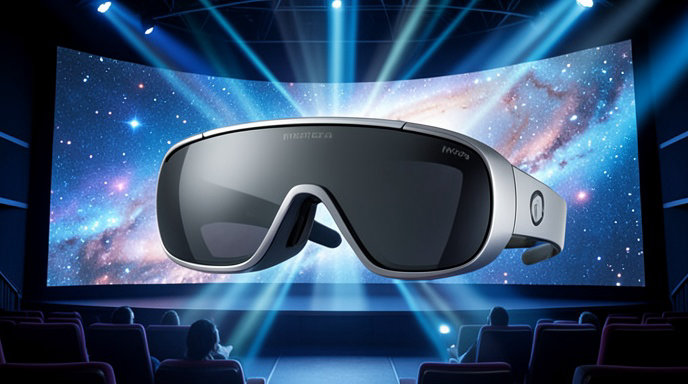
The device at the center of the push is widely believed to be Project Puffin, Meta's long-rumored lightweight headset. Unlike the Quest 3 and Quest 3S, Puffin splits the weight entirely. The glasses themselves house only the displays, pancake lenses, cameras for inside-out tracking, and audio, while all the heavy computing and battery live in a small puck that sits in your pocket and connects via a cable.
The result is a headset that weighs just over 100 grams, compared to more than 500 grams for a Quest 3. That's lighter than most smartphones and firmly in sunglasses territory. Meta has also moved to open-periphery designs and softer, breathable fabrics, with prescription support from EssilorLuxottica built in from day one. The message is clear: these are glasses you can wear for a two-and-a-half-hour movie without a headache, red marks, or neck strain.
Early hands-on reports describe 4K-class micro-OLED displays with a wide field of view, eye-tracking for foveated rendering, and hand-tracking plus a wrist-based EMG band for controls, eliminating the need for clunky controllers when you're just trying to hit pause on popcorn.
What The IMAX Integration Actually Does
This isn't just another streaming app port. Meta confirmed a deep IMAX integration for Horizon OS that brings IMAX's signature expanded 1.90:1 aspect ratio to VR for the first time at scale, meaning up to 26% more picture compared to standard widescreen cuts on select films.
Subscribers will get a dedicated IMAX theater environment, modeled after real IMAX auditoriums with its curved screen, signature sound tuning, and dimmed lighting that reacts to what's on screen. At launch, the lineup includes remastered blockbusters, nature documentaries shot with IMAX cameras, and live-captured concerts, all presented in high-bitrate 4K HDR with spatial audio optimized for the glasses' open-ear speakers.
Crucially, IMAX content will support both fully immersive solo viewing and Watch Party co-viewing, where friends appear as photorealistic avatars sitting next to you. Meta is also opening the IMAX pipeline to creators, promising tools to shoot and distribute IMAX-certified immersive video without Hollywood budgets.
Why This Time Feels Different From Past Attempts
Meta has tried the entertainment angle before. Remember Oculus Video in 2016, Facebook Watch on Oculus Go in 2018, and the big Horizon Venues concert push in 2021? All of them failed for the same three reasons: the headsets were too heavy and blurry for movies, the content library was thin, and you had to watch alone.
What's changed is both hardware and strategy. Display resolution has roughly quadrupled since Oculus Go, pancake lenses have killed the screen-door effect and god rays, and mixed-reality passthrough means you no longer feel isolated from your living room. Instead of building its own Hollywood studio, Meta is now licensing prestige content people already want to see, led by IMAX, Disney+, Netflix, and Xbox Cloud Gaming for breaks between films.
The company has also learned from Ray-Ban Meta's breakout success. People will wear smart glasses all day if they look good and feel light. Puffin is Meta's attempt to bring that Ray-Ban lesson to full VR.
Could Lightweight Plus Hollywood Finally Go Mainstream
Analysts say the combo solves VR's biggest adoption blocker: purpose. Gaming alone was never going to sell a billion headsets, but a personal, portable IMAX theater you can take on a flight just might.
At a rumored price point well below Apple Vision Pro's $3,499, and with a focus on comfort, style, and two-hour-plus battery life via the external puck, Meta is positioning these glasses not as a Quest replacement, but as an entertainment-first companion device. Think AirPods for your eyes: not essential, until you try a midnight movie on a virtual 100-foot screen while your partner sleeps next to you.
Challenges remain, from battery anxiety and the awkwardness of the pocket puck to whether Hollywood will keep remastering films fast enough. But if Meta can deliver all-day wearability with true IMAX spectacle, VR glasses may finally have their killer app, and it's just sitting back and watching.

Get All The Latest Updates Delivered Straight To Your Inbox For Free!