
Muju Earth Aeropod Automates Soil Aeration Without Robotics at TechCrunch Disrupt
TL;DR
- Muju Earth Technologies will debut its Aeropod at TechCrunch Disrupt as a low-cost, no-robotics solution to automate soil aeration.
- The solar-powered pod uses passive airflow, moisture sensing, and bio-mimicry to loosen compacted soil, cutting fuel, labor, and equipment costs for farmers.
- By boosting root oxygenation and microbial health, the company says Aeropod can sustainably increase crop yields while reducing tillage and chemical inputs.
The $200 Billion Problem Under Our Feet
Soil compaction is one of agriculture's least visible but most expensive problems. Heavy tractors, constant tilling, and extreme weather compress the topsoil, choking off oxygen and water flow to roots. The result is weaker plants, increased runoff, and heavier reliance on fertilizers to compensate for unhealthy soil.
Muju Earth Technologies, an agtech startup focused on regenerative farming tools, says most solutions only make the problem worse. Larger machines and complex robotics add cost, weight, and maintenance without addressing the biology of soil itself. Its answer, set to be showcased at TechCrunch Disrupt in San Francisco next month, is deliberately low-tech at first glance: the Aeropod.
What Is the Aeropod
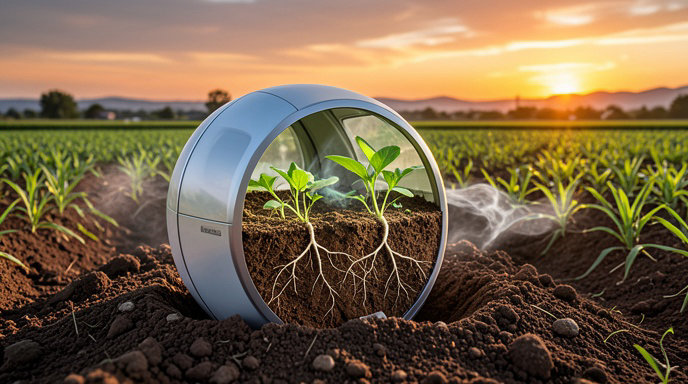
The Aeropod is a squat, cone-shaped device about the size of a traffic cone that farmers stake directly into the field. No motors, no wheels, no lidar, no autonomous navigation stack. Once installed in a grid pattern across a plot, the pods work continuously and passively throughout the growing season.
Each unit is solar-assisted and fully self-contained, designed to last multiple seasons with almost no maintenance. Muju Earth says a single farmer can deploy dozens of pods in a day with hand tools, compared to weeks of integration required for robotics platforms.
How It Automates Aeration Without Robotics
Despite its simple appearance, the Aeropod automates three jobs that typically require diesel-powered tillage or expensive farm robots.
First, it breathes. A vented, spiral channel design captures wind and daily temperature shifts to pump micro-bursts of air down into the root zone, gently fracturing compacted layers over time. The company calls it passive pneumatic aeration.
Second, it senses. Embedded soil moisture, temperature, and oxygen sensors monitor conditions every 15 minutes. When soil becomes anaerobic after heavy rain or over-irrigation, the pod opens its micro-vents wider to accelerate drying and gas exchange, then closes to retain moisture during drought.
Third, it feeds biology. Each Aeropod holds a slow-release cartridge of beneficial microbes and root-stimulating compounds. As air and water move through the pod, it inoculates the surrounding soil, encouraging earthworm activity and mycorrhizal networks that naturally keep soil loose.
All data is sent via low-power LoRa mesh to a phone app, giving farmers a field-level map of soil oxygen and compaction without walking the rows.
Why Skipping Robotics Saves Farmers Money
Muju Earth's pitch at Disrupt is as much economic as environmental: robotics is overkill for soil health.
Autonomous tillage robots can cost $50,000 to over $250,000 per unit, plus software subscriptions, repairs, and charging infrastructure. They are also heavy, which can re-compact the soil they are meant to fix.
In contrast, Muju Earth is targeting a price of a few hundred dollars per Aeropod, with volume discounts for broad-acre farms. Because there are no moving drive systems, there is almost nothing to break. The company estimates fuel and labor savings of up to 60% on aeration and tillage passes, with payback in a single season for high-value crops like vegetables, berries, and vineyards.
For smallholder and mid-size farms that have been priced out of precision ag, that difference is critical.
Healthier Soil, Higher Yields - Sustainably
The ultimate claim Muju Earth will have to defend on the Disrupt stage is yield. In early field trials with partner farms in California and Kenya over the past two growing seasons, the company reports 12% to 27% yield increases in maize, tomatoes, and leafy greens, alongside 30% less irrigation water and significantly reduced need for synthetic nitrogen.
Agronomists say the science is plausible. Better aeration promotes deeper root growth, more efficient nutrient uptake, and a thriving soil microbiome, all of which make crops more resilient to heat and drought. Unlike deep tilling, which releases stored carbon, passive aeration keeps soil structure intact, allowing fields to sequester more carbon over time.
Muju Earth is positioning Aeropod not as a gadget, but as infrastructure for regenerative agriculture at scale.
What to Watch at TechCrunch Disrupt
At TechCrunch Disrupt, Muju Earth Technologies is expected to demonstrate a live Aeropod array, share new third-party trial data, and announce pricing and pre-orders ahead of a 2027 commercial rollout. Key questions from investors and farmers will be durability in harsh field conditions, cartridge refill costs, and performance in heavy clay versus sandy soils.
If the company delivers on its data, the Aeropod could stand out in a Disrupt field crowded with AI drones and humanoid farm robots - precisely because it does less, not more. In an era of costly complexity, Muju Earth's bet is that the future of soil health is deceptively simple, distributed, and designed to disappear into the field itself.

Get All The Latest Updates Delivered Straight To Your Inbox For Free!