
Nexterity's Pelican-Case Robot Automates Dangerous Pipefitting Bolt Work
TL;DR
- Nexterity has unveiled a portable, Pelican-case-sized robot that can tighten or loosen four flange bolts simultaneously, automating one of pipefitting's most injury-prone tasks.
- The battery-powered system clamps onto standard flanges, delivers calibrated, even torque, and keeps workers clear of pinch points, high pressure, and hazardous chemicals.
- Designed for oil and gas, chemical plants, and shipyards, the robot points to a future of compact, task-specific automation rather than large, general-purpose humanoids.
The Job No One Wants To Do
Every industrial plant runs on flanged pipe connections, and every one of those flanges has to be made up or broken out by hand. That means heavy hydraulic torque wrenches, sledgehammers, cheater bars, and workers with their hands inches from thousands of pounds of steel under tension.
It's slow, back-breaking work. It's also dangerous. Slipped wrenches, uneven loading, stored energy in a line, and exposure to hydrocarbons, steam, or chemicals during a breakout make flange work one of the leading causes of hand injuries, strains, and caught-between incidents in pipefitting. Nexterity, a Houston-based robotics startup focused on industrial maintenance, decided to start there.
What Nexterity Built
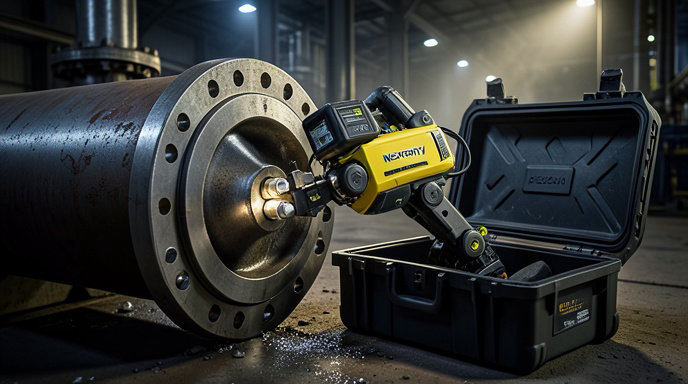
Nexterity's solution looks nothing like a traditional industrial robot. Packed into a rugged Pelican-style transport case, the unit weighs under 50 pounds and can be carried by a single technician up scaffolding, into pipe racks, or below deck.
On site, the operator splits the device into two halves, clamps it around the flange, and locks it in place. Four synchronized drive heads then engage four bolts at once — a major departure from the current one-bolt-at-a-time method. With a single button press, the robot can torque, tension in sequence, or break loose seized bolts with precisely controlled force.
The company says the system handles the most common 4-inch to 12-inch flanges with quick-change adapters, delivering up to several thousand foot-pounds of torque per stud while logging every turn for QA documentation.
How The Four-At-Once System Works
The key is simultaneous, even loading. When humans tighten flange bolts sequentially, it's easy to warp the gasket and create a leak path, requiring costly rework and re-torquing. Nexterity's robot drives opposing bolts together in a star pattern automatically, just like a calibrated pro, but with machine repeatability.
Vision and force sensors detect cross-threading, galling, and bottomed-out nuts, pausing before damage occurs. For breakouts, the robot applies gradual, high-torque pulses to free corroded fasteners without the shock loads of hammering or the risk of a worker losing balance when a bolt suddenly lets go.
The unit is battery-powered for about a full shift of typical make-ups, and can be operated remotely from 20+ feet away via a tethered pendant or tablet — keeping the operator out of the line of fire if a line still holds pressure or residual product.
Why Safety And Speed Matter Now
Industrial operators are facing a double squeeze: an aging, experienced craft workforce retiring, and a push to cut downtime during turnarounds. A flange crew can spend hours per joint on large lines, and a single gasket failure on startup can shut down a unit for days.
Nexterity argues its robot cuts bolting time by up to 60% while virtually eliminating hands-on-flange time. No fingers in pinch points. No backs strained holding a 30-pound torque gun overhead. No one leaning into a wrench when hazardous fluid weeps out.
Early pilot partners in oil and gas and chemical processing reportedly used the system for heat exchanger swaps, pump changeouts, and turnaround work, where repeatable torque records also help with compliance and leak prevention.
A Glimpse At The Future Of Field Automation
Nexterity isn't trying to replace pipefitters — it's trying to remove the worst part of their day. That philosophy reflects a broader shift in industrial robotics away from giant arms and full humanoids toward small, rugged, task-specific tools that fit existing workflows.
Instead of automating the whole plant, startups are targeting dull, dirty, and dangerous choke points: welding inspection, valve turning, grinding, and now bolting. The tools are portable, don't require plant modifications, and show ROI in weeks rather than years.
What's Next
Nexterity says the next version will expand coverage to larger 16-inch and 24-inch flanges, add automatic bolt lubrication and cleaning, and integrate with plant digital twins to preload torque specs by scanning a flange tag.
The company is currently taking reservations for pilot deployments in early 2027, targeting refineries, LNG terminals, chemical plants, and shipyards in the Gulf Coast and Middle East. Pricing hasn't been disclosed, but Nexterity plans a robot-as-a-service model where contractors rent units by the turnaround rather than buying outright.
If it delivers, the most dreaded job in pipefitting — hanging off a pipe rack fighting a frozen flange — might finally be done from a safe distance, with a lunchbox-sized robot doing the heavy turning.

Get All The Latest Updates Delivered Straight To Your Inbox For Free!