
Nvidia to Acquire Hugging Face for $12.9 Billion: AI Mega Deal Explained
TL;DR
- Reports circulating as of September 3, 2026 claim Nvidia is set to acquire Hugging Face for $12.9 billion, a deal that would give the chip giant control of the world's largest AI model hub with over 3 million models and 18 million developers — though no official confirmation has been issued by either company.
- The strategic logic is clear: Nvidia would move beyond chips to own the software layer where AI is built and shared, tightening its grip on the full AI stack from hardware to model distribution and deployment.
- If confirmed, the deal could reshape the open-source AI ecosystem, raising questions about platform neutrality, developer trust, and intensifying competition with rivals like Microsoft, Google, Amazon, and Meta in AI infrastructure.
Reports of a Blockbuster Deal — But No Official Word Yet
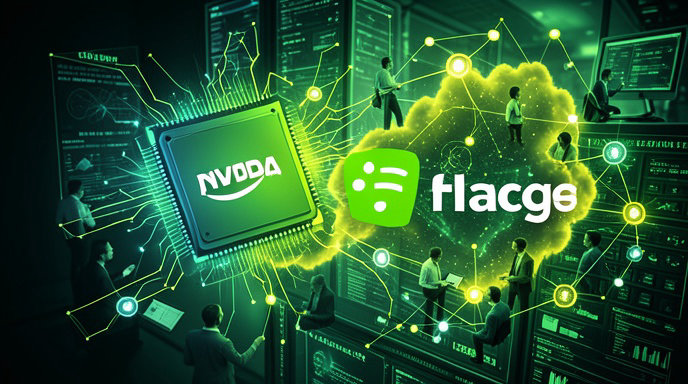
A major shakeup may be coming to the AI industry. Unverified reports suggest Nvidia is preparing to acquire Hugging Face, the New York-based platform widely considered the GitHub of AI, in a deal valued at approximately $12.9 billion.
As of September 3, 2026, neither Nvidia nor Hugging Face has issued an official press release or regulatory filing confirming the transaction, and independent verification is still pending. The reports, which have gained traction across tech media and social platforms, describe a deal that would rank among the largest AI acquisitions to date.
Hugging Face, last valued at $4.5 billion after its $235 million Series D in 2023, has grown into essential infrastructure for modern AI. Its Hub now hosts more than 3 million models, datasets, and demos, and serves a community of over 18 million developers, researchers, and enterprises who use it to build, share, and deploy open-source and proprietary AI systems.
If the $12.9 billion price tag is accurate, it would represent a nearly 3x markup on Hugging Face's last known valuation — a sign of both the platform's strategic importance and the premium Nvidia may be willing to pay to control it.
Why Nvidia Would Want Hugging Face
On the surface, Nvidia makes chips. In reality, Nvidia has spent the last decade building an unassailable AI empire. Its GPUs power the vast majority of AI training workloads, and its CUDA software platform locks developers into its ecosystem. Acquiring Hugging Face would be the next logical — and most aggressive — step in that vertical integration strategy.
First, it’s about owning the distribution layer. While Nvidia dominates where models are trained, Hugging Face dominates where models are discovered, shared, and deployed. Every day, thousands of developers push models to the Hub and pull them via its Transformers library and Inference API. Owning that funnel would give Nvidia direct insight into what models are trending, what developers need, and where the market is heading.
Second, it’s about software and services revenue. Nvidia has been pushing hard to diversify beyond hardware with offerings like DGX Cloud, NIM microservices, and AI Enterprise. Hugging Face’s enterprise products, including Inference Endpoints, Spaces, and its on-premise solutions, would give Nvidia an immediate, developer-loved SaaS layer to complement its hardware.
Finally, it’s about data and defensibility. In an era where model efficiency and ecosystem lock-in matter as much as raw compute, controlling the central repository for open-source AI would create a powerful flywheel: more developers on Hugging Face means more workloads optimized for Nvidia hardware, which in turn attracts more developers.
What It Could Mean for Open-Source AI and Developers
This is where the potential deal gets complicated. Hugging Face’s entire brand is built on openness, neutrality, and community trust. It hosts models from virtually every major player — including Meta’s Llama, Google’s Gemma, Microsoft’s Phi, and countless independent researchers — regardless of what hardware they run on.
The immediate fear among developers is platform neutrality. Would a Nvidia-owned Hugging Face continue to give equal treatment to models and tools optimized for competitors like AMD, Intel, or emerging AI chip startups? Would the platform subtly prioritize integration with Nvidia’s ecosystem, from CUDA to TensorRT and NIM, over others?
For the open-source community, the stakes are even higher. Hugging Face has been a staunch advocate for open science, providing free hosting, open libraries, and governance for the community. While Nvidia has contributed to open-source projects, its core business is proprietary and closed. Developers will be watching closely for any changes to terms of service, pricing for private repos and inference, or the openness of the Hub itself.
That said, there is a bullish case. With Nvidia’s resources, Hugging Face could scale faster, offer more generous free compute, improve enterprise-grade security and reliability, and accelerate innovation in model hosting and deployment. For startups and researchers who rely on the platform daily, deeper integration with Nvidia’s accelerated computing stack could mean faster, cheaper inference.
The Competitive Fallout: A Shot Across the Bow
If confirmed, this acquisition would send shockwaves through the AI infrastructure wars.
For hyperscalers like Microsoft, Amazon Web Services, and Google Cloud, Hugging Face is a crucial but neutral partner. All three offer one-click integrations with the Hub and host Hugging Face models on their clouds. A Nvidia-owned Hub could become a strategic lever to steer users toward Nvidia-powered clouds or Nvidia’s own DGX Cloud, threatening that delicate balance.
For competitors like AMD and Intel, who are desperately trying to gain ground on Nvidia in AI accelerators, losing a neutral distribution hub would be a major blow. Hugging Face is where developers evaluate whether a model runs well on non-Nvidia hardware — a critical battleground for alternative chipmakers.
It also puts pressure on other AI platforms. Repositories like GitHub, Replicate, and emerging model marketplaces would suddenly be competing with a hardware giant that can bundle distribution, compute, and software into one package. Regulators in the US and EU would also likely scrutinize the deal closely for antitrust concerns, given Nvidia’s already dominant position in AI chips.
What to Watch Next
Until an official announcement arrives, this remains a reported deal, not a done deal. There are several key signals to watch in the coming days and weeks.
First, official confirmation. Investors should look for a joint statement from Nvidia and Hugging Face, followed by an 8-K filing if the deal is material. Second, the terms. Is it all-cash, cash-and-stock, and what happens to Hugging Face’s leadership team, including CEO Clem Delangue? Retention of the founding team would be critical for maintaining developer trust. Third, regulatory review. A deal of this size and strategic importance would almost certainly face review from the FTC and European Commission.
For now, developers don’t need to panic or migrate, but they should stay informed. The core promise of Hugging Face — that AI should be open, collaborative, and accessible — will be tested like never before if it becomes part of the world’s most valuable chip company.
Whether this reported $12.9 billion bet pays off will depend on one thing: can Nvidia own the town square of AI without destroying what made everyone want to gather there in the first place?

Get All The Latest Updates Delivered Straight To Your Inbox For Free!