
Ollie Bets on Privacy-First AI to Win the Family Assistant Race
TL;DR
- Ollie, a new family-focused AI assistant, is making privacy its core selling point by promising never to use family data for AI training or share it with third parties.
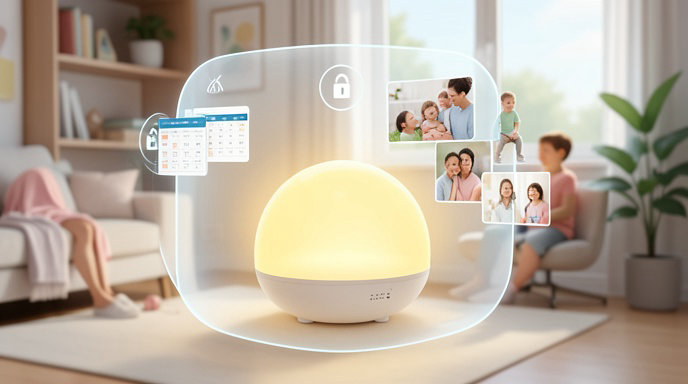
- Instead of cloud-based learning, Ollie relies on on-device processing, end-to-end encryption, and a private family data vault to handle sensitive everyday information like schedules, health notes, and kids' activities.
- Analysts say the privacy-first approach could be a major differentiator against giants like Amazon, Google, and OpenAI, but Ollie will need to prove it can match rivals on features and performance without compromising its promise.
A Crowded Market Gets a Privacy Challenger
The AI assistant market has never been more crowded. From Amazon's Alexa and Google Assistant to ChatGPT, Siri, and a wave of new generative AI companions, every major player is racing to become the default helper for the modern household. Now, a newcomer named Ollie is trying a different tactic to stand out: instead of promising to be smarter or faster, it's promising to be more private.
Ollie is positioning itself explicitly as a family-focused assistant — designed not for individual power users, but for busy households juggling calendars, homework, meal planning, health reminders, and countless sensitive daily details. In a landscape where trust is eroding over how tech companies collect and use personal data, Ollie's bet is that privacy itself can be the killer feature.
What "Privacy-First" Actually Means
According to the company, Ollie's privacy model is built on three core commitments that directly address common concerns parents and families have about AI in the home.
First, Ollie says it will not use customer data to train its AI models. While many leading assistants use anonymized conversations and user interactions to improve future versions of their systems, Ollie claims family data stays entirely out of the training loop.
Second, the company pledges not to share or sell personal information to third parties or advertisers. That includes everything from location data and shopping lists to children's voice recordings and school schedules.
Third, Ollie is emphasizing where data is processed and stored. The assistant is designed to handle as much as possible directly on-device, with sensitive information kept in an encrypted private vault that only the family can access. When cloud processing is necessary, the company says data is encrypted end-to-end and automatically deleted after the task is complete, rather than retained for analytics.
It's an approach that aims to solve the paradox of the helpful assistant: the more useful an AI is for family life, the more intimate data it needs — and the more hesitant families may be to hand that data over.
Why Families Are the Battleground
Ollie's focus on families is strategic. Households represent one of the most data-rich and privacy-sensitive environments for any AI product. An assistant that manages a family calendar knows where your kids are after school. One that helps with grocery shopping and health tracking knows about allergies, prescriptions, and routines.
Surveys consistently show that parents are among the most concerned about AI data collection, especially when it involves children. High-profile incidents involving voice assistants accidentally recording private conversations or data being used for targeted ads have only deepened that skepticism.
By making privacy a brand identity rather than a footnote in a terms-of-service agreement, Ollie is hoping to turn that anxiety into loyalty. The message is simple: you don't have to trade your family's privacy for convenience.
Can a Privacy Promise Beat the Tech Giants?
The big question is whether privacy alone is enough to win. Rivals like Amazon, Google, Apple, and OpenAI already have massive advantages in ecosystem integration, third-party app support, and raw AI capabilities built on vast training datasets.
Ollie's challenge will be to prove that a privacy-first model doesn't mean a less capable assistant. On-device processing and a refusal to learn from user data can limit personalization and make it harder to improve the AI quickly. Families will expect Ollie to still understand natural language, anticipate needs, and connect seamlessly with smart home devices, calendars, and school apps — all without the data harvesting that powers those features elsewhere.
Privacy advocates have largely praised the move, calling it a necessary correction in an industry that has normalized surveillance as the price of helpfulness. Industry analysts are more cautious, noting that consumers often say they value privacy but ultimately choose products based on price and performance.
Ollie is betting that for families, that calculus is changing. If it can deliver an assistant that is both genuinely useful and demonstrably trustworthy — with transparent controls that let parents see, edit, and delete what Ollie knows — it may have found the wedge it needs to break into a market dominated by giants.
For now, Ollie hasn't just launched another AI assistant. It has launched a test of whether, in 2026, privacy can still be a competitive edge.

Get All The Latest Updates Delivered Straight To Your Inbox For Free!