
OpenAI Launches GPT-6 Sol and Luna: Cheaper, Smarter Models Powered by Astra
TL;DR
- OpenAI has launched GPT-6 Sol and Luna on its new Astra foundation, with Sol as the flagship for complex reasoning and Luna as a fast, ultra-cheap model for high-volume apps.
- Both models promise major drops in cost and hallucinations, with up to 40% lower API pricing, 1M-token context, and improved factuality and multimodal performance.
- For developers, the release means cheaper scaling and simplified routing, intensifying the AI race with Google, Anthropic, and open-source rivals.
What Just Happened
OpenAI has officially taken the wraps off its next generation of artificial intelligence with GPT-6 Sol and Luna. Announced this week, the pair marks the debut of Astra, OpenAI's new unified foundation architecture designed to replace the fragmented training and deployment stack behind GPT-5.
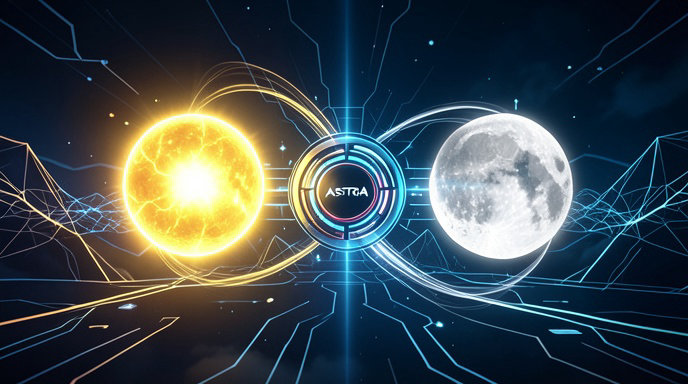
Instead of a single one-size-fits-all model, OpenAI is going with a dual-track strategy. Sol is the heavyweight, built for deep reasoning, coding, science, and agentic workflows. Luna is the lightweight speedster, optimized for real-time chat, search, voice, and mass-market consumer apps where latency and cost matter more than raw brainpower.
In a briefing, OpenAI framed the launch simply: smarter models that make fewer mistakes and cost a lot less to run.
Meet Sol and Luna: Two Models, Two Missions
GPT-6 Sol is positioned as OpenAI's most capable model ever. The company says Sol delivers PhD-level performance in math, software engineering, and long-form reasoning, with particular gains in multi-step planning and tool use. It can autonomously chain API calls, browse, write and execute code, and self-correct over long sessions.
GPT-6 Luna, by contrast, is all about efficiency. OpenAI claims Luna matches GPT-5-level intelligence on most everyday tasks while running nearly three times faster and at a fraction of the price. It is designed to power ChatGPT's default experience, mobile voice assistants, customer support bots, and embedded devices.
Both models launch with full multimodal support for text, images, audio, and video input, with native speech-to-speech output for more natural voice conversations.
Under the Hood: The Astra Foundation
The real story behind the launch is Astra. Described by OpenAI as a modular, mixture-of-experts foundation, Astra allows Sol and Luna to share core knowledge and safety systems while scaling compute up or down depending on the task.
Key technical upgrades OpenAI is highlighting include a 1 million token context window as standard, significantly improved memory for long conversations and large codebases, and a new reasoning engine that dynamically allocates more thinking time for harder problems.
Most importantly, Astra introduces a rebuilt factuality layer. OpenAI says internal evaluations show a 55% reduction in hallucinations for Sol compared to GPT-5 Pro, plus far better citation accuracy and instruction-following. Luna also sees a 35% drop in factual errors despite its smaller size.
Cheaper, Faster, and Developer-First
For developers, price may be the biggest headline. OpenAI confirmed API pricing cuts of up to 40% for Luna and around 20% for Sol compared to equivalent GPT-5 tiers, alongside 2x to 3x faster token throughput and lower latency.
The company is also rolling out automatic model routing in the API, letting developers set a quality, speed, and budget preference and have OpenAI shift traffic between Sol, Luna, and distilled variants in real time. Other developer perks include persistent project memory, improved structured outputs and JSON mode, expanded function calling for agents, and cheaper batch processing for large-scale workloads.
Early partners in customer service, coding, and healthcare are already reporting major cost savings by swapping high-volume GPT-5 tasks to Luna while reserving Sol for complex edge cases.
What It Means for the AI Race
The GPT-6 launch lands at a pivotal moment. Google is pushing Gemini 3, Anthropic is scaling Claude 4, and open-source labs like Meta, Mistral, and DeepSeek are closing the gap with powerful, low-cost models.
By splitting the lineup into Sol for power and Luna for price, OpenAI is fighting on both fronts at once. Analysts say Luna is a direct shot at Google and Anthropic's fast, cheap workhorse models, while Sol is meant to defend OpenAI's crown in enterprise reasoning and autonomous agents.
If Astra delivers on its promise of cheaper training and deployment, OpenAI could update models more frequently and fend off open-source pressure. The next battle, experts say, will not just be about who is smartest, but who can deliver reliable intelligence at internet scale without breaking the bank.
Availability and What's Next
Starting today, Luna is rolling out as the default for free and Plus ChatGPT users, with Sol available for Pro, Team, and Enterprise tiers. Both models are live in the API, with general availability expected globally over the coming weeks.
OpenAI teased that Astra will also power future robotics, video generation, and real-time agent products later this year. For now, the message is clear: the GPT-6 era has begun, and it is designed to be everywhere, faster and cheaper than ever before.

Get All The Latest Updates Delivered Straight To Your Inbox For Free!