
Qualcomm Bets $70M on Ultrahuman to Turn Smart Rings Into AI Computers
TL;DR
- Qualcomm has led a $70 million funding round in Indian health-tech startup Ultrahuman to co-develop a next-generation smart ring built on Qualcomm's low-power chipsets.
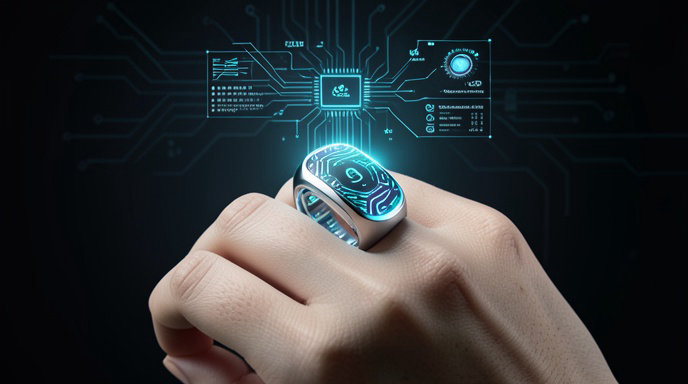
- The partnership positions the smart ring as an always-on AI computer, moving ambient health tracking and on-device AI processing off the wrist and onto the finger.
- Ultrahuman says the capital will accelerate global expansion and product development as it targets a $200 million annualized revenue run rate by January 2027.
Why Rings Are Suddenly Interesting to Chipmakers
For years, the smartwatch has been the default wearable computer. But watches are bulky, power-hungry, and still largely tethered to the phone. Rings offer something different: they are invisible, worn 24/7, and sit on one of the best places on the body to capture continuous health signals.
That is exactly why Qualcomm is interested. The chip giant sees the finger as the next frontier for ambient computing. A ring has direct access to arterial blood flow, skin temperature, and motion data with far less noise than a wrist-worn device. If you can put enough compute power into a tiny, ultra-efficient chip, you can turn that stream of biometric data into real-time, on-device AI insights without needing to ping the cloud or drain a battery in hours.
For Qualcomm, which has dominated smartphones and is now pushing hard into wearables, AR glasses, and edge AI, backing Ultrahuman is a bet that the next personal computer won't be something you look at - it will be something you wear and forget about.
Inside the $70 Million Bet
The $70 million round, backed by Qualcomm Ventures, marks one of the largest recent investments in the smart ring category. Ultrahuman, best known for its Ring AIR and its metabolic health platform, has built a reputation for combining hardware with a deep software stack focused on sleep, recovery, stress, and metabolic fitness.
While full terms of the deal have not been disclosed, the strategic nature of the investment is clear. This is not just capital. Ultrahuman will get direct access to Qualcomm's next-generation ultra-low-power processors and connectivity platforms, allowing it to build a ring that does more processing on the finger itself.
That means faster insights, better privacy through on-device AI, and significantly improved battery life - three of the biggest pain points for current smart rings. Instead of just collecting data and syncing it to an app later, the next Ultrahuman Ring is expected to function as an autonomous AI health computer.
From Tracker to AI Computer
The current generation of smart rings are primarily passive trackers. They log your sleep, heart rate variability, and activity and show you a score the next morning. The vision Qualcomm and Ultrahuman are pitching is far more active.
Imagine a ring that acts as a real-time AI health coach. Using on-device machine learning, it could detect early signs of illness from temperature deviations, nudge you to adjust your breathing when stress spikes, optimize your caffeine and workout windows based on your circadian rhythm, and do it all without needing your phone nearby.
By leveraging Qualcomm's expertise in edge AI - the same technology powering AI PCs and on-device generative AI on phones - the ring could process sensitive health data locally. That reduces latency and keeps personal health data off the cloud, a critical advantage as consumers become more privacy-conscious.
The move also signals a broader shift in wearables. As AI models become smaller and more efficient, the need for a large screen or a powerful phone connection diminishes. The most useful computer might be the one that quietly understands your body and context in the background.
Ultrahuman's $200 Million Run Rate Ambition
For Ultrahuman, the funding is rocket fuel for an already aggressive growth plan. The Bengaluru-based startup has set a target of hitting a $200 million annualized revenue run rate by January 2027.
The company plans to get there through three levers: global retail expansion, particularly in the US and Europe where the Oura Ring has dominated; a deeper subscription platform that layers personalized health insights on top of its hardware; and the launch of this new Qualcomm-powered flagship ring.
Ultrahuman's ecosystem approach is key to that goal. Unlike pure hardware players, it monetizes through its app platform, including Ultrahuman M1 for continuous glucose monitoring and its Blood Vision biomarker testing service. The ring acts as the entry point and daily retention engine for that broader metabolic health universe. A more powerful, AI-driven ring makes that ecosystem stickier and justifies a premium subscription.
What This Means for the Future of Wearable AI
Qualcomm's investment is a strong validation that smart rings are moving from niche biohacker gadget to mainstream computing platform. The global smart ring market is still small compared to smartwatches, but it is growing rapidly as consumers look for less intrusive, more comfortable wearables.
If Qualcomm can deliver a chip that makes rings truly intelligent and autonomous, it could unlock a new category of AI wearables that compete directly with watches and even phones for daily relevance. Competitors like Oura, Samsung, and Apple are all watching closely.
The race is no longer just about who can make the smallest sensor. It is about who can put the smartest AI on your finger.

Get All The Latest Updates Delivered Straight To Your Inbox For Free!