
Stolen Passwords Expose America's Water Systems to Major Hacking Threat
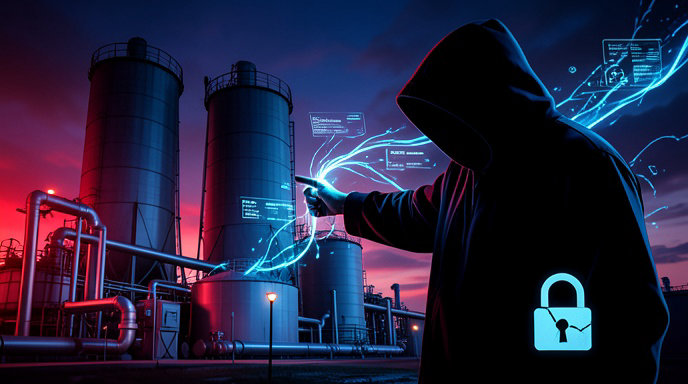
TL;DR
- Cybercriminals are actively using stolen and leaked credentials—often from unrelated data breaches—to log into operational technology (OT) systems at U.S. water utilities, with at least one confirmed intrusion linked to a reused password.
- Many water providers still run legacy, internet-facing control systems with no multi-factor authentication (MFA), making them unusually easy targets compared to other critical infrastructure sectors.
- Federal agencies and security researchers warn that the next attack could go beyond data theft, potentially manipulating chemical dosing or disabling pumps, posing a direct threat to public drinking water safety.
The Credential Goldmine: How Hackers Walk In the Front Door
In late 2025, a routine security audit at a mid-sized municipal water utility in the Midwest uncovered something alarming: an attacker had been inside the plant’s supervisory control and data acquisition (SCADA) system for 11 days. The intruder didn’t exploit a zero-day vulnerability or breach a firewall. They simply used a username and password that had been leaked in a 2021 breach of a completely unrelated fitness app—credentials that the plant’s senior operator had reused for both his personal account and the utility’s remote access portal.
That incident is not an outlier. According to a joint advisory issued by the Cybersecurity and Infrastructure Security Agency (CISA), the FBI, and the Environmental Protection Agency (EPA) in early 2026, researchers have identified at least 47 U.S. water utilities where valid, compromised credentials are currently circulating on criminal forums—credentials that map directly to internet-exposed remote access points. The advisory calls this the “single most persistent and preventable threat” facing the sector.
Why Water Systems Are Still Using Passwords Alone
The core problem is a mismatch between the sophistication of attackers and the aging infrastructure of water providers. Many municipal utilities were designed decades ago, when the only network connection was a phone line to a pager. Today, those same plants have been retrofitted with internet-connected remote monitoring for efficiency, but the security layers did not come along.
A CISA field assessment of 100 utilities in 2025 found that 68% still rely on single-factor authentication for remote access. Only 12% had enforced MFA on all operator accounts. Even more concerning: 31% of the utilities had at least one account with a password that had appeared in a known breach database (like HaveIBeenPwned), and 9% were using default credentials from the original equipment manufacturer—many of which are publicly documented in hacking forums.
“The water sector is in the position the energy sector was in 2015,” said a senior ICS security researcher at Dragos in a recent briefing. “They’ve been told to patch and change defaults, but operational continuity takes priority. A plant manager will not take a pump offline for a password rotation if it risks a pressure drop. So the passwords stay.”
The Real-World Impact: From Espionage to Potential Poisoning
So far, the confirmed intrusions have largely been “smash-and-grab” operations—attackers stealing customer billing data or planting ransomware that locks control screens. But researchers warn the threat is escalating. In a proof-of-concept demonstrated at the 2025 ICS Cyber Security Conference, a researcher used leaked credentials to access a real (but decommissioned) water treatment plant’s PLC logic. Within 40 minutes, they had modified the chemical dosing algorithm to drastically increase chlorine levels—a change that would have been invisible to operators until water quality sensors flagged a violation.
The FBI has noted an increase in “hacktivist” groups targeting water utilities specifically for political messaging. In one case in Texas, a group claimed to have accessed a pump station’s controls and briefly altered the pressure setpoints, causing a minor water main burst. While no public health crisis has occurred yet, the agency’s 2026 threat assessment lists “deliberate contamination or service disruption via compromised credentials” as the top deliberate threat to U.S. critical infrastructure.
The Looming Threats: What’s Next
Security researchers point to three converging trends that will make the problem worse before it gets better:
- AI-Powered Credential Stuffing: Attackers are no longer manually trying passwords. Automated tools can test thousands of leaked credential pairs against a single utility’s VPN portal in minutes. CISA has observed a 300% increase in brute-force attempts against water sector remote access points since Q3 2025.
- The Rise of “Living Off the Land” OT Attacks: Once inside via valid credentials, attackers are increasingly using native SCADA functions (like remote setpoint changes) rather than deploying malware. This makes detection much harder because the activity looks like normal operator behavior.
- The “Cyber-Physical” Ransomware Shift: Traditional ransomware encrypts files. Newer strains targeting water utilities threaten to disable lift station pumps or open valves unless a ransom is paid. This is a direct physical extortion threat, and valid credentials are the initial entry vector.
What’s Being Done—and Why It’s Not Enough
The EPA has begun using its enforcement authority under the Safe Drinking Water Act to mandate cybersecurity improvements, including MFA and password hygiene. In November 2025, the agency issued its first administrative order against a utility in Pennsylvania for failing to address known credential exposures. However, the sector is fragmented: there are over 50,000 community water systems, many serving fewer than 500 people with a single part-time operator who has no IT training.
CISA has also released a free “WaterISAC Credential Checker” tool that allows utilities to cross-reference their account lists against known breach dumps. But adoption is slow. A survey by the American Water Works Association in December 2025 found that only 22% of utilities had run the tool.
The Bottom Line: A Preventable Crisis
The uncomfortable truth is that the biggest vulnerability in America’s water infrastructure is not a sophisticated exploit—it’s a reused password. Until utilities treat credential hygiene with the same urgency as a broken pump, the risk of a catastrophic, life-threatening attack remains high. The researchers’ warning is clear: the next major water crisis may not be a drought or a chemical spill, but a cybercriminal logging in with a password stolen from a dating app.

Get All The Latest Updates Delivered Straight To Your Inbox For Free!