
Tesla Opens Cybercab Fleet Sales to Future Robotaxi Operators
TL;DR
- Tesla has quietly published an official inquiry form for businesses interested in buying the Cybercab in bulk, signaling its first direct-to-fleet sales push for the autonomous two-seater.
- The move suggests Tesla is confident in a late 2026 production ramp at Giga Texas and is laying the groundwork for a decentralized robotaxi network beyond its own Tesla-owned fleet.
- For entrepreneurs, the program offers a chance to own and operate a self-driving taxi business on Tesla's platform, but regulatory approval for unsupervised operation and details on pricing and servicing remain the biggest unknowns.
Tesla's Robotaxi Pitch Just Got Real
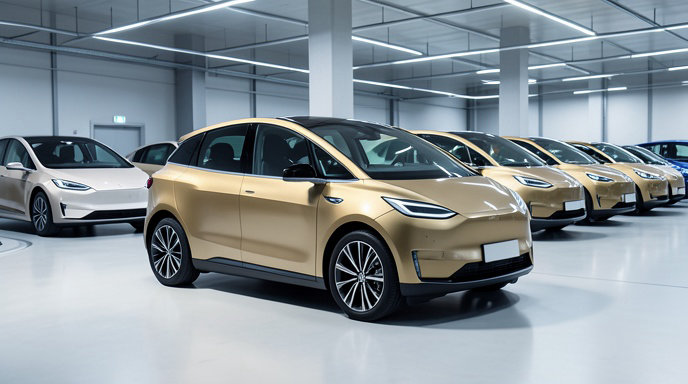
Tesla is no longer just talking about a robotaxi future — it's taking names. The company has launched a new initiative to sell its purpose-built autonomous vehicle, the Cybercab, directly to fleet operators, complete with a live, official form for interested buyers to apply.
Spotted on Tesla's website in late August 2026, the form marks the clearest sign yet that Tesla intends to let outside businesses — not just Tesla itself — own and operate fleets of Cybercabs. It's a major shift from the original vision of a Tesla-owned-and-operated network and opens the door for entrepreneurs to run their own self-driving taxi services.
The Form That Started It All
The inquiry portal, listed under Tesla's Cybercab section, is straightforward but telling. It invites "fleet operators, transit agencies, and business owners" to express interest in acquiring multiple Cybercabs.
Applicants are asked to provide company details, intended fleet size, target operating geography, charging infrastructure plans, and intended use case — whether that's ride-hailing, hotel and airport shuttles, campus transit, or last-mile delivery. Tesla also asks about timeline expectations, indicating it is actively qualifying and prioritizing early partners.
There is no public configurator, pricing sheet, or guaranteed delivery date attached to the form. Instead, Tesla frames it as an early-access program, with its team reaching out to qualified applicants to discuss next steps. That approach mirrors how Tesla handled early Semi and Cybertruck fleet reservations.
What Tesla Is Actually Selling
The Cybercab itself remains unlike any other Tesla. Unveiled in October 2024, it's a sleek, two-seat coupe with no steering wheel, no pedals, and butterfly doors. It's designed from the ground up for autonomy, relying entirely on Tesla's Full Self-Driving (FSD) software and a camera-based vision system, with no lidar.
Key features Tesla has highlighted include wireless inductive charging — eliminating the need for a human to plug in — an ultra-efficient powertrain targeting the lowest per-mile cost in the industry, and a minimalist, easy-to-clean cabin built for high-utilization fleet duty. Elon Musk has repeatedly said the target price will be under $30,000, a figure that would dramatically undercut any other autonomous vehicle on the market if achieved.
For fleet buyers, the pitch is not just the car, but the ecosystem: the vehicle, the software, the charging, and access to Tesla's upcoming ride-hailing platform, often referred to as the Tesla Network, which will handle dispatch, routing, and payments.
What Fleet Sales Signal About Production
The timing of the fleet form is arguably more important than the form itself. For months, Tesla has reiterated that Cybercab volume production is slated to begin in 2026 at Giga Texas, using its new "unboxed" manufacturing process.
Opening a fleet order book now suggests Tesla is confident enough in that timeline to start lining up commercial customers. The company would not want to solicit business plans and operating cities if production were still years away. Industry watchers see this as a strong indicator that pilot production lines are progressing and that Tesla expects to have early units available for fleet validation in late 2026, with broader scale-up in 2027.
It also signals how Tesla plans to scale its robotaxi ambitions. Instead of bearing the full capital cost of deploying millions of robotaxis itself, Tesla can offload vehicle ownership to third-party operators while still collecting revenue from software, servicing, and network fees. It's a classic platform play — Tesla provides the hardware and AI, others provide the capital and local operations.
The Big Question: Unsupervised Autonomy
There is one massive caveat hanging over the entire program: regulation. The Cybercab is designed to operate without a driver, but Tesla's FSD still requires regulatory approval for fully unsupervised, driverless operation in most U.S. states.
Tesla is currently operating supervised robotaxi pilots in Austin and the Bay Area, and has stated it aims to remove safety drivers as it validates its system. Fleet buyers who sign up today are essentially betting that Tesla will solve both the technical and legal hurdles for Level 4 autonomy in their target markets within the operational life of their vehicles.
Until the National Highway Traffic Safety Administration and state regulators grant exemptions for a vehicle with no manual controls, large-scale commercial deployment cannot legally begin.
What This Means for Future Robotaxi Operators
If you have dreamed of running your own autonomous taxi company, this is the closest Tesla has come to saying you can.
The opportunity is compelling. A low-cost, electric, purpose-built robotaxi with access to Tesla's software and network could theoretically offer per-mile operating costs far below a human-driven Uber or Lyft. Tesla has previously claimed the Cybercab could operate for as little as $0.20 to $0.30 per mile, which would be transformative for ride-hailing economics.
But entrepreneurs should go in with eyes open. Tesla has not yet disclosed fleet pricing, warranty and maintenance structures for high-mileage autonomous use, insurance requirements, or the revenue split for rides booked through the Tesla Network. Questions also remain about fleet management tools, remote assistance, cleaning and charging logistics, and what happens during software downtime.
In short, Tesla is now officially building its bench of robotaxi partners. The form is live, the intent is clear, and the production clock is ticking. For cities, startups, and transit operators willing to bet early on Tesla's autonomy roadmap, the chance to reserve a place in line has finally arrived — even if the driverless future is still waiting for its green light.

Get All The Latest Updates Delivered Straight To Your Inbox For Free!