
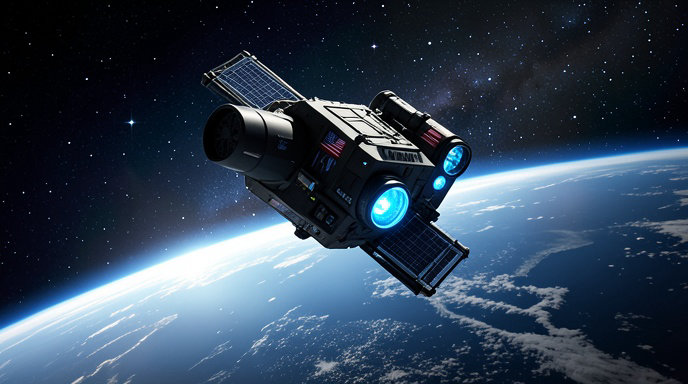
US Military Confirms First Space Weapon Deployed in Earth Orbit
TL;DR
- As of September 16, 2026, the U.S. military has not publicly acknowledged deploying an offensive weapon in Earth's orbit, despite viral claims suggesting a first-ever confirmation.
- What the Pentagon has confirmed is accelerating work on space-based missile defense and military spaceplanes, including the Golden Dome initiative and the X-37B Orbital Test Vehicle, neither of which is classified as a deployed orbital weapon.
- The real arms race in space is focused on anti-satellite capabilities, jamming, rendezvous operations, and proposed space-based interceptors, raising major concerns about the Outer Space Treaty and global security.
What Sparked the Claim
In recent weeks, social media posts and speculative blogs have claimed the Pentagon finally admitted to putting a weapon in orbit. No Department of Defense press release, briefing transcript, Space Force statement, or White House announcement as of September 16, 2026 supports that claim.
What U.S. officials have actually discussed publicly is a shift in tone: from calling space a peaceful domain to calling it a warfighting domain that must be defended. That rhetorical shift, combined with new missile-defense plans that would put interceptors in space in the future, has been misinterpreted as confirmation of a weapon already deployed.
What Was Actually Deployed
No confirmed U.S. orbital weapon system is currently in Earth's orbit. What is in orbit and publicly acknowledged includes:
Military communications, missile-warning, GPS, and reconnaissance satellites operated by the U.S. Space Force and National Reconnaissance Office.
The X-37B Orbital Test Vehicle, an uncrewed, reusable Boeing-built spaceplane operated by the Space Force. It has flown multiple long-duration classified missions testing new sensors, orbital maneuvers, and space environment technologies. The Pentagon says it is a test platform, not a weapon.
Experimental payloads for missile tracking, laser communications, and proximity operations. These are dual-use technologies that could support future defense systems but are not publicly described as weapons.
The U.S. remains a party to the 1967 Outer Space Treaty, which bans weapons of mass destruction in orbit but does not explicitly ban all conventional weapons. The Pentagon has historically stated it seeks to deter conflict in space, not initiate weaponization.
Why The Pentagon Is Talking About Space Weapons Now
There are three reasons disclosure talk is accelerating, even without a deployment:
Golden Dome Missile Defense: Announced in 2025, the Golden Dome concept calls for a next-generation homeland missile shield that would eventually include space-based sensors and interceptors to destroy missiles in boost phase. The Congressional Budget Office and Pentagon have described this as a future architecture, with major technical, cost, and timeline hurdles. No space-based interceptor has been launched or deployed.
Russian and Chinese Activity: U.S. Space Command has repeatedly warned about Russian Cosmos satellites conducting rendezvous and proximity operations near U.S. assets, and about China's rapidly expanding on-orbit servicing, robotic arm, and anti-satellite test programs. In 2024-2025, U.S. officials also warned Russia was developing a space-based nuclear anti-satellite capability, which Moscow denied. Washington has used these warnings to justify more funding for resilient satellites and counter-space defenses.
Declassification Strategy: The Space Force has adopted a policy of revealing more about adversary threats and U.S. defensive tools, such as ground-based jammers, cyber defenses for satellites, and maneuverable spacecraft, to deter attacks. This greater transparency is often mistaken online for admission of orbital weapons.
What It Means For Global Security
Even without a confirmed U.S. first, experts say space is already weaponized in practice.
Most current space weapons are not in orbit — they are on Earth. These include direct-ascent anti-satellite missiles tested by China, Russia, India, and the U.S. in the past, ground-based lasers to dazzle sensors, GPS jammers, and cyberattacks on satellite ground stations. Russia's jamming of satellite signals during the war in Ukraine and repeated cyber intrusions have shown how quickly space services can be disrupted without firing a shot in orbit.
A true U.S. deployment of an orbital interceptor or laser would be a historic break with decades of policy and would likely trigger immediate responses. China and Russia would cite it to justify their own deployments, efforts at the United Nations to ban space weapons would collapse, and commercial operators — from Starlink to weather and science missions — would face higher collision and escalation risks.
For now, analysts describe the situation as a pre-deployment arms race: all major powers are building the pieces, testing the technologies, and laying the legal and political groundwork, but no one has publicly crossed the line of claiming an active weapon stationed in orbit.
What To Watch Next
Key indicators to watch through late 2026 and 2027 include Pentagon budget requests for space-based interceptor prototypes, Space Force test launches under Golden Dome, new X-37B mission details, and any formal policy update on offensive counter-space authorities.
Until a named system, launch date, orbital designation, and official briefing are provided, claims of a confirmed first U.S. space weapon should be treated as speculation, not fact.

Get All The Latest Updates Delivered Straight To Your Inbox For Free!