
AI Is Making Smart TVs Dumb Again to Escape Ads and Tracking
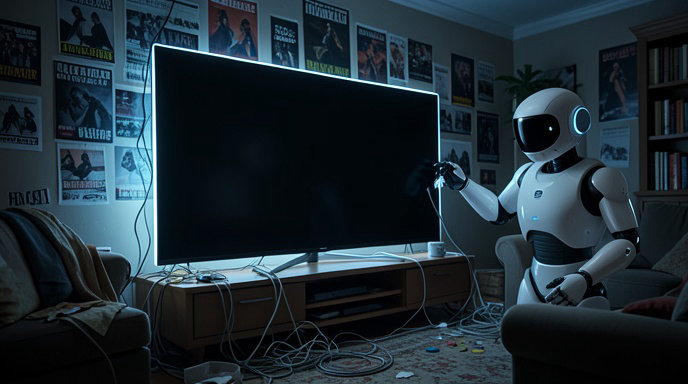
TL;DR
- Frustrated smart TV owners are turning to AI agents and automation tools to bypass bloated home screens, auto-skip ads, and launch streaming apps directly.
- Privacy-focused setups using Pi-hole, custom DNS, and AI-driven debloat scripts are blocking TV telemetry and tracking that can send viewing data every few minutes.
- The "dumb TV" revival is going mainstream as users pair cheap displays with Apple TV, Nvidia Shield, or mini-PCs, using AI to manage and simplify the entire experience.
The $2,000 Billboard in Your Living Room
Your smart TV isn't really yours anymore. Power it on and you're greeted with auto-playing trailers, sponsored rows, app tiles you never installed and can't delete, and a home screen that takes five seconds to load despite gigabit fiber.
According to recent consumer surveys in 2025 and 2026, the average smart TV interface now shows 3 to 5 times more sponsored content than it did in 2020. Roku, Samsung Tizen, LG webOS, Amazon Fire TV, and Google TV all monetize the home screen. It's not just annoying — it's surveillance. Researchers have repeatedly found smart TVs sending screenshots, viewing habits, and device fingerprints to data brokers via Automatic Content Recognition, or ACR, even when users think they've opted out.
For a growing number of power users, the answer isn't to buy a new TV. It's to make their smart TV dumb again — with help from AI.
Meet the De-Bloaters
A new wave of Reddit threads, YouTube guides, and GitHub projects in 2026 focuses on one thing: stripping the smart out.
The tools aren't always labeled AI, but AI agents are doing the heavy lifting. Instead of manually digging through hidden service menus and ADB commands, users are asking ChatGPT, Claude, and local agents to generate custom debloat scripts for their exact TV model.
Type in "Remove all bloatware from TCL QM8 Fire TV without breaking Netflix and Prime" and you get a step-by-step ADB debloat list, the exact package names to disable, and what not to touch. AI coding assistants can scan logcat output to find which process is causing stutter, then write a launcher replacement.
Popular tactics right now include:
- Replacing the stock launcher with open-source alternatives like FLauncher, Projectivy Launcher, or Wolf Launcher, which boot straight to apps with zero ads.
- Using ADB AppControl and Universal Android Debloater NG with AI-generated allow-lists to safely freeze Samsung, LG, and TCL system apps.
- Deploying voice and vision agents that automatically click through setup screens, decline privacy policies, and turn off personalization.
What used to take hours of forum hunting now takes 15 minutes with a chatbot walking you through it.
Blocking the Spies
Speed is only half the battle. The other half is tracking.
Smart TVs are notorious for phoning home. A 2024-2025 traffic analysis study found some models contacting tracking servers thousands of times per day, even in standby mode. That data fuels ad profiles sold across the streaming ecosystem.
The fix gaining steam in 2026 is the AI-managed network block.
Users are installing Pi-hole or AdGuard Home on a $35 Raspberry Pi and letting AI helpers generate blocklists specifically for TV telemetry — Samsung's samsungads.com, LG's lgtvsdp.com, Roku's logs.roku.com, Vizio's viewd ecosystem, and Amazon's massive device-metrics endpoints.
Others are switching their entire home network to privacy DNS like NextDNS or Control D, with AI rules that block ad domains and ACR uploads while whitelisting Netflix, Max, YouTube, and Disney+ so nothing breaks.
New router firmware and apps like Tailscale and Home Assistant are also getting AI assistants built in. Ask "Why is my Hisense TV uploading 200MB overnight?" and the agent will show the blocked queries and suggest a firewall rule.
For the truly fed up, the nuclear option is simple: never connect the TV to Wi-Fi at all.
The Dumb TV Revival
Here's the irony: TV panels have never been better or cheaper. A 65-inch mini-LED 4K 120Hz display that cost $2,500 in 2020 is now under $700. People love the picture. They hate the software.
So they're bypassing it entirely.
The 2026 playbook looks like this: Buy the best panel for the money, ignore the OS, plug in an Apple TV 4K, Nvidia Shield Pro, or $150 mini-PC, and disable the TV's own internet. Enthusiasts are calling it BYOS — Bring Your Own Software.
AI agents make the setup painless. They sync remotes via HDMI-CEC, remap buttons, auto-login to apps, organize Plex and Jellyfin libraries with AI posters and metadata, and even create one-button "Movie Night" routines that dim lights and launch directly into content with no menus.
Sales of commercial signage displays and projectors with no smart OS — like Samsung's Frame alternatives from Sceptre and commercial LG lines — are quietly rising because buyers specifically search for "no ads" and "no tracking."
Why Manufacturers Won't Stop
Don't expect Samsung, LG, Roku, or Vizio to give up. TVs are now sold at or near cost. The real money is post-purchase: ads, app revenue share, and data licensing. Vizio's ad business has been worth more than its hardware business for years, a model everyone copied after Walmart's acquisition.
That's why unskippable home screen video ads, pause-screen ads, and AI-powered contextual ads that scan what you're watching are expanding in 2026, not shrinking. Manufacturers pitch them as personalization. Viewers experience them as slowdown — smart TV processors are often 3-4 years behind phones, so every extra ad layer makes navigation worse.
Regulators in the US and EU are starting to probe whether opting out of tracking is deliberately confusing, but enforcement is slow.
How to Take Back Control Today
You don't need to be a hacker to join the dumb-TV movement. Here's what early adopters recommend:
- Turn off ACR now: On Samsung, it's Viewing Information Services. On LG, it's Live Plus. On Roku and Fire TV, it's under Privacy > Smart TV Experience. Turn off everything, then limit ad tracking and reset your advertising ID.
- Use an external streamer: A $129 Apple TV or $99 ONN 4K Pro box is faster, gets longer updates, and shows far fewer ads than built-in software.
- Block at the network: Even a free NextDNS account with a smart TV tracking list can cut 70-90% of telemetry without breaking apps.
- Try an AI helper: Paste your TV model into your AI assistant and ask for a safe debloat and privacy hardening guide. Always double-check before disabling system packages.
- Don't connect if you don't need to: If you use HDMI devices only, skip Wi-Fi setup completely. No connection means no ads and no uploads.
The future of TV might be less smart, on purpose. As one popular post put it: "I paid for a display, not a data collector with a remote." With AI doing the tedious work of stripping, blocking, and automating, reclaiming that simple, fast screen has never been easier.

Get All The Latest Updates Delivered Straight To Your Inbox For Free!