
Factory AI vs Cognition: CEO Accuses VC Chris Degnan of Spying After Shocking CRO Defection
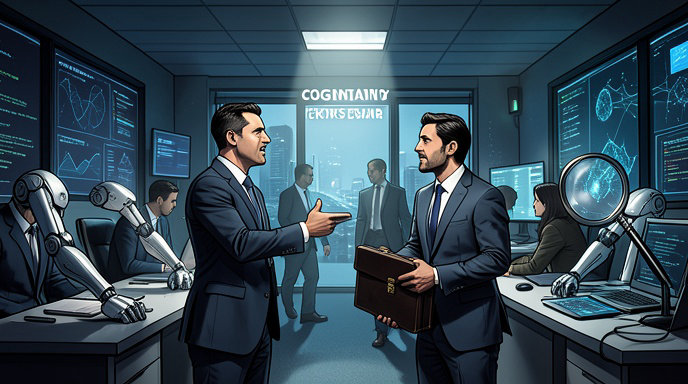
TL;DR
- Factory AI CEO Matan Grinvald publicly accused former board adviser Chris Degnan of spying for rival Cognition after Degnan was announced as Cognition's new Chief Revenue Officer.
- Grinvald claims Degnan sat in on sensitive Factory board and go-to-market meetings while secretly preparing to join Cognition, sparking a heated debate on X over VC conflicts of interest.
- The fallout highlights the escalating AI coding wars between Factory, Cognition, Cursor, and GitHub Copilot as enterprise deals become the next major battleground.
The Post That Started It All
The AI coding world woke up to drama this week when Factory AI CEO Matan Grinvald took to X to torch Chris Degnan, a well-known enterprise sales leader and former Snowflake Chief Revenue Officer.
Grinvald alleged that Degnan had served as a board adviser to Factory, giving him access to confidential product roadmaps, revenue numbers, and enterprise strategy, only to defect to direct rival Cognition as its new CRO.
In a blunt post that quickly went viral, Grinvald suggested Degnan was effectively spying for the competition. He questioned how an adviser with insider access could in good faith take a top executive role at the company's most bitter rival weeks later. The post racked up millions of views within hours, with founders, VCs, and sales leaders piling into the replies.
Who Is Chris Degnan And Why Does This Matter
Degnan is no ordinary hire. As Snowflake's longtime CRO, he helped scale the data giant from pre-IPO to over $3 billion in revenue and became one of the most respected go-to-market operators in Silicon Valley.
After leaving Snowflake, Degnan moved into advising and venture roles, including working closely with AI startups on enterprise sales playbooks. Factory had touted his involvement as a major validation signal — having a Snowflake-caliber sales brain advising on how to sell AI coding agents to Fortune 500 engineering teams.
On Monday, Cognition — the maker of Devin and one of Factory's top competitors — announced Degnan as its new Chief Revenue Officer to lead its enterprise push. That announcement is what triggered Grinvald's public response.
The Spying Allegation Explained
At the heart of Grinvald's accusation is timing and access. According to Grinvald, Degnan was still attending Factory adviser sessions and internal strategy discussions while in talks with Cognition.
The CEO implied this was not just a normal job hop, but a breach of trust. He argued that board advisers see the crown jewels: win-loss rates against Cognition, pricing for large deals, upcoming agent features, and customer pipelines. Taking that knowledge straight to a rival, he said, is indefensible even if no formal NDA was violated.
Supporters of Grinvald were quick to agree, calling it a classic Silicon Valley conflict-of-interest problem where advisers and part-time VCs play both sides of a hot market.
X Erupts: Founders Pick Sides
The response on X, formerly Twitter, was explosive and instantly split into two camps.
On one side, founders and early-stage CEOs rallied behind Grinvald. They argued startups are vulnerable when big-name advisers demand sensitive information without the same fiduciary duties as formal board members. Several prominent founders shared their own horror stories of advisers joining competitors.
On the other side, VCs and operators defended Degnan, calling Grinvald's public callout unprofessional and dangerous. Their argument: advisers are not employees, non-competes in California are largely unenforceable, and top talent has every right to join the rocketship they believe in. Some accused Grinvald of trying to litigate via tweet and discourage future hires to Cognition.
Degnan himself has not posted a lengthy rebuttal, but people close to him pushed back on the spying characterization, saying his advisory role at Factory was informal, time-limited, and ended before Cognition talks got serious.
Cognition Stays Quiet — For Now
Cognition CEO Scott Wu has so far declined to engage directly with the spying claim. The company reposted its CRO announcement celebrating Degnan's hire as a signal it is going all-in on enterprise revenue, positioning Devin not just as a viral coding assistant but as a full software engineering workforce.
That silence is telling. Cognition recently raised at a massive valuation and is racing Factory, Cursor-maker Anysphere, and GitHub to lock in large annual contracts with banks, tech firms, and government agencies. Hiring Degnan is widely seen as its biggest statement yet that the AI coding wars will be won on sales execution, not just benchmarks.
What This Means For The AI Coding Wars
Beyond the personal drama, this fight exposes how high the stakes have become. Factory and Cognition started as research-driven agent labs, but in 2026 they are both transforming into full enterprise sales machines.
Factory has been pushing its Droid agents for large codebase migrations and has landed major customers in tech and finance. Cognition, after acquiring Windsurf earlier this year, now has both Devin and a popular IDE to sell as a bundle. Both need seasoned sales leadership to close seven and eight-figure deals — and there are only a handful of people like Degnan who know how.
The incident is also reigniting a broader reckoning over the VC-adviser model in AI. With every top firm funding multiple competing model and agent startups, founders are increasingly asking: who can you really trust in the boardroom.
Whether this ends in a lawsuit, a quiet settlement, or just lingering bad blood, one thing is clear. The battle for AI-powered software development is no longer just about who has the best model. It is about revenue, relationships, and ruthless competition — and Factory vs. Cognition just became its most personal rivalry.

Get All The Latest Updates Delivered Straight To Your Inbox For Free!