
Federal Judge Rules Flock Is Indiscriminate Mass Surveillance in Fourth Amendment Case
TL;DR
- A federal judge ruled a Virginia sheriff's deputy violated a woman's Fourth Amendment rights by running her license plate through Flock's national database without a warrant or probable cause.
- The court condemned Flock as indiscriminate mass surveillance, ruling its 30-day-plus searchable location history triggers Carpenter protections and requires a warrant.
- The decision could force police departments nationwide to get warrants for historical ALPR searches and fuels growing legal and legislative backlash against Flock.
The Stop That Started It All
What began as a routine license plate lookup has turned into one of the most consequential privacy rulings of the year for automated license plate reader technology.
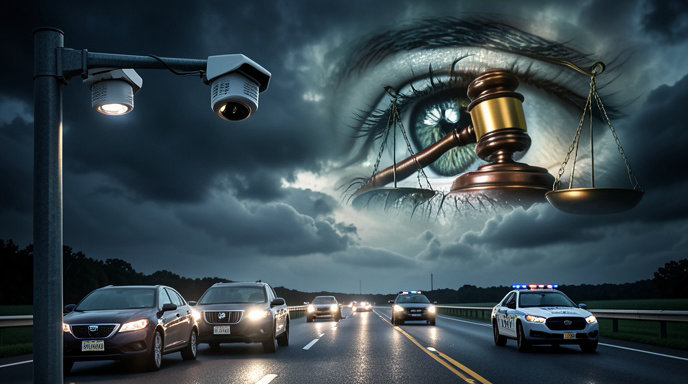
According to court records, a sheriff's deputy in Virginia ran a woman's license plate through Flock Safety's system during a drug-related investigation without a warrant, without probable cause, and without her knowledge. The single query instantly pulled up a detailed, time-stamped map of where her car had been — weeks of movements captured automatically by Flock's network of cameras mounted on street poles, businesses, and neighborhoods across the region.
That history was then used to further investigate and surveil her. She sued, arguing the warrantless search of her location history violated the Fourth Amendment's protection against unreasonable searches.
This week, the federal judge agreed.
In a sharply worded opinion, the court denied the deputy's claim of qualified immunity and held that querying Flock's database to reconstruct a person's past movements is a search under the Fourth Amendment — one that requires a warrant.
Why the Court Called Flock Indiscriminate Mass Surveillance
The most explosive part of the ruling is not just who won, but how the judge described Flock itself.
The court found that unlike a single officer jotting down a plate or even a traditional police ALPR check for a stolen car, Flock creates a vast, searchable dragnet that records everyone, everywhere, all the time.
The opinion highlighted three facts that troubled the court:
First, scale. Flock operates more than 70,000 cameras in over 5,000 communities nationwide, capturing billions of plate reads per year. Every car that passes is photographed, geotagged, and stored — innocent or not.
Second, retention and searchability. Flock stores that data by default for 30 days, and many agencies keep it longer. Any officer with access can type in a plate and instantly rewind a person's life: home, work, church, clinic, protest, bar, partner's house.
Third, indiscriminate collection. The judge wrote that Flock does not target suspects. It targets everyone who drives. That, the court said, is the textbook definition of indiscriminate mass surveillance, fundamentally different from a wanted-vehicle hotlist ping.
In the judge's words, Flock allows police to travel back in time to track anyone, with no judicial oversight. That power, the court concluded, cannot be left to an officer's unbridled discretion.
Carpenter Comes for License Plate Readers
Legal experts say the ruling's power comes from how directly it applies Carpenter v. United States, the landmark 2018 Supreme Court decision that required warrants for long-term cell-site location data.
For years, police and Flock have argued that license plates are public, exposed to plain view, and therefore carry no reasonable expectation of privacy. The judge flatly rejected that.
Citing Carpenter and the mosaic theory of privacy, the court ruled that while one public sighting of a car is not private, the whole of a person's movements over days and weeks reveals an intimate window into their life — political associations, medical care, religious practice, and personal relationships.
The court ruled that accessing more than a day or two of historical Flock data is a search requiring a warrant supported by probable cause. A single real-time alert that a stolen car just passed a camera might be different, the judge noted, but digging through weeks of stored history to build a case is not.
The opinion also distinguished the Supreme Court's older beeper and checkpoint cases, saying Flock's efficiency, persistence, and retroactive power create exactly the kind of too permeating police surveillance the Framers feared.
What This Means for Privacy Advocates
For digital rights groups like the ACLU and the Electronic Frontier Foundation, which filed amicus briefs in the case, the ruling is a watershed.
They have long warned that Flock has quietly built one of the largest civilian tracking networks in U.S. history with almost no laws governing it. Until now, most departments allowed any deputy to run unlimited historical searches for any reason — from a homicide investigation to checking on a neighbor or ex-partner — with only a vague requirement to log a reason.
The judge cited evidence that Flock searches are routinely conducted thousands of times per month in a single county, often without any connection to a serious crime, and that audit logs are rarely reviewed.
Privacy advocates say the ruling validates what they have argued for years: mass collection plus warrantless querying equals unconstitutional search. They hope it will become a model for other federal courts now considering similar challenges in Norfolk, Virginia, Texas, and California.
What This Means for Policing and Flock
For law enforcement, the decision is destabilizing.
Flock has marketed itself as essential crime-solving infrastructure, claiming its cameras help solve everything from carjackings to Amber Alerts and that officers need instant, frictionless access to work effectively. More than 5,000 police agencies now rely on it.
If this ruling stands and spreads, departments would need to get a judge to sign off before running historical Flock searches — a major procedural shift. Real-time hotlist alerts would likely survive, but investigative lookbacks, the feature officers use most, would require probable cause and a warrant.
Flock Safety itself was not a defendant in the case, but the company responded this week defending its system as constitutional and noting the ruling applies only to one officer's conduct, not Flock nationwide. The company pointed to built-in audit logs, access controls, and 30-day deletion policies as privacy safeguards, and said license plates in public carry no privacy right.
Legal analysts expect an appeal, and say a circuit split is now almost inevitable.
A Turning Point for ALPR Law
The ruling does not ban Flock cameras or order them torn down. It does something potentially more powerful: it changes the rules for using the data they collect.
If upheld, police can still collect plate reads, but they cannot search the treasure trove at will. Like cell phone location data, emails, and smart home records before it, historical driving data would join the category of digital evidence that requires judicial approval.
With multiple federal lawsuits against Flock-enabled cities still pending, state legislatures debating ALPR retention limits, and the Supreme Court widely expected to eventually take up an ALPR case, this week's decision may be remembered as the moment the legal tide turned.
For now, one message from the court is clear: just because your car is visible on a public road does not mean the government gets a warrantless time machine for your entire life.

Get All The Latest Updates Delivered Straight To Your Inbox For Free!