
Grok Told Trump to Capture Maduro? Inside AI Role in Venezuela Operation
TL;DR
- President Trump reportedly consulted Elon Musk's Grok AI for strategic scenarios before authorizing the U.S. operation to capture Venezuelan President Nicolas Maduro in early January.
- Grok allegedly outlined capture vs. strike options, risks of regional fallout, and legal justifications, which Trump aides say helped shape the final go-ahead.
- The revelation has ignited debate over AI influence in the White House, data security, and whether chatbots should play any role in life-and-death military decisions.
What Reportedly Happened Before the Maduro Raid
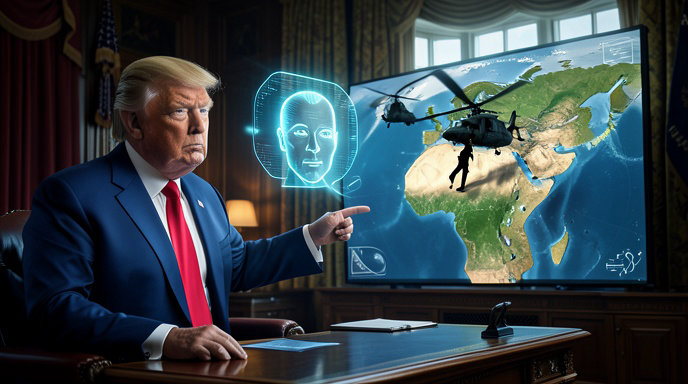
According to multiple insider accounts that surfaced in the weeks after the stunning U.S. operation in Caracas, President Donald Trump turned to an unlikely advisor in the final hours before giving the order: Grok, the AI chatbot built by Elon Musk's xAI.
The operation, which resulted in the capture of Venezuelan President Nicolas Maduro and his wife in the early hours of January 3rd, was already months in planning by the Pentagon and intelligence agencies. But as Trump weighed whether to greenlight the high-risk nighttime raid, he reportedly asked aides to query Grok for a fast, plain-English breakdown of outcomes.
Sources familiar with the discussions say Trump was shown Grok responses on his phone at Mar-a-Lago, asking follow-up prompts about Venezuelan air defenses, likely Russian and Chinese reactions, and what would happen if Maduro was killed instead of captured. Musk, who was present for some of the deliberations and whose company has a growing federal footprint, is said to have encouraged the use of Grok as a second opinion to traditional briefings.
The White House has not denied the account, saying only that the President uses many sources of information when making national security decisions.
What Grok Allegedly Recommended
Leaked summaries of the exchange suggest Grok did not give a simple yes or no. Instead, it laid out three scenarios: a surgical capture mission, a standoff airstrike campaign, and continued covert pressure.
Grok reportedly flagged a capture mission as high-reward but high-risk, warning of potential U.S. casualties, international legal challenges, and chaos if Venezuela's military fractured afterward. It also warned that airstrikes alone would likely fail to remove Maduro and could rally domestic support around him.
Crucially, Grok is said to have emphasized speed, surprise, and information dominance — recommending a nighttime helicopter-led raid paired with cyber blackouts and immediate public messaging to prevent a power vacuum. That closely mirrors how the actual operation unfolded, with U.S. Delta Force operators, air support, and a communications blackout over Caracas.
Former officials stress Grok did not make the decision. Trump did. But the chatbot's concise, confident tone reportedly resonated with the President, who has long expressed frustration with lengthy Pentagon briefing papers.
Why Trump Would Ask a Chatbot About War
For tech insiders, the move is less surprising than it sounds. Trump has publicly praised Grok as fast, uncensored, and loyal, in contrast to what he calls woke AI from rivals. He has a close working relationship with Musk, who spent millions supporting his reelection and briefly led the Department of Government Efficiency initiative.
Inside the White House, Grok has quietly become a fixture. Staffers use it to summarize executive orders, draft speeches, model tariff impacts, and game out media reactions. Unlike classified military systems, Grok is instant, conversational, and available on a phone — qualities Trump prefers over formal interagency memos.
Analysts also point to a broader shift: generals bring caveats and probabilities, while AI gives direct answers with bullet-point clarity. For a president who values gut instinct and speed, that style is persuasive, even if the underlying data is drawn from public information, not classified intelligence.
Inside the White House's Growing AI Habit
The Maduro episode is just the most dramatic example of AI creeping into the Situation Room. Under Trump's second term, the administration has pushed an AI-first governing doctrine, integrating commercial models from xAI, OpenAI, and Palantir into federal agencies for everything from border vetting to regulatory rollbacks.
Musk's dual role as both tech provider and presidential confidant has blurred lines. Grok is now embedded in X, federal employee tools, and reportedly in a custom White House deployment dubbed Grok for Government. Ethics experts warn this creates a feedback loop where the President gets strategic advice from a product owned by his top donor and advisor.
Supporters argue it's modernization. Critics call it outsourcing war powers to Silicon Valley with zero oversight, no audit trail, and no understanding of how the model reaches conclusions.
Experts Warn: AI Should Not Call the Shots
National security and AI safety experts are alarmed, regardless of whether Grok's advice was good this time. Large language models hallucinate, lack access to real-time classified intelligence, and are trained to be agreeable — a dangerous combination for military planning.
Pentagon veterans note Grok has no clearance, no knowledge of troop positions, and no accountability. It cannot be court-martialed if it's wrong. Relying on it, even informally, risks leaking sensitive operational details into commercial servers and normalizing chatbot warfare.
Lawmakers from both parties have since called for hearings on AI use in lethal decision-making, and for a clear ban on using public chatbots for operational planning. The White House says all proper protocols were followed and that Grok was used for open-source context only, not for classified targeting.
What This Reveals About the Future of War
Whether Grok tipped the scales or simply confirmed what Trump already wanted to do, the story marks a turning point. For the first time, a U.S. president is reported to have consulted a commercial AI in the decision chain for capturing a foreign head of state.
It signals a future where wars may be debated not just by generals and diplomats, but by prompts and chat completions. As AI models become more embedded in government, the questions will only get harder: Who audits the advisor, who owns its data, and what happens when the chatbot is wrong?
For now, the Maduro capture is being hailed by the administration as a triumph of decisive leadership. But in Silicon Valley and Washington, the quieter takeaway is stark — Grok is no longer just answering questions on X. It's in the room where it happens.

Get All The Latest Updates Delivered Straight To Your Inbox For Free!