
Jack Dorsey's Bitchat Vanishes From India App Stores After Government Order
TL;DR
- Apple and Google have pulled Jack Dorsey's Bitchat from their India app stores following a government takedown order, making new downloads largely unavailable in the country.
- Officials cite concerns over untraceable, server-less communication that cannot be intercepted or moderated under India's IT laws, though no detailed public order has been released.
- Because Bitchat runs on Bluetooth mesh and is open-source, existing installs still work offline, sparking a wider debate over privacy, censorship, and the future of decentralized messaging in India.
What Happened
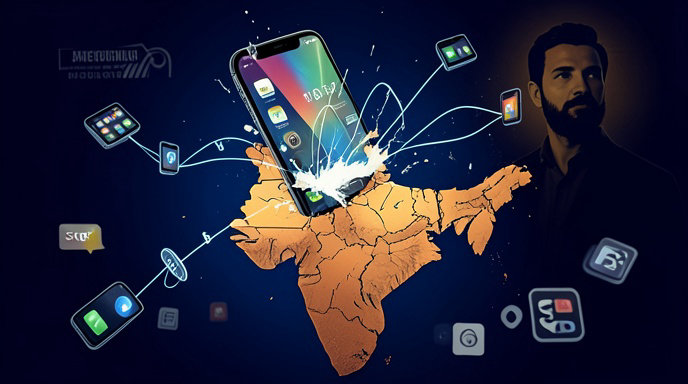
Bitchat has effectively vanished for most smartphone users in India. As of late September 2026, the app no longer appears in search results on Apple's App Store or Google Play Store for users with an Indian account.
The removal follows a directive from the Ministry of Electronics and Information Technology. Both Apple and Google complied with the order, a standard practice under India's Information Technology Act, which allows the government to block access to apps in the interest of sovereignty, security, and public order.
Jack Dorsey has not yet issued a detailed public statement on the India-specific block. The app's developer community on GitHub noted the delisting, confirming it appears to be geo-restricted rather than a global removal.
Why India Moved Against Bitchat
Bitchat, launched by Dorsey in July 2025, is radically different from WhatsApp, Telegram, or Signal. It requires no phone number, no email, no account, and no central servers. Instead, it uses Bluetooth Low Energy mesh networking to relay encrypted messages directly from phone to phone, with Wi-Fi and optional Nostr relays for longer distances.
That architecture is exactly what worries regulators. Indian authorities have grown increasingly focused on traceability under the IT Rules, 2021, which require messaging platforms to be able to identify the originator of a message when ordered by a court or government.
Bitchat cannot comply by design. There is no company server to subpoena, no user database to inspect, and messages disappear by default without passing through an ISP. Government sources cited in local media point to fears that the app could be used to organize protests, spread unverified information, or coordinate unlawful activity without any avenue for lawful interception.
The timing is also significant. India has previously blocked other privacy-focused or protest-linked tools during periods of unrest, and officials have repeatedly stated that anonymity cannot override national security.
How The Restrictions Are Being Enforced
The enforcement so far is focused on distribution, not on the protocol itself.
App Store Removal: Apple has geo-blocked the listing, so Indian Apple IDs cannot download or re-download it. Google has done the same on the Play Store.
No ISP-Level Block Needed: Unlike a website ban, there is nothing to block at the network level because Bitchat works offline over Bluetooth. The government cannot switch off already-installed versions remotely.
Sideloading Loophole: On Android, users can still sideload Bitchat via its open-source APK from GitHub, though that carries security risks and requires enabling installs from unknown sources. On iPhone, sideloading is far more difficult without changing App Store region or using TestFlight and developer tools, effectively cutting off most iOS users.
ISPs and the Department of Telecommunications have not issued orders to block Bitchat's optional internet bridges, but those relays are decentralized and hosted outside India, making them hard to fully shut down.
In short, India has made Bitchat largely unavailable for new users, but it has not — and technically cannot — delete it from phones where it is already installed.
Why Privacy Advocates Are Alarmed
For digital rights groups, the Bitchat block is a landmark moment. It is one of the first times India has moved to restrict a purely peer-to-peer, offline communication tool rather than a centralized social media platform.
Privacy advocates argue that Bitchat is not a dark-web tool but a resilience tool. It was designed for festivals, blackouts, natural disasters, and areas with poor connectivity — scenarios highly relevant in India, from Himalayan treks to monsoon-related network outages to crowded rallies where cellular networks collapse.
Critics of the order say blocking an app simply because it cannot be surveilled sets a dangerous precedent. If untraceability alone is grounds for a ban, they argue, then any end-to-end encrypted or mesh-based technology could be next.
Supporters of the government's stance counter that all technologies operating in India must respect Indian law, and that absolute anonymity makes it impossible to curb misinformation, scams, fraud, and incitement to violence.
What This Means For Offline Communication In India
The Bitchat saga highlights a growing global tension: governments want backdoors and traceability, while developers are building tools that have no doors at all.
For Indian users, the practical impact is divided. Newcomers on iOS are locked out almost entirely. Android power users can still find workarounds, and mesh networks actually get stronger as more people in close proximity use them — meaning existing user clusters in colleges, activist circles, and tech communities can continue chatting offline at protests or on campuses without internet.
Developers are watching closely. Because Bitchat is open-source under the MIT license, clones and forks have already appeared on GitHub with different names and icons, which are much harder to police one by one. Attempts to ban the concept of Bluetooth mesh messaging may prove to be a game of whack-a-mole.
The larger question now is whether India will push for a broader framework to regulate decentralized protocols, require app stores to proactively block forks, or order the blocking of Bitchat's online directory and relay infrastructure.
Until then, Bitchat's disappearance from India's app stores sends a clear message: the era of truly offline, censorship-resistant communication has arrived — and it is already colliding head-on with state power.

Get All The Latest Updates Delivered Straight To Your Inbox For Free!