
Meta Is Giving Away Muse AI Free to Power Your TV, Toaster, and Every Gadget
TL;DR
- Meta will give hardware makers free, open-source access to its Muse AI models and on-device runtime, letting them embed voice AI in everything from TVs and fridges to toasters with no licensing fee.
- The bet is on ubiquitous ambient AI: instead of winning with one device, Meta wants Muse everywhere to drive Llama usage, developer lock-in, and data for its ad and wearables ecosystem.
- The move delights developers and pressures Google, Amazon, and Apple, but raises major privacy questions about always-listening gadgets and how Meta will monetize free software.
The Toaster Pitch That Stole Connect
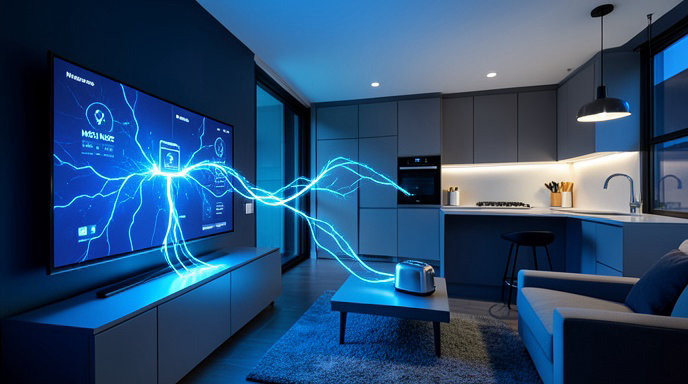
Mark Zuckerberg has a new favorite demo, and it involves toast. At Meta Connect this past week, the Meta CEO showed a prototype toaster — not built by Meta — that talks. You say "Muse, make it extra crispy but not burnt," and it does, then asks if you want it to remember your preference for next time.
The trick isn't the toaster. It's what's inside: Muse, Meta's new family of voice-first AI models for physical devices, which Meta says it will give away for free to virtually any hardware maker that wants it.
No licensing fees. No per-unit royalty. Download the code, flash it to a cheap chip, and ship.
If it sounds familiar, it should. It's the Android playbook, remade for the AI era. And Meta is explicit about the ambition: to put Muse in TVs, cars, kitchen appliances, toys, robots, smart glasses clones, and industrial gear — basically anything with a microphone and a $2 processor.
How the Free Giveaway Actually Works
Meta isn't just open-sourcing one model. Muse is a stack built for gadgets:
First, the models themselves. Meta is releasing Muse 1B and 3B voice-to-voice models under its Llama Community License, optimized to run fully on-device for wake-word detection, commands, and basic conversation without the cloud. A larger Muse Cloud model handles complex reasoning via API for devices with Wi-Fi.
Second, the Muse SDK and Runtime. This is the real Trojan horse. It includes wake-word engine, noise cancellation, speaker ID, low-power always-on listening, and plug-ins for Alexa-style skills, Smart Home standards like Matter, and Android AOSP. Meta says it runs on Qualcomm, MediaTek, NXP, and Espressif chips already found in TVs and appliances.
Third, the Muse Developer Hub. Hardware startups and hobbyists get reference designs, a prompt-tuning console, and a one-click path to publish "Muse Actions" — essentially apps for physical AI. Think: "ask my air fryer for a recipe" or "tell my thermostat to pre-cool before I get home."
Meta VP of AI Devices said partners can fork it, rebrand it, keep user data on-device, and never pay Meta a dime. Monetization, for now, is optional cloud inference and distribution via Meta's store.
Why Meta Wants to Be Everywhere, Not Just on Your Face
Why would Meta spend billions training AI just to give it away for toasters?
Because Meta lost the phone war and doesn't want to lose the ambient war. Google has Android and Gemini, Amazon has Alexa+, Apple has Siri and its chips. Meta has Ray-Bans and Quest — hits, but niche compared to the 15 billion connected devices shipped yearly.
Muse flips the strategy: if you can't own the device, own the intelligence inside every device.
Ubiquitous ambient AI means no more pulling out your phone. You just talk to the room. Meta believes the winner won't be the best speaker or TV, but the assistant layer that follows you from car to kitchen to backyard grill. By making Muse free and open, Meta hopes to become the default — especially for smaller brands that can't afford to build their own LLM or pay Google's fees.
There is a longer game too. Every Muse device can, with user permission, connect to a Meta account, feed its Llama ecosystem, and keep people inside Meta's AI, advertising, and commerce loop. More usage means more voice data, more developers building Muse Actions instead of Gemini Gems or Alexa Skills, and less leverage for rivals to lock Meta out.
What It Means for Developers and Gadget Makers
For developers and small hardware companies, this is a gift.
Building a decent voice assistant used to take a team of speech scientists and a cloud bill. Now a startup making smart lamps or e-bikes can download Muse, add a custom wake word like "Hey Lumos," and ship in weeks. Early partners teased by Meta include LG for TVs, Lenovo for smart displays, and iRobot-style robot makers, plus a wave of white-label Chinese appliance firms.
Crucially, Meta is allowing full customization. Unlike Alexa or Siri, makers can strip out "Meta" branding entirely, train Muse on their own manuals, and keep it offline. That open-source flexibility is why many developers burned by Amazon's Alexa fees and Google's Assistant shutdowns say they are willing to try again.
The catch: the best features — memory, personalization, multi-step agents that can order groceries or call an electrician — still require Muse Cloud, hosted by Meta. That's where lock-in could quietly creep in.
Privacy: Who's Listening to Your Living Room?
Put an always-listening Meta model in your TV and toaster and the obvious question follows: who hears what?
Meta insists Muse was designed privacy-first. The small on-device models process wake words and simple commands locally, with no audio leaving the device until you say the wake word. Makers can add a hardware mute switch and LED indicator as part of the reference design, and Meta says it won't collect audio from third-party devices by default unless users link a Meta account and opt into cloud features.
Privacy advocates aren't convinced. They point to Meta's ad-based business model and its history with Portal, and warn that a free model is never truly free. Will budget TV makers with poor update practices patch vulnerabilities? Will your toaster's conversations be used to train ads? What happens when speaker ID data lives on a $30 gadget from an unknown brand?
Meta says partners must pass a privacy and security review to use the Muse Compatible badge and cloud services, but because the base code is open, anyone can ship a non-compliant fork. Expect regulators in the EU and California to look closely at retention, kids' data from toys, and whether "ambient" becomes synonymous with "always recording."
What It Means for Google, Amazon, Apple and OpenAI
Rivals should be nervous.
Google and Amazon charge or tightly control access to Gemini and Alexa+. Apple keeps Siri locked to its own silicon. Meta just undercut them all to zero. If Muse becomes good enough, why would TCL, Hisense, Beko, or a smart toy startup pay anyone else?
Analysts call it classic disruption: commoditize the assistant layer to weaken moats around Android, Echo, and HomePod, while strengthening Meta's strengths in models, open source, and social distribution. It's the same logic that made Llama a developer favorite against GPT-4 and Gemini.
Expect a response fast. Google is already pushing Gemini Nano deeper into Android and TV makers, Amazon is racing to get its new LLM-powered Alexa+ into as many OEM devices as possible, and Apple is rumored to be opening Siri to select accessory makers next year. OpenAI, working with Jony Ive on a secret device, wants to own the high-end — Meta wants to own everything else.
The real fight won't be about smarts. It will be about trust, distribution, and who developers build for first.
Coming Soon to a Kitchen Near You
Meta says the first Muse-powered TVs, smart displays, and kitchen appliances from partners will ship in early 2027, with developer kits available now. A toaster from a partner brand is already slated as a tongue-in-cheek launch product to prove a point: if AI can run here, it can run anywhere.
Whether consumers actually want to chat with their toaster remains to be seen. Past attempts at smart fridges and talking microwaves flopped because the AI was dumb. Muse might finally be smart enough — and cheap enough — to change that.
If Meta is right, the next computing platform isn't a phone or a headset. It's the room you're already in. And it might be listening, ready to help, powered quietly by free code from Menlo Park.

Get All The Latest Updates Delivered Straight To Your Inbox For Free!