
Sanders Pushes Federal Ban on Flock and Automatic License Plate Readers
TL;DR
- Sen. Bernie Sanders has introduced new legislation that would bar all federal agencies from buying, using, or funding Flock Safety cameras and other automatic license plate readers.
- The bill targets growing privacy alarms over Flock's nationwide tracking network, including warrantless mass location collection and data sharing with ICE and local police.
- While it would not ban state and local use outright, experts say it could cut federal funding streams and set the stage for broader surveillance reform.
A Federal Line in the Sand
Sen. Bernie Sanders, I-Vt., is taking direct aim at one of the most controversial surveillance technologies in America.
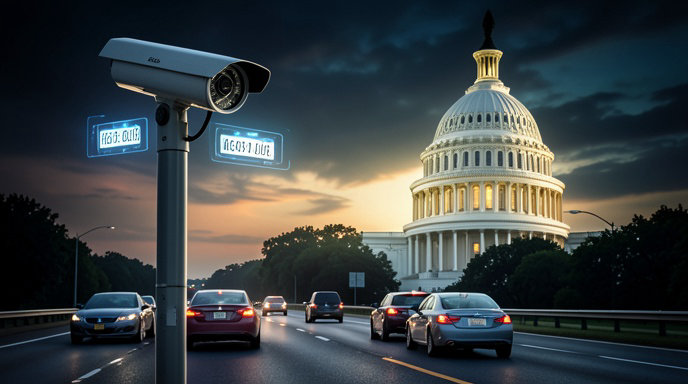
This week, Sanders introduced legislation that would prohibit federal agencies from using automatic license plate readers, or ALPRs — with Flock Safety's rapidly expanding Falcon camera network named as a primary target. The proposal would block federal procurement, use, and funding of the technology, marking the most aggressive federal push yet to rein in license plate surveillance.
The move comes amid mounting backlash to Flock, which now operates in more than 5,000 communities across the U.S. and has built what privacy researchers describe as a de facto national tracking system capable of logging billions of vehicle movements per year.
What the Bill Would Actually Ban
According to Sanders' office, the scope of the proposed ban is sweeping at the federal level:
It would prohibit all federal agencies and departments — including the FBI, DEA, Department of Homeland Security, and Immigration and Customs Enforcement — from purchasing, leasing, operating, or contracting for ALPR systems.
It would bar federal funds, grants, and cost-sharing programs from being used to support state, local, or private ALPR networks that feed into federal databases.
It would require federal agencies to delete any ALPR data already collected and prohibit them from accessing or purchasing commercial license plate data from brokers like Flock and Vigilant Solutions.
It would also block workarounds, such as federal agents querying local Flock networks through fusion centers or informal data-sharing agreements without a court order.
In a statement, Sanders framed the bill as a Fourth Amendment issue, arguing Americans should not be tracked every time they drive to work, a protest, a clinic, or a place of worship.
Why Flock Is in the Crosshairs
Flock Safety, the Atlanta-based startup valued at more than $7.5 billion, has become shorthand for the ALPR debate.
Unlike traditional police plate readers mounted on patrol cars, Flock sells stationary, solar-powered Falcon cameras to neighborhoods, HOAs, businesses, and police departments. Each camera captures license plates, vehicle make, model, color, and distinguishing features, logging time and GPS location.
That data is retained by default for 30 days and can be searched nationally across participating agencies — a feature Flock markets as a crime-solving tool for finding stolen cars, missing persons, and suspects.
But investigations by civil liberties groups and news outlets have found the system is also being used for immigration enforcement, with ICE and Homeland Security Investigations agents able to tap into local Flock networks. Other reports have documented uses to monitor protesters, track people traveling out-of-state for abortions, and surveil visitors to gun stores and houses of worship.
The company insists it requires a legitimate law enforcement reason for searches and has rolled out auditing tools, but critics say those safeguards are voluntary and easily abused.
Privacy Advocates Sound the Alarm
Digital rights groups including the American Civil Liberties Union and the Electronic Frontier Foundation have long warned that ALPRs enable retroactive mass surveillance.
Unlike a targeted stakeout, Flock cameras photograph every passing vehicle — the vast majority belonging to people suspected of no crime. Over time, that creates a detailed map of a person's life: where they sleep, work, pray, seek medical care, and who they associate with.
Advocates also point to data security risks. Flock has faced scrutiny after reports that some camera feeds and customer portals were poorly secured, potentially exposing live locations to hackers. Cities including Denver, Austin, and parts of Virginia have already restricted or removed Flock cameras over those concerns.
Sanders' bill echoes those arguments, calling ALPR networks warrantless, dragnet surveillance that disproportionately impacts communities of color, immigrants, and activists.
What It Could Mean for Surveillance Nationwide
To be clear: the Sanders proposal would not make Flock cameras illegal across the country. State and local police — who operate the bulk of the network — could still buy and use them under state law.
But the implications could still be significant.
First, federal money matters. Many local departments purchased Flock cameras using federal homeland security and justice grants. Cutting off that pipeline could slow expansion, especially in smaller cities.
Second, a federal ban would create political pressure. Privacy legislation in states like California, Virginia, and New Jersey has already limited retention periods and ICE access. Supporters hope a federal prohibition sets a model for state-level bans.
Third, it signals growing bipartisan scrutiny of private surveillance vendors. Lawmakers on both sides have questioned Flock's contracts, lobbying, and lack of transparency, while the Federal Trade Commission has faced calls to investigate data retention practices.
Flock Safety pushed back on the proposal, saying its cameras help solve violent crime, car thefts, and amber alerts daily, and that a federal ban would make communities less safe. The company says it supports “common-sense guardrails” but opposes an outright prohibition.
Uphill Fight, But the Debate Has Shifted
The bill faces long odds in a divided Congress, where previous surveillance reform efforts have stalled. Law enforcement associations are expected to lobby heavily against it, arguing ALPRs are critical as police departments face staffing shortages.
Still, tech policy experts say the introduction alone marks a turning point. Just two years ago, Flock was largely seen as a neighborhood safety startup. Now it is at the center of a national debate over AI-powered policing, location privacy, and who controls the data trails Americans leave behind.
Sanders is expected to push for a hearing in the coming months, with companion legislation possible in the House. Whether it passes or not, the fight over license plate readers is no longer local — it's federal.

Get All The Latest Updates Delivered Straight To Your Inbox For Free!