
Rivian CEO Says Autonomy Will Redefine Car Design, Teases Futuristic R4
TL;DR
- Rivian CEO RJ Scaringe says true autonomy will fundamentally change vehicle design, shifting focus from steering wheels and pedals to maximizing interior space, comfort, and shared experiences.
- Scaringe revealed that Rivian is already designing for that autonomous future, with its autonomy and AI teams informing vehicle packaging years in advance.
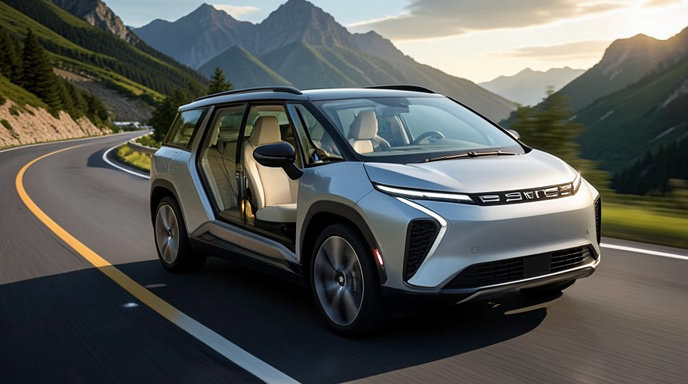
- The upcoming Rivian R4, described as smaller, more affordable and Rallye-inspired, is being positioned as the first Rivian to fully embody this space-first, autonomy-ready philosophy.
Scaringe's Long-Term Bet: The Car Becomes a Living Space
Rivian founder and CEO RJ Scaringe is looking far beyond the current race for driver-assist features. In recent interviews, Scaringe laid out a long-term vision where Level 4 and Level 5 autonomy completely rewrites the rules of automotive design.
Once the driver no longer needs to drive, Scaringe argues, the entire front-biased, control-centric layout of today's cars becomes obsolete. No steering wheel, no pedals, no fixed forward-facing seats. In its place: dramatically different form factors built around one thing — human space.
It's a return to first principles. For more than a century, cars have been designed around the act of driving. Scaringe believes the next century will be designed around the act of riding.
Why Autonomy Changes Everything for Designers
Speaking about Rivian's product roadmap, Scaringe explained that autonomy unlocks packaging freedom engineers have only dreamed about. Without a steering column, instrument cluster sightlines, and pedal box constraints, designers can push the windshield forward, flatten the floor completely, and create airy, lounge-like cabins even in smaller vehicles.
The emphasis shifts to comfort, versatility, and modularity — swiveling seats, sliding tables, panoramic visibility, and smarter storage. For an adventure-focused brand like Rivian, that also means rethinking how people camp, work, sleep, and socialize inside their vehicles when the car itself handles the highway slog.
Scaringe has stressed this is not a 12-month idea, but a 10-year architectural shift. Rivian's vehicle team is now working in lockstep with its autonomy and AI teams in Palo Alto to ensure today's platforms can evolve into tomorrow's fully software-defined, sensor-rich vehicles.
How This Vision Shapes Rivian's Roadmap Today
That future thinking is already influencing near-term decisions. Rivian's next-generation electrical architecture and its new autonomy computer, developed in partnership with Volkswagen Group through their multi-billion-dollar joint venture, are designed to be scalable from hands-free highway driving today to eyes-off, hands-off autonomy tomorrow.
The company's Universal Hands-Free system, rolling out on Gen 2 R1T and R1S and planned as standard on R2, is the stepping stone. Scaringe has said Rivian is moving aggressively toward a lidar-free, camera-plus-radar approach powered by large AI models — a path he believes will scale faster and cost less than robotaxi-only systems.
Every mile driven by Rivian's fleet trains that model, creating a data flywheel that will eventually enable the radical interior concepts Scaringe is describing.
Enter the R4: Small, Affordable, and Radically Different
The most concrete teaser of this philosophy is the upcoming R4. While the midsize R2 SUV, due in 2026, and the R3 and R3X crossovers are next in line, Scaringe has confirmed work is underway on an even smaller, more affordable R4.
Described as Rallye-inspired and distinctly fun, the R4 is expected to sit below R3 in size and price, targeting the mass-market and potentially European streets where compact footprints matter. But more than just a cheaper Rivian, insiders say it will be the first vehicle fully packaged with an autonomy-first mindset from day one.
Expect a surprisingly roomy cabin for its exterior size, minimalist controls, heavy reliance on voice and AI assistance, and a full suite of autonomous-ready sensors hidden cleanly into the design. It won't launch as a steering-wheel-free pod — regulations aren't ready — but it will be built to get there with software updates.
A Direct Challenge to Tesla, Apple Car Dreams, and Detroit
Scaringe's comments land amid an industry-wide identity crisis. Tesla is pushing its Cybercab with no steering wheel at all, while traditional automakers hedge between driver-focused cockpits and autonomous concepts.
Rivian is betting it can do both: deliver driver-centric adventure vehicles people love today, while quietly engineering them to become autonomous living spaces tomorrow. If Scaringe is right, the winners won't be those who add the most screens, but those who dare to delete the steering wheel entirely.
The R4 may be Rivian's first real test of that thesis — and a glimpse at what cars look like when we finally stop driving them.

Get All The Latest Updates Delivered Straight To Your Inbox For Free!