
Elon Musk Defends Nvidia CEO Jensen Huang, Comparing His Ousting to Dropping Michael Jordan
TL;DR
- Elon Musk has compared Nvidia CEO Jensen Huang to Michael Jordan, arguing that removing him would deprive the company of an exceptional leader.
- Musk has also portrayed Huang as loyal to the United States while navigating intense U.S.-China competition over advanced artificial intelligence chips.
- The remarks have renewed debate about Nvidia’s dependence on Huang, its global technology influence, and the strategic risks of changing leadership.
Musk Defends Nvidia’s CEO as a Strategic “MVP”
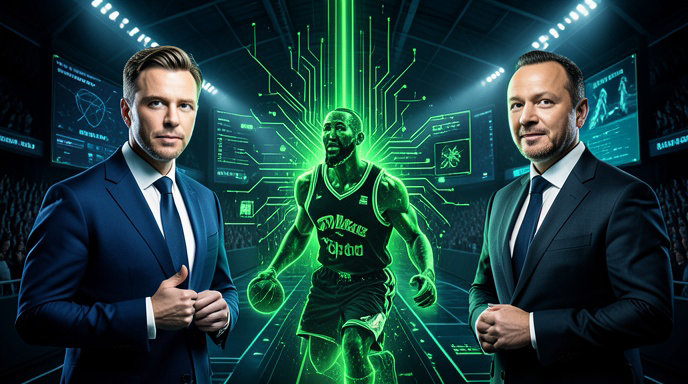
Elon Musk has defended Nvidia CEO Jensen Huang against arguments that the chipmaker could benefit from a leadership change, comparing Huang’s importance to the company with Michael Jordan’s importance to the Chicago Bulls.
The analogy casts Huang not merely as a corporate executive but as an unusually consequential figure whose personal judgment, technical understanding and public leadership are closely tied to Nvidia’s success. Musk’s comments arrive as Nvidia remains central to the artificial-intelligence boom and faces growing political pressure over where its most advanced technology can be sold.
In Musk’s view, removing Huang would be comparable to dropping an elite athlete in the middle of a championship campaign: technically possible, but strategically self-defeating.
Why Jensen Huang Has Become So Important to Nvidia
Huang co-founded Nvidia in 1993 and has led the company through several major transformations. Nvidia began as a graphics-chip specialist, became a dominant supplier of gaming hardware, and later repositioned its graphics-processing units as foundational infrastructure for modern AI.
That long-term shift required Nvidia to commit heavily to parallel computing and software tools well before generative AI became a mainstream commercial phenomenon. The company’s CUDA software platform, its data-center products and its relationships with cloud providers and AI developers have helped create an ecosystem that is difficult for rivals to replicate quickly.
Huang has also become one of the most recognizable executives in technology. His leather-jacketed appearances, detailed explanations of AI hardware and willingness to make ambitious forecasts have made him an unusually visible representative of the semiconductor industry.
For supporters, those qualities demonstrate why replacing him could be dangerous. Nvidia’s advantage is not based solely on chip specifications. It also depends on product timing, developer relationships, manufacturing coordination and the ability to anticipate where computing demand is heading.
The Michael Jordan Comparison
Musk’s comparison to Jordan reflects a broader view of corporate leadership: some executives contribute far more than their formal job description suggests because they shape a company’s culture, strategy and competitive identity.
Jordan’s role with the Bulls became a shorthand for the value of an irreplaceable star. Although basketball teams can theoretically replace one player, replacing a generational talent without weakening the team is a much harder task. Musk’s argument is that Huang occupies a similar position at Nvidia.
The comparison does not mean Nvidia has no other capable leaders. The company has a deep bench of engineers, product executives and business specialists. However, the challenge would be preserving the combination of technical insight, risk tolerance and strategic consistency that Huang has provided for more than three decades.
It would also raise questions for investors about succession. Nvidia’s valuation and market position reflect expectations about future AI demand, but confidence in Huang’s leadership is part of the company’s wider investment narrative.
Huang’s Position in the U.S.-China Technology Rivalry
Musk’s remarks also emphasized Huang’s loyalty to the United States, according to reporting around the comments. That issue is particularly sensitive because Nvidia operates at the center of an escalating technology rivalry between Washington and Beijing.
The U.S. government has imposed export controls intended to limit China’s access to the most advanced AI processors. Nvidia has had to redesign products, seek regulatory approval and adjust its sales strategy in response. China, meanwhile, remains an important market and a major source of demand for computing technology.
Huang has repeatedly argued that American companies need to remain competitive globally rather than surrendering entire markets to foreign competitors. His position has sometimes placed him in a delicate political position: supporting U.S. national-security restrictions while warning that overly broad controls could encourage customers to adopt Chinese alternatives.
Musk’s defense appears to frame that balancing act as evidence of Huang’s strategic value rather than disloyalty. From this perspective, Huang’s efforts to preserve Nvidia’s global reach do not conflict with his commitment to the United States. Instead, maintaining American technological leadership may require American companies to remain commercially strong and widely adopted.
Nvidia’s Global Influence Raises New Questions
Nvidia’s rise has made it more than a successful chip company. Its processors are increasingly viewed as critical infrastructure for AI laboratories, cloud-computing companies, governments and businesses building large-scale models.
That influence has generated both admiration and concern. Supporters say Nvidia’s products have accelerated innovation and helped establish the United States as the leading center of AI development. Critics worry that a single supplier has gained too much control over the computing resources needed to train and operate advanced systems.
The company’s position has also intensified scrutiny of its pricing power, supply-chain relationships and partnerships with major technology firms. As AI investment grows, decisions made by Nvidia can affect the pace and cost of development across the industry.
Those conditions make leadership stability especially important. A sudden change at the top could unsettle customers, employees and investors even if Nvidia’s underlying technology remained strong.
The Case for Leadership Change
Musk’s argument is not universally accepted. Critics of Nvidia’s current leadership could contend that no company should depend too heavily on one individual, particularly in an industry changing as rapidly as AI.
A new chief executive could bring a different perspective on software, hardware diversification, regulation or international markets. Nvidia may also need to prepare for a future in which AI growth becomes less explosive, competition from companies such as AMD and specialized chip designers intensifies, and customers develop more of their own silicon.
Corporate-governance advocates generally favor clear succession planning and independent oversight. A board that treats a CEO as irreplaceable can create risks, including delayed transitions, weaker accountability and excessive dependence on personal relationships.
The key distinction is between removing Huang abruptly and preparing responsibly for a future transition. Even supporters of Huang’s leadership could argue that Nvidia should demonstrate how its strategy, culture and customer relationships would endure beyond him.
The Larger Debate Over Nvidia’s Future
The disagreement ultimately reflects two competing views of Nvidia. One sees the company as an institution with durable advantages in hardware, software and ecosystems. The other sees it as a company whose extraordinary momentum remains closely associated with Huang’s personal vision.
Both interpretations contain some truth. Nvidia’s technology platform and developer network are substantial assets, but Huang has been instrumental in building and communicating that platform. His ability to explain complex products, anticipate market shifts and maintain confidence among customers and investors has become part of Nvidia’s competitive edge.
Musk’s Michael Jordan comparison therefore serves as more than praise. It is a warning against treating leadership change as a simple personnel decision at a company whose strategic choices influence the direction of the global AI industry.
For now, Nvidia’s challenge is to preserve Huang’s strengths while ensuring that its future does not depend on any single executive. As the contest over AI chips, software ecosystems and national technology leadership intensifies, the company’s succession planning may become nearly as important as its next generation of processors.

Get All The Latest Updates Delivered Straight To Your Inbox For Free!