
Meta Spaces: A New Way to Collaborate With Muse AI Agents
TL;DR
- Meta Spaces is designed to let people collaborate with Muse AI agents inside shared, task-focused environments.
- The feature could connect AI assistants with files, apps, workflows, and multiple participants rather than limiting them to one-on-one chats.
- Its impact will depend on integration support, agent reliability, privacy controls, and whether users find shared AI workspaces genuinely useful.
What Meta Spaces Could Change
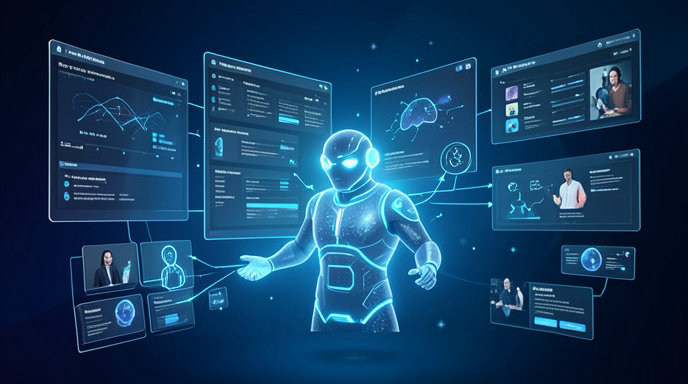
Meta is exploring a more collaborative model for artificial intelligence with Spaces, a feature intended to give users a shared environment for working with Muse AI agents. Instead of treating an AI assistant as a private chatbot, Spaces appears designed to position agents inside ongoing projects where people can interact with them, provide context, and use their output together.
The concept reflects a broader shift in AI products. Early assistants focused primarily on answering questions or generating text on demand. Newer systems are increasingly being designed to participate in workflows: organizing information, creating content, analyzing data, coordinating tasks, and working across multiple applications.
Spaces could give Meta a way to bring those capabilities into a more persistent and collaborative format.
From Chat Windows to Shared Workspaces
Traditional AI chats are generally built around a single user and a linear conversation. That model works well for quick questions, but it becomes less effective when a project involves several people, multiple files, changing requirements, and repeated rounds of feedback.
Spaces is intended to address that limitation by creating a shared setting for human users and Muse agents. A team could use a Space to discuss an idea, ask an agent to develop material, revise the results, and preserve the relevant context for later sessions.
That setup could be useful for tasks such as:
- Drafting and editing marketing campaigns
- Planning social media content
- Brainstorming product concepts
- Summarizing research and documents
- Creating presentation outlines
- Coordinating project plans
- Producing visual or written creative work
- Managing recurring business processes
The most important distinction is persistence. If a Space retains project information, instructions, files, and prior decisions, users would not need to repeatedly reconstruct the same context in separate conversations.
How Muse Agents Fit Into the Experience
Muse agents are central to the proposed experience. Rather than relying on one general-purpose assistant, Spaces could allow users to work with agents specialized for particular roles or tasks.
One agent might focus on research, another on writing, and another on visual development or planning. These agents could potentially contribute different types of work to the same Space, allowing users to direct them individually or ask them to build on one another’s output.
For example, a creative team could ask a research-oriented agent to identify audience trends, a writing agent to turn those findings into campaign concepts, and a design-focused agent to suggest visual directions. Human participants would still review and refine the results, but the agents could help move a project through multiple stages more quickly.
This approach also changes how users interact with AI. Instead of asking isolated questions, they may assign goals, provide feedback, and monitor progress over time. The assistant becomes less like a search box and more like a collaborator embedded in a project.
Potential Benefits for Creative Work
Creative professionals are among the groups that could benefit most from shared AI environments. Writers, designers, developers, marketers, and producers often work through iterative processes that involve collecting references, generating alternatives, and making decisions over several sessions.
A Space could bring those steps together. A team might store a brief, examples of previous work, brand guidelines, and feedback in one location. Muse agents could then use that material when generating drafts or suggestions.
The arrangement may be particularly valuable for early-stage creative work. AI can rapidly produce variations, but teams still need a place to compare those options, identify weaknesses, and decide which direction to pursue. A shared Space could provide the working memory needed for that process.
However, AI-generated creative output is unlikely to eliminate the need for human judgment. Questions of originality, tone, accuracy, cultural sensitivity, and brand suitability still require careful review. Spaces may improve the speed of experimentation, but the quality of the final work will depend on how well teams guide and evaluate the agents.
Expanding Integrations
Integrations could determine whether Spaces becomes a meaningful productivity tool or simply another destination for AI conversations.
For the feature to support real workflows, it would need to interact with the services people already use. Potential integration categories include cloud storage, calendars, task-management tools, communication platforms, creative applications, customer databases, and productivity software.
With appropriate permissions, an agent might be able to summarize a collection of documents, turn a discussion into an action list, prepare a project schedule, or update related records. It could also help users move information between tools without requiring them to copy and paste content manually.
The challenge is balancing convenience with control. Integrations that allow agents to take actions on a user’s behalf must include clear permission settings, activity histories, approval steps, and ways to undo mistakes. Users need to know what an agent can access, what it has changed, and which actions require confirmation.
Collaboration Across People and Agents
Spaces could also make AI collaboration more social. Multiple people may be able to contribute to the same environment, with the agents responding to the combined context rather than to one person’s private conversation.
That could help distributed teams keep projects aligned. New participants could review the Space’s history instead of asking colleagues to repeat decisions. Agents could summarize discussions, identify unresolved issues, and highlight changes since the previous session.
At the same time, shared AI environments introduce questions about ownership and responsibility. Teams will need to understand who can invite an agent, who controls the data in a Space, and how disagreements between users and agents are handled.
Meta may also need to distinguish between private, group, and organization-wide Spaces. The appropriate privacy model for a personal creative project will not be the same as the model required for internal company planning or client work.
Privacy and Trust Concerns
Any system that combines shared documents, conversations, and AI processing will face scrutiny over privacy and data use.
Users will want clear answers about whether Space content is used to improve Meta’s models, how long information is retained, and whether data can be deleted completely. Businesses may also require assurances that confidential documents are isolated and not exposed to other users or systems.
Permission design will be especially important. An agent should not automatically treat every item in a Space as equally authoritative. It may need to distinguish between instructions, reference material, private comments, and unverified information.
There is also the risk of prompt injection and other forms of manipulation. A malicious or misleading document could contain instructions intended to redirect an agent away from the user’s actual goal. Strong safeguards, source tracking, and visible explanations of agent actions will be necessary if Spaces is used for sensitive work.
The Importance of Reliability
The usefulness of Spaces will depend less on how impressive the agents appear in demonstrations and more on how consistently they perform in everyday tasks.
Agents working in a shared Space must maintain context without becoming confused by contradictory instructions. They need to recognize when information is incomplete, ask for clarification, and avoid presenting uncertain conclusions as established facts.
Reliability is even more important when an agent is allowed to take actions. A mistaken draft may be easy to correct; an incorrect database update, message, or calendar change could create significant problems.
Meta will therefore need to make the system’s behavior understandable. Users should be able to inspect the sources behind an answer, see which agent produced a result, review the chain of actions, and correct errors without rebuilding the entire project.
A New Competitive Arena
Meta Spaces enters a market where technology companies are competing to define the next generation of AI-assisted work. Collaboration platforms, office software providers, social networks, and specialist AI companies are all experimenting with agents that can operate across tasks and applications.
Meta’s potential advantage lies in its large ecosystem and its experience with communication, social interaction, and creative tools. If Spaces connects smoothly with Meta’s existing products, it could offer a familiar route into collaborative AI for creators, communities, and businesses.
Its challenge will be proving that the feature offers more than a repackaged chatbot. Users will need a clear reason to move their projects into Spaces, particularly when they already rely on established tools for messaging, file management, and task coordination.
The Road Ahead
The success of Meta Spaces will likely depend on how broadly it can integrate, how transparent its controls are, and whether Muse agents can deliver dependable assistance over time.
A strong implementation could make AI more useful by placing it where work actually happens: inside shared projects with relevant context, ongoing conversations, and human oversight. It could help teams explore more ideas, reduce repetitive coordination, and turn scattered information into organized progress.
But collaboration with AI is not automatically better than individual interaction. Shared spaces can become cluttered, agents can generate unnecessary content, and poorly defined permissions can create confusion. Meta will need to make the experience simple enough for casual users while offering the governance and security expected by professional teams.
If it succeeds, Spaces could represent an important step in the evolution of AI assistants—from tools people consult occasionally to active participants in creative and productive work. If it fails, it may serve as another reminder that useful AI depends not only on model capability, but also on thoughtful product design, trustworthy controls, and a clear understanding of how people collaborate.

Get All The Latest Updates Delivered Straight To Your Inbox For Free!