
Pixel 11 Pro Fold: Google’s Sturdy Foldable Faces a Wider Rivalry
TL;DR
- The Pixel 11 Pro Fold is expected to emphasize a conventional, durable rectangular design rather than chase the widest or thinnest foldable profile.
- Google faces intensifying pressure from Samsung, OnePlus, Honor and Chinese rivals, whose foldables increasingly prioritize slimness, large displays and distinctive form factors.
- Key questions remain unresolved around the Pixel 11 Pro Fold’s final design, hinge, cameras, battery, pricing and global availability until Google makes an official announcement.
A More Conservative Foldable Strategy
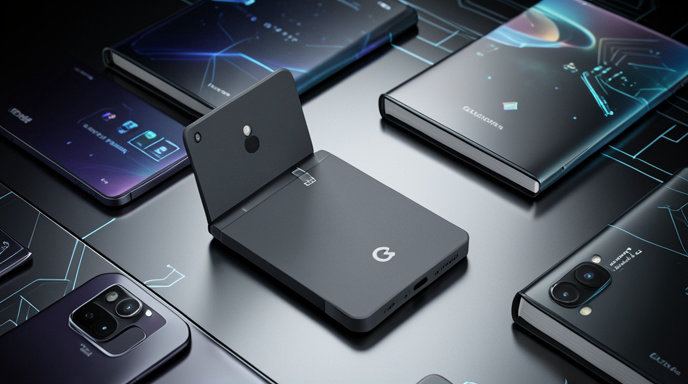
Google’s next-generation foldable is shaping up as an exercise in refinement rather than reinvention. Reports and early speculation surrounding the Pixel 11 Pro Fold point to a sturdy rectangular design that would preserve the familiar book-style format while improving durability, ergonomics and everyday usability.
That approach could distinguish Google from manufacturers competing to make foldables increasingly thin, wide and visually dramatic. Instead of treating the foldable as a technology showcase alone, Google appears likely to position the Pixel 11 Pro Fold as a dependable premium phone first and a flexible-screen device second.
The distinction matters. Foldables have moved beyond their experimental phase, but many buyers still worry about hinge reliability, display damage, crease visibility, weight and repair costs. A robust design could therefore be more valuable to mainstream customers than a marginal reduction in thickness.
Still, it is important to separate confirmed information from speculation. Google has not publicly finalized every detail associated with the Pixel 11 Pro Fold, and reports about its dimensions, hardware and release plans should be treated as provisional until the company announces the device.
Why the Rectangular Design Matters
A conventional rectangular foldable offers several practical advantages. When closed, it can provide a more predictable smartphone experience, with fewer compromises in typing, app compatibility and one-handed use. When opened, it can deliver a tablet-like workspace for reading, multitasking, gaming and productivity.
Google’s software expertise could make that format particularly appealing. Android includes increasingly sophisticated support for large screens, dual-pane layouts, drag-and-drop interactions and app continuity between the outer and inner displays. A durable rectangular chassis would give Google a stable foundation on which to build those experiences.
The design may also help the Pixel 11 Pro Fold avoid some of the drawbacks associated with extremely wide cover screens. Broad outer displays can make a folded phone more comfortable for typing and video, but they can also add weight and create a less familiar aspect ratio. Google may prefer a balanced shape that works naturally with existing Android apps.
Durability will likely be central to the product’s marketing. Foldable displays remain more vulnerable than conventional smartphone panels, while moving hinges introduce another potential point of failure. Improvements to water resistance, dust protection, hinge construction and the protective layers above the flexible display could determine whether the Pixel 11 Pro Fold feels ready for everyday use or remains a premium niche product.
Samsung Remains the Benchmark
Samsung continues to define the mainstream foldable category. Its Galaxy Z Fold range established the large book-style foldable as a viable premium product and has given the company years of experience with hinge engineering, flexible displays and foldable software.
The competitive challenge for Google is not simply matching Samsung’s specifications. It must persuade consumers that the Pixel 11 Pro Fold offers a better overall experience through photography, artificial intelligence, Android integration and long-term software support.
Samsung’s advantages include global distribution, a mature accessory ecosystem and strong brand recognition. Its foldables are also available in more markets than many competing products. Google, by contrast, can use the Pixel brand’s strengths in computational photography and exclusive software features to create a more distinctive alternative.
The Pixel 11 Pro Fold will need to demonstrate meaningful progress in areas where earlier Pixel Fold models faced criticism, including weight, outer-screen proportions, charging speeds, battery endurance and camera hardware. A tougher design alone may not be enough if the phone remains bulky or expensive.
OnePlus and Honor Push the Hardware Limits
OnePlus and Honor have helped raise expectations for thinness and portability. Their foldables have increasingly focused on reducing bulk while preserving large internal displays and capable camera systems. Honor in particular has made slim, lightweight construction a central part of its foldable identity.
That creates a direct contrast with Google’s reported emphasis on sturdiness. A thicker phone may offer more room for battery capacity, cooling and structural reinforcement, but consumers may still compare it with rivals that feel closer to conventional smartphones when folded.
OnePlus also brings a different competitive formula: aggressive pricing, high-performance hardware and fast charging. If Google prices the Pixel 11 Pro Fold at the top of the market, buyers may compare it not only with Samsung but also with devices offering faster charging, larger batteries or more premium materials at a similar price.
The result is a market in which “best foldable” no longer means one thing. Some buyers prioritize durability and software polish, while others want the lightest possible device, the fastest performance or the widest display.
The Wider Chinese Foldable Market
The most intense hardware competition is coming from manufacturers such as Huawei, Oppo, Vivo, Xiaomi and Honor. These companies have experimented with thinner bodies, reduced creases, larger cover screens, advanced hinge designs and multiple foldable formats.
Many of those products have limited availability outside Asia, but they still influence the global direction of the category. Their designs demonstrate how quickly foldables can evolve and put pressure on established brands to improve dimensions, materials and camera technology.
Several manufacturers are also exploring concepts beyond the standard inward-folding book design. Clamshell phones remain popular, while larger foldables, outward-folding designs and devices with unusual aspect ratios continue to appear. Rollable and multi-fold concepts are also being used to test where the category might go next.
Google’s rectangular approach may therefore seem conservative, but it could also be strategically sensible. A reliable form factor with strong software support may have a better chance of reaching mainstream users than a more exotic design that introduces additional durability and usability concerns.
Software Could Be Google’s Biggest Advantage
Google is unlikely to win the foldable race through hardware alone. The company’s strongest opportunity lies in connecting the device to Android, Pixel-exclusive features and its broader artificial-intelligence strategy.
A well-optimized foldable could use the inner display for expanded camera controls, document editing, split-screen research and enhanced video calls. Google could also build more intelligent continuity features, allowing applications to transition smoothly between the cover screen and the unfolded display.
Pixel phones have increasingly served as showcases for Google’s on-device and cloud-assisted AI capabilities. On a foldable, those tools could become more useful because the larger screen provides additional space for summaries, image editing, research, translation and multitasking.
However, software advantages must be delivered consistently. Foldable owners expect major applications to support large-screen layouts rather than simply stretching a phone interface. Google will need to work with developers while ensuring its own applications take full advantage of the internal display.
The Camera Question
Pixel photography will be another major part of the Pixel 11 Pro Fold’s identity. Foldables have traditionally made camera compromises because their hinges, dual-screen construction and limited internal space complicate the placement of large sensors.
Google could differentiate the device through image processing, computational photography and AI-assisted editing even if the physical camera hardware does not match the company’s most advanced slab-style Pixel models. Nevertheless, buyers paying flagship prices may expect the foldable to offer more than software improvements.
A stronger camera system would make the Pixel 11 Pro Fold more compelling as an all-purpose premium phone. It would also help justify the device against Samsung’s Galaxy Z Fold range and high-end foldables from Chinese competitors.
Price and Availability Will Shape Its Prospects
Foldables remain expensive because flexible displays, precision hinges and complex manufacturing processes cost more than conventional smartphone components. Google’s pricing strategy could determine whether the Pixel 11 Pro Fold remains a specialist product or reaches a broader audience.
A premium price would reinforce its position as a flagship but could expose it to direct comparisons with Samsung and luxury-oriented rivals. A more aggressive price could attract customers who have been curious about foldables but unwilling to spend flagship-plus money on an emerging form factor.
Availability is equally important. Google’s foldable business has historically been constrained by regional distribution compared with Samsung. If the Pixel 11 Pro Fold launches in only a limited number of markets, its impact on the broader category may be smaller than its specifications suggest.
Google will also need to provide confidence around repairs, replacement parts and software support. Foldable buyers are more likely to consider long-term ownership risks, making warranty coverage and service access important parts of the purchasing decision.
A Battle Between Reliability and Reinvention
The Pixel 11 Pro Fold could arrive at an important moment for the foldable market. Early devices competed primarily on novelty, but newer models are competing on practical details: thickness, weight, battery life, crease visibility, camera quality, durability and price.
Google’s reported rectangular design signals a preference for reliability and familiarity. That could appeal to customers who want a foldable without embracing an unusual shape. At the same time, it risks making the Pixel 11 Pro Fold appear less ambitious than slimmer and more experimental alternatives.
The company’s challenge will be to show that a sturdy design is not merely a compromise. The phone must feel refined, pocketable and premium while delivering software experiences that cannot be replicated on a standard Pixel.
If Google can combine a durable chassis with better battery life, stronger cameras, smooth Android multitasking and competitive pricing, the Pixel 11 Pro Fold could establish a clear identity. If it delivers only incremental hardware improvements at a higher cost, rivals offering broader screens and thinner bodies may capture the attention of buyers seeking visible innovation.
For now, the Pixel 11 Pro Fold remains a product defined as much by expectation as by confirmed specifications. Its eventual success will depend on whether Google can turn a cautious hardware philosophy into a convincing everyday advantage.

Get All The Latest Updates Delivered Straight To Your Inbox For Free!