
Post-Midterms Reckoning: How Data Center Restrictions Could Reshape the AI Industry
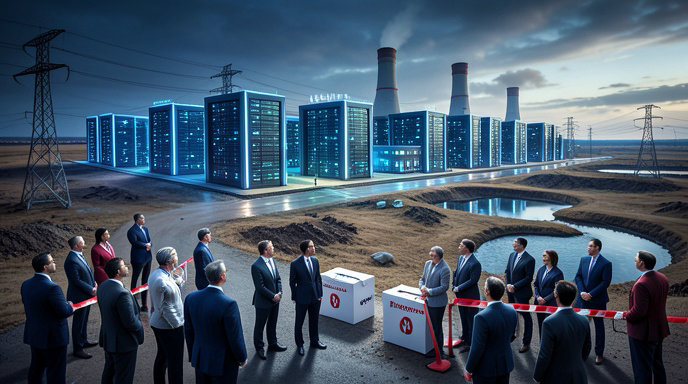
TL;DR
- Post-midterm political momentum could give communities more leverage over AI data-center projects, especially on power, water, pollution, and land-use issues.
- Tighter permitting and stricter infrastructure standards may slow expansion, raise costs, and push operators toward cleaner, more distributed facilities.
- The AI industry’s next growth phase may depend as much on winning local consent and securing electricity as on building larger models.
A New Political Test for AI Infrastructure
The AI boom is entering a more complicated political era. For years, the industry’s expansion was powered by a simple proposition: build more data centers, secure more electricity, add more chips, and deploy increasingly capable models.
That formula is now running into a growing backlash over the physical footprint of artificial intelligence. Across the United States, residents, local officials, environmental groups, and some lawmakers are questioning whether the economic benefits of new data centers justify their demands on electricity grids, water supplies, roads, land, and air quality.
The political consequences could become more significant after the midterm elections. Democratic victories in key contests, combined with broad voter support for restrictions on data-center development, could create a tougher regulatory environment for AI companies over the next two years. The issue is unlikely to remain confined to technology policy. It sits at the intersection of climate politics, industrial development, utility regulation, tax incentives, and local control.
The result may be a fundamental shift in how AI infrastructure is built—and where it can be built.
Why Data Centers Are Becoming a Target
Modern AI systems require enormous computing capacity. Training and operating large models depends on specialized processors running in facilities that can consume vast amounts of electricity. As companies add AI services to search, office software, advertising, customer support, and consumer applications, demand for computing infrastructure is expected to continue increasing.
The environmental concerns are substantial.
Electricity consumption is the most visible issue. Data centers operate around the clock, and AI-focused facilities can require far more power than traditional enterprise computing sites. In regions where the grid is already constrained, a large project can force utilities to build new transmission lines, generation capacity, or substations.
Water use is another concern. Many facilities rely on cooling systems that consume water, particularly in hot climates. The impact can be especially controversial in areas facing drought, declining groundwater levels, or competition among households, farms, and industry.
Communities are also raising questions about backup generators, diesel emissions, noise, construction traffic, and the broader pollution associated with new power generation. Even when a facility itself produces limited direct emissions, its electricity demand may increase reliance on natural-gas or other fossil-fuel plants if clean energy supplies are unavailable.
These concerns have made data centers a highly tangible symbol of AI’s infrastructure costs. The technology may be delivered through software, but its expansion depends on large industrial facilities that communities can see, hear, and regulate.
The Rise of Local Resistance
Much of the regulatory pressure is emerging at the local and state levels. City councils, county boards, planning commissions, and state legislatures are considering moratoriums, zoning changes, stricter environmental reviews, and new requirements for energy and water disclosures.
Some proposals would give local governments greater authority to approve or reject facilities. Others would require developers to demonstrate that projects will not undermine the reliability of the electric grid or increase costs for existing ratepayers.
The details differ by jurisdiction, but the underlying argument is consistent: communities should not be required to accept the environmental and financial consequences of data-center growth without meaningful control over the process.
This approach could challenge the industry’s traditional development model. Companies have often sought large parcels of inexpensive land near power infrastructure, sometimes relying on tax incentives and expedited approvals. If local governments impose longer reviews, stricter zoning rules, or public-benefit requirements, the timeline and economics of new projects could change substantially.
State lawmakers may also face pressure to limit the ability of local authorities to block developments. That could produce a familiar conflict between statewide economic-development goals and local concerns about growth, environmental impacts, and infrastructure costs.
What Tighter Oversight Could Mean for AI Companies
The most immediate effect of tighter regulation would likely be slower and more expensive expansion.
Longer permitting processes can delay the deployment of computing capacity at a time when AI companies are competing for access to scarce chips, electricity, and high-performance facilities. Delays may also increase financing costs and make it harder for developers to meet contracts with cloud providers and model companies.
New environmental requirements could add further expense. Operators may be required to invest in closed-loop cooling systems, reclaimed water, renewable-energy procurement, battery storage, cleaner backup power, or more efficient buildings. Those investments could reduce environmental impacts, but they would also raise the cost of each additional unit of computing capacity.
The industry could face more scrutiny over who pays for infrastructure upgrades. If a data center requires a new substation, transmission line, or power plant, regulators may insist that the developer cover more of the cost rather than shifting it to the utility’s broader customer base.
For companies with strong balance sheets, these requirements may be manageable. Smaller AI firms and newer cloud providers could find them more difficult to absorb. The result could be greater consolidation, with the largest technology companies gaining an advantage because they can finance custom facilities and negotiate directly with utilities.
Regulation could therefore slow construction while simultaneously strengthening the position of the industry’s biggest players.
The Grid Becomes a Strategic Bottleneck
Electricity availability may prove more important than land availability in determining where AI infrastructure can grow.
Data-center developers are increasingly seeking locations with dependable power, access to transmission networks, and favorable regulatory conditions. But many regions are already struggling to connect new industrial customers to the grid. Utilities must balance data-center demand against residential growth, manufacturing, electrification, and reliability requirements.
This creates a political dilemma. A utility may welcome a large customer that promises significant revenue, while regulators and consumer advocates worry that the required infrastructure will increase rates or reduce reliability.
Some policymakers are responding by demanding more detailed forecasts and stronger commitments from developers. A company may be asked to pay for interconnection costs, accept limits on its electricity use during periods of grid stress, or provide firm assurances that a proposed facility will actually be built and operated as promised.
Such conditions could encourage more flexible computing models. AI operators might shift workloads to regions with available power, schedule nonurgent training during periods of lower demand, or design facilities that can reduce consumption during emergencies.
They may also accelerate investment in on-site generation, long-duration energy storage, nuclear power, geothermal energy, and dedicated renewable projects. Those options could improve energy security, but each carries its own regulatory, financial, and environmental challenges.
Water and Pollution Rules Add Another Layer
Electricity has received the most attention, but water policy could become an equally important constraint.
Cooling requirements vary by facility design, climate, workload, and technology. Operators can reduce water consumption through air cooling, liquid cooling, recycled water, or closed-loop systems. However, each alternative involves tradeoffs involving cost, efficiency, land use, or electricity demand.
In water-stressed regions, public officials may require developers to use nonpotable water, finance conservation projects, or demonstrate that a facility will not reduce supplies for households and agriculture. Some communities may conclude that no level of mitigation is sufficient during periods of drought.
Air pollution is another potential point of conflict. Backup generators are essential for reliability, but large facilities can require extensive emergency power systems. Regulators may impose tighter emissions limits, require cleaner fuels, or restrict generator testing during periods of poor air quality.
The industry’s environmental profile will increasingly be evaluated across the entire energy chain. A facility powered by a relatively clean grid may be viewed differently from one that depends on new fossil-fuel generation. That distinction could influence permitting decisions, public opinion, and the willingness of governments to provide subsidies.
The Tax-Incentive Debate
Economic incentives are likely to come under renewed scrutiny. Governments have often offered tax abatements, discounted electricity, infrastructure support, or expedited approvals to attract data centers.
Supporters argue that these projects generate construction work, stimulate local business activity, strengthen the tax base, and position regions to benefit from the digital economy. Critics counter that data centers are highly automated, may create relatively few permanent jobs, and can receive substantial public assistance while imposing long-term costs on utilities and communities.
The political debate may shift from whether data centers are beneficial in general to whether each project provides a sufficient public return.
That could lead to stricter conditions on incentives. Governments might require minimum employment levels, local procurement, water-reuse plans, clean-energy commitments, or payments for grid upgrades. Some jurisdictions may tie tax benefits to measurable reductions in emissions and resource consumption.
For AI companies, the era of automatic incentives may be ending. Projects will need to demonstrate not only that they are technologically important, but also that they deliver a credible economic and environmental case.
The Industry’s Response
Technology companies are already under pressure to make AI systems more efficient. Better chips, improved model architectures, workload optimization, and software designed to reduce unnecessary computation can lower energy use per task.
Efficiency, however, does not automatically reduce total consumption. If lower costs encourage wider use of AI, overall demand may continue to rise. This rebound effect could make it difficult for companies to satisfy policymakers with efficiency claims alone.
The strongest response may involve a combination of smaller models, specialized systems, workload scheduling, advanced cooling, and cleaner power procurement. Companies may also have to provide more detailed public information about energy use, water consumption, emissions, and the expected duration of construction.
Transparency will become especially important as communities grow skeptical of broad claims about economic benefits or carbon neutrality. Regulators may demand independently verified data rather than relying on company estimates.
The geography of AI could change as well. Instead of concentrating facilities in a small number of fast-growing technology regions, developers may distribute workloads across areas with surplus power, cooler climates, available water, or more supportive permitting regimes.
That strategy could reduce local pressure in some places while creating new political disputes elsewhere.
A More Fragmented Regulatory Map
One of the biggest challenges for the industry will be regulatory inconsistency. Rules may vary widely from state to state and even between neighboring counties.
Some regions may welcome data centers with generous incentives and streamlined approvals. Others may impose temporary moratoriums or require extensive environmental reviews. Developers will need to navigate a patchwork of zoning rules, utility policies, water restrictions, emissions standards, and disclosure requirements.
This fragmentation could make national planning more difficult. A company that has standardized facility designs and procurement arrangements may have to customize each project to satisfy local requirements.
It could also encourage regulatory competition. States seeking investment may advertise faster approvals and lower costs, while others may emphasize environmental protections and community control. The outcome may resemble the broader competition among states over manufacturing, energy projects, and technology investment.
Federal policymakers could eventually attempt to establish common standards, particularly for grid planning, environmental reporting, and critical infrastructure. But a sweeping federal framework could itself become politically contentious, especially if it is seen as limiting local authority.
What It Means for AI’s Next Growth Phase
The regulatory pushback does not necessarily threaten the AI industry’s long-term expansion. It does, however, challenge the assumption that infrastructure can scale at the speed of software.
AI companies may still build aggressively, but their projects could take longer to approve, cost more to operate, and require deeper partnerships with utilities and local governments. The winners may be companies that treat energy, water, and permitting as core strategic issues rather than administrative details.
The industry may also have to redefine what “scale” means. Instead of relying solely on ever-larger centralized facilities, companies could emphasize efficient models, distributed computing, workload flexibility, and infrastructure that can operate within environmental limits.
That could benefit some users by encouraging more efficient AI services. It could also slow the rollout of power-intensive applications whose commercial value is uncertain.
The political pressure may ultimately produce a more disciplined industry—one that accounts for the physical costs of computation before promising unlimited growth.
A Test of the Social Contract
The debate over data centers is part of a larger question about who benefits from technological progress and who pays for it.
AI companies argue that advanced computing can improve productivity, scientific research, healthcare, education, and public services. Communities are not necessarily rejecting those possibilities. They are asking whether the benefits will be shared locally and whether the environmental costs will be fairly distributed.
The post-midterm political environment could make those questions harder for the industry to avoid. Democratic gains, stronger environmental constituencies, and widespread voter support for restrictions may give regulators more confidence to demand concessions.
Over the next two years, AI companies may discover that public acceptance is not a public-relations issue but an operating requirement. Access to electricity, water, land, tax incentives, and permits will depend increasingly on convincing communities that data-center development is compatible with local priorities.
The next phase of the AI race will therefore be fought on two fronts: the competition to build better models and the competition to build the infrastructure those models require.
The companies that succeed will need to win both.

Get All The Latest Updates Delivered Straight To Your Inbox For Free!