
Uber Launches Parking Service After SpotHero Acquisition to Power the Future of Robotaxis
TL;DR
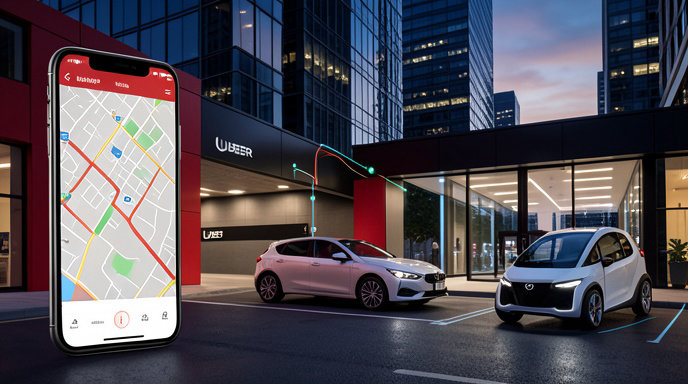
- Uber’s parking initiative is designed to extend its app beyond ride-hailing by helping users discover and reserve parking spaces.
- The reported SpotHero acquisition would give Uber access to parking inventory, booking technology and a customer base that complements its mobility platform.
- Parking could become strategically important as Uber prepares for autonomous vehicles, providing infrastructure for drop-offs, pickups, staging and charging.
Uber’s push into parking signals a broader ambition: to become the operating system for urban transportation rather than simply an app for summoning a car.
The company’s parking strategy centers on helping users find and reserve spaces before they drive. By incorporating parking into the Uber app, the company could connect more parts of a journey—from planning and driving to parking and onward travel—while creating another source of revenue outside traditional ride-hailing.
The move follows Uber’s reported acquisition of SpotHero, a parking marketplace known for allowing drivers to compare and reserve spaces in garages, lots and other facilities. The combination would give Uber a ready-made parking network and technology platform as it expands into more parts of the mobility ecosystem.
A New Layer for Uber’s Mobility Platform
Uber has spent years broadening its business beyond conventional car rides. Its platform now spans food delivery, freight, public-transit information, micromobility partnerships and other services that keep users inside the app for more transportation-related needs.
Parking fits naturally into that strategy. A driver heading into a crowded downtown district could use Uber to identify a nearby garage, check availability, reserve a spot and receive navigation. A user who parks outside a central business district could then continue the trip using an Uber ride, public transit or another connected service.
That creates a more complete journey-management product. Rather than competing only for the ride itself, Uber can participate in decisions made before and after a trip—where to park, how much it costs and which transportation option is most convenient.
The SpotHero Advantage
SpotHero’s value lies in its marketplace relationships and booking infrastructure. Parking is a fragmented industry, with inventory spread across private garages, municipal facilities, hotels, stadiums, airports and commercial operators. Aggregating that supply and presenting it in a simple digital interface is difficult to build at scale.
A SpotHero integration could allow Uber to accelerate its entry into the sector instead of developing a parking marketplace from scratch. It could also bring Uber data about parking demand, pricing, availability and trip patterns.
For customers, the practical benefit would be convenience. Reserving a parking space in advance can reduce the uncertainty associated with driving into dense urban areas, where garages may be full or prices can vary sharply by time and location.
For Uber, parking data could support more sophisticated routing and pricing features. The company could potentially recommend whether a user should drive, take an Uber, combine driving with a ride or use public transportation based on parking availability and total travel time.
From Rides to Complete Trips
Uber’s broader strategy is built around increasing the number of transportation decisions it can influence. Each additional service can make the app more useful while strengthening the company’s relationship with users.
Parking is especially relevant because it sits at the intersection of private car ownership and shared mobility. Many people still drive part of a journey but use ride-hailing for another portion. A parking product could help Uber serve that mixed behavior instead of treating driving and ride-hailing as separate activities.
The company could also use parking reservations as an entry point for new customers. Someone searching for a space near a concert, airport or downtown event may encounter Uber before booking a ride. Once inside the app, that user could be exposed to other transportation services.
The business opportunity extends beyond booking fees. Uber could earn commissions from parking operators, promote premium spaces, bundle parking with rides or offer discounts that encourage users to combine services. The company may also gain valuable information about travel patterns in locations where ride-hailing demand is high.
Why Parking Matters to Robotaxis
The parking expansion could become even more significant as Uber develops its autonomous-vehicle strategy.
Robotaxis will not operate only on roads. They will need places to wait between trips, reposition during periods of low demand, undergo maintenance and potentially recharge. In dense cities, access to strategically located facilities could affect how efficiently an autonomous fleet operates.
Parking operators could therefore become important infrastructure partners. Garages and lots may serve as staging areas where autonomous vehicles pause between rides or move away from busy streets when demand falls. Facilities near airports, entertainment districts and business centers could be especially valuable.
A parking marketplace would not automatically solve those operational challenges. Consumer parking spaces are not necessarily suitable for commercial fleet staging, charging or maintenance. Still, a platform that maps parking supply and manages reservations could provide a foundation for negotiating access to larger facilities.
Uber may also use parking data to help autonomous vehicles make better decisions. If a robotaxi knows that curb space is unavailable, it could direct a passenger to a nearby pickup zone or use a reserved facility for a temporary stop. In that sense, parking information could become part of the digital infrastructure required for autonomous transportation.
The Difference Between Consumer Parking and Fleet Infrastructure
The robotaxi connection should not be overstated. Finding a space for a human driver is a different problem from managing a large autonomous fleet.
Consumer parking depends mainly on location, price, size and availability. Robotaxi operations require additional factors, including vehicle access rules, charging capacity, cleaning and maintenance support, insurance requirements and permission to conduct commercial operations.
Uber will likely need partnerships with property owners, cities, charging providers and autonomous-vehicle companies before parking can become a meaningful part of robotaxi operations. The SpotHero marketplace may provide useful relationships and data, but it is only one component of a much larger infrastructure effort.
The company’s autonomous ambitions also depend on partners. Uber has pursued collaborations with developers of self-driving technology rather than relying solely on a single in-house vehicle program. A parking service could support those partnerships by helping autonomous fleets operate more efficiently once they reach commercial scale.
Challenges Ahead
Parking is a difficult market, and the acquisition does not eliminate its structural problems.
Availability can change quickly, particularly during events and peak commuting periods. Prices vary by demand, operator and local rules. Reservations can also create customer-service issues when a facility is full, inaccessible or unable to recognize a booking.
Uber will need to make the experience reliable enough that users trust it with time-sensitive trips. A failed reservation before a flight, meeting or concert could damage confidence in the broader platform.
The company will also face competition from established parking apps, navigation platforms, automakers and local operators. Many garages already offer their own reservation systems, while mapping companies can display parking locations and estimated prices. Uber’s advantage will depend on how effectively it connects parking with rides and other transportation services.
Regulatory and privacy concerns may also emerge. Combining ride-hailing, parking and location data could give Uber a detailed picture of where users live, work and travel. The company will need to explain how that information is used and protected.
A Step Toward Mobility-as-a-Service
Uber’s parking expansion reflects the company’s long-term attempt to move from a ride-hailing marketplace toward a broader mobility platform.
The immediate product is straightforward: search for a parking space, compare options and reserve one through Uber. The strategic implications are larger. Parking gives Uber another place in the transportation journey, another relationship with property and transportation operators, and another source of data about how people move through cities.
If autonomous vehicles become a significant part of urban transportation, that position could become more valuable. Robotaxis will require more than vehicles and software. They will need access to curbs, garages, charging locations and operational hubs.
The SpotHero acquisition, if completed as reported, would give Uber a foothold in one of those infrastructure layers. Whether that foothold becomes a major competitive advantage will depend on execution: the quality of the parking inventory, the reliability of reservations and Uber’s ability to connect consumer convenience with the operational requirements of autonomous fleets.
For now, the parking initiative is best understood as both a practical service and a strategic experiment. It helps Uber monetize more parts of a trip today while positioning the company for a future in which controlling mobility may mean managing not only the ride, but also everything that happens before the vehicle arrives and after it reaches its destination.

Get All The Latest Updates Delivered Straight To Your Inbox For Free!