
WHOOP Launches Social Network to Share Sleep, Recovery, and Workout Data
TL;DR
- WHOOP is introducing a social layer that lets members share sleep, recovery, strain, and workout data with friends and communities.
- CEO Will Ahmed is positioning WHOOP as a broader personal-health brand rather than only a wearable and subscription service.
- Ahmed has also signaled that acquisitions could help WHOOP expand into new areas of health, fitness, and wellness.
WHOOP Launches Social Network to Share Sleep, Recovery, and Workout Data
A fitness tracker is becoming a social platform.
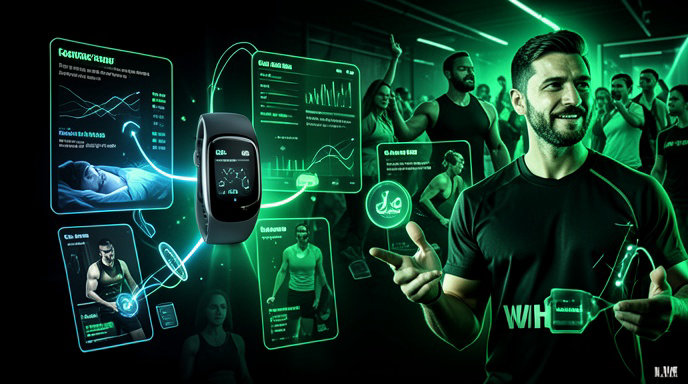
WHOOP is expanding beyond its traditional role as a wearable for monitoring sleep, recovery, and exercise strain. The company is introducing a social-networking experience designed to let members share selected health and fitness metrics, compare progress, and interact around daily performance.
The move reflects a broader ambition from CEO Will Ahmed: to make WHOOP a central consumer brand for personal health, not simply a device worn by professional athletes and dedicated fitness enthusiasts.
A Social Network Built Around Health Data
The new experience gives WHOOP members a way to share information that has historically remained private inside the company’s app. Depending on the member’s preferences, that may include sleep performance, recovery scores, workout activity, strain, and other health-related metrics.
Rather than focusing primarily on photos, status updates, or short videos, WHOOP’s social layer is built around quantified behavior. Members can use it to show how well they slept, discuss training sessions, compare recovery trends, or encourage friends to stay active.
The format could also appeal to teams, clubs, gyms, and other groups that already use WHOOP to coordinate training. Athletes may be able to share workout data with teammates, while ordinary users can use the service for accountability and friendly competition.
WHOOP’s challenge will be making health data feel social without making it feel overly competitive. Recovery scores and sleep metrics can be highly personal, and a low score may reflect stress, illness, travel, or other circumstances that users do not want to explain publicly.
Privacy Will Be Central to Adoption
WHOOP’s social push depends on giving members meaningful control over what they disclose. Health information is more sensitive than a typical social-media post, and users will likely expect granular settings for sharing data with individuals, groups, or the wider WHOOP community.
The company’s approach is expected to emphasize opt-in sharing rather than automatically exposing a member’s metrics. Users may also need the ability to hide particular measurements, limit historical data, or share summaries without revealing detailed health information.
That distinction matters because WHOOP’s value is based on continuous monitoring. The more data a member generates, the more useful the service can become—but also the more information there is to protect.
WHOOP is therefore attempting to combine the engagement mechanics of social media with data that can reveal a person’s sleep habits, physical condition, training load, and recovery patterns.
From Wearable to Personal-Health Platform
WHOOP began with a strong focus on performance optimization, especially among professional athletes and serious recreational users. Its subscription model helped the company build a recurring relationship with members, while its hardware collected data continuously throughout the day and night.
The company has gradually broadened its audience. WHOOP has promoted use cases involving sleep improvement, stress management, behavior change, women’s health, and general wellness. Its products and services are increasingly being presented as tools for understanding everyday health rather than only maximizing athletic performance.
The social network fits into that evolution. A platform where people discuss sleep and recovery can encourage members to use WHOOP more consistently, while also making the service more visible to people who do not already own the device.
Social features may also improve retention. If users build relationships, join groups, or participate in shared challenges through WHOOP, leaving the platform becomes more difficult than simply canceling a wearable subscription.
Will Ahmed’s Bigger Vision
Ahmed has described WHOOP as a company with ambitions that extend well beyond a single wearable. His broader goal is to establish WHOOP as a leading personal-health brand—one that helps people understand and improve their health through continuous data.
That vision puts WHOOP in competition with a much wider range of companies. Its rivals include wearable makers such as Apple, Garmin, Fitbit, and Oura, as well as software platforms that provide coaching, workout plans, nutrition advice, and digital wellness services.
WHOOP’s advantage is the depth of its recovery-focused data and its subscription relationship with members. Its challenge is turning those strengths into a product that appeals to mainstream consumers, many of whom may not want to analyze detailed metrics every day.
A social network could help close that gap by making WHOOP’s information easier to discuss and more relevant to everyday routines. For some users, the appeal may not be advanced training analytics but the ability to see how sleep, exercise, alcohol, travel, or stress affect their next-day recovery.
Acquisitions Could Expand WHOOP’s Reach
Ahmed has also left open the possibility of future acquisitions. Purchasing other companies could help WHOOP move more quickly into adjacent categories, including nutrition, fitness content, coaching, women’s health, mental wellness, or medical technology.
An acquisition strategy would give WHOOP access to products, engineering talent, specialized expertise, and established user communities. It could also help the company offer a more complete health ecosystem instead of relying primarily on its wearable hardware and core app.
However, acquisitions would bring their own risks. Integrating new services into WHOOP’s subscription model could make the product more complicated, while health-related acquisitions may introduce regulatory, privacy, and clinical-validation challenges.
The company would also need to avoid diluting its central identity. WHOOP’s appeal has historically come from its focused approach to performance and recovery. Expanding too aggressively could make the brand less clear to existing members.
A Different Kind of Social Competition
WHOOP is not entering social networking as a direct replacement for the largest general-purpose platforms. Its opportunity lies in creating a smaller, more purposeful community centered on measurable habits.
The company could develop social tools around group recovery trends, shared training plans, team readiness, sleep challenges, and personalized goals. Coaches and health professionals could also potentially use the platform to work with clients, provided WHOOP maintains strict controls over data access.
This creates an unusual balance. Competition can motivate people to train, sleep, or recover more consistently, but it can also encourage unhealthy behavior if members chase scores at the expense of rest. WHOOP will need to design its social features so that they reward sustainable progress rather than constant overexertion.
The company’s recovery-oriented approach gives it a natural alternative to leaderboards based only on steps, calories, or workout volume. In theory, a member who takes a rest day or prioritizes sleep could be recognized for making a smart decision—not simply for doing more.
The Business Case for Sharing Data
The social network may also strengthen WHOOP’s business model. The company has built its business around recurring subscriptions, making ongoing engagement particularly important.
If social features prompt members to check the app more often, participate in groups, and invite friends, they could generate both higher retention and more organic customer acquisition. A member’s shared recovery score could function as a product demonstration, introducing WHOOP to potential subscribers without traditional advertising.
That approach is especially valuable in a crowded wearable market. Hardware specifications are increasingly difficult to differentiate, while communities and social networks can create longer-lasting competitive advantages.
At the same time, WHOOP must convince users that social sharing improves the product rather than turning health into another source of pressure. Trust will be essential. Members need to believe that their information will not be used in ways they did not expect.
What Comes Next
WHOOP’s social-network launch is an important test of whether health data can become a compelling basis for online community. The company has an opportunity to build a more intimate and useful social experience around sleep, recovery, and exercise—but it must handle sensitive information more carefully than conventional social platforms.
The initiative also offers a preview of WHOOP’s larger strategy. Under Ahmed, the company is seeking to become a broader personal-health brand with a platform that connects hardware, software, community, and potentially acquired services.
If WHOOP succeeds, the wearable could become only one part of a much larger ecosystem. Members may use the company not just to monitor their bodies, but to find training partners, follow healthier routines, receive coaching, and manage more aspects of their daily health.
The biggest question is whether users will want to share intimate health metrics socially. WHOOP’s answer is that, with the right controls and community design, data can become more valuable when it is shared. The success of the new platform will depend on proving that idea without compromising privacy, trust, or the healthy behavior the service is meant to encourage.

Get All The Latest Updates Delivered Straight To Your Inbox For Free!