
Women’s Sports App Aims to Transform Fan Engagement Without Real-Money Gambling
TL;DR
- A new women’s-sports-focused app is designed to make games, athletes and fan communities easier to follow in one place.
- Its interactive features aim to deepen engagement without relying on real-money wagering.
- The platform reflects a broader push to build digital products around the rapidly growing audience for women’s sports.
A Dedicated Digital Home for Women’s Sports
Women’s sports are attracting larger audiences, stronger commercial investment and more consistent media coverage than ever. Yet fans still often have to piece together information from league websites, social media accounts, streaming services and general-purpose sports apps.
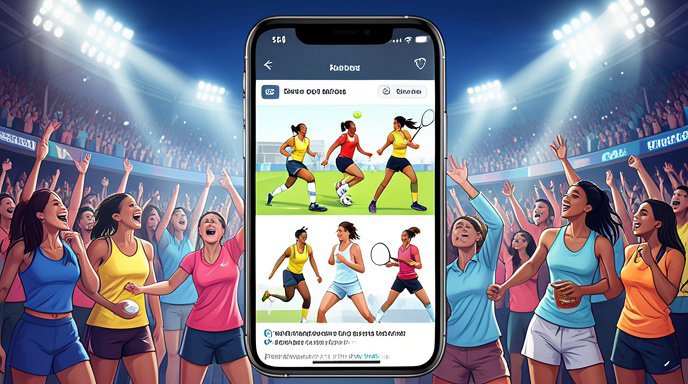
A new sports app is attempting to address that gap by placing women’s sports at the center of the user experience. Rather than treating women’s leagues as a secondary category within a broader sports product, the platform is being built around the schedules, athletes, teams and storylines that matter most to this audience.
The goal is straightforward: give fans a single, more engaging destination for following games and athletes while creating a stronger connection between live competition and the digital communities surrounding it.
More Than Scores and Schedules
Traditional sports apps generally focus on scores, standings, statistics and breaking news. Those features remain important, but the new generation of fan platforms is attempting to provide a more active experience.
A women’s-sports-focused app can bring together live game updates, athlete profiles, team information, editorial content and social features. Fans may be able to follow specific players or clubs, receive personalized alerts, participate in discussions and track major moments as they happen.
That approach could be particularly valuable in women’s sports, where fans frequently follow multiple leagues and competitions across different broadcasters and platforms. A centralized product can reduce the friction involved in finding game times, viewing results and keeping up with emerging athletes.
It also gives the platform more opportunities to highlight the context around a game. Rivalries, player development, records, injuries and off-field achievements can receive the same level of attention as the final score.
Engagement Without Real-Money Wagering
One of the app’s clearest points of differentiation is its effort to create excitement without depending on real-money gambling.
Sports betting has become increasingly visible in digital sports products, often appearing alongside scores, editorial coverage and live statistics. While wagering can increase short-term interaction for some users, it also introduces concerns about addiction, financial harm, age restrictions and the commercialization of every moment in a game.
The alternative model is based on participation rather than financial risk. Fans can be encouraged to make predictions, compete in free-to-play challenges, collect achievements, vote in polls or compare their knowledge with friends without placing money on an outcome.
This type of engagement can preserve some of the interactive appeal associated with betting while keeping the core experience centered on fandom. The distinction is important: users are participating because they care about the sport, the athletes and their communities—not because they are risking money.
For the platform, a non-wagering model could also support a more brand-safe environment. Leagues, teams and advertisers may be more comfortable associating themselves with an app that emphasizes community and discovery rather than gambling activity.
Why Women’s Sports Are Ready for New Platforms
The growth of women’s sports has exposed limitations in the existing digital infrastructure. Interest is increasing, but coverage and distribution remain fragmented. Fans may encounter a major game through a broadcast partner, follow commentary on social media and search separately for statistics or postgame analysis.
That fragmentation creates an opening for specialized technology companies. A product designed from the outset for women’s sports can prioritize the leagues and athletes that general sports platforms have historically underserved.
The opportunity is not limited to established competitions. A dedicated app could help users discover college athletes, developing professional leagues, international events and emerging sports. Better discovery may be especially important for fans who are new to women’s sports and do not yet know which teams or players to follow.
The platform could also benefit from the relatively close relationship many fans have with women athletes. Players are often central to the growth of a league’s identity, and digital products that make it easier to follow individual athletes may create stronger long-term loyalty.
Building a Community Around Athletes
Social engagement is likely to be a central part of the app’s strategy. Fans increasingly expect sports products to offer more than passive consumption, particularly on mobile devices.
Features such as reactions, fan polls, prediction games and shared match discussions can give supporters a reason to return between fixtures. Athlete-centered content can deepen that relationship by connecting performances on the field with interviews, personal stories and behind-the-scenes material.
There are challenges, however. Community features require careful moderation, strong privacy controls and safeguards against harassment. Women athletes and sports journalists frequently face disproportionate abuse online, making platform governance an essential part of the product experience.
A successful app will need to demonstrate that its community tools are not merely engagement mechanisms. They must also create a healthier environment for fans and athletes.
The Business Case for Specialized Sports Apps
A platform devoted to women’s sports can appeal to several groups at once.
For fans, it can offer better discovery and a more convenient way to follow competitions. For leagues and teams, it can provide a direct channel to supporters and a source of audience insights. For sponsors, it can create targeted advertising opportunities around a rapidly expanding market.
The app may also support premium subscriptions, sponsored content, ticketing partnerships, merchandise integrations or advertising. A free-to-play model could help attract a broad audience, while optional paid features might appeal to highly engaged supporters.
The main challenge will be turning attention into sustainable revenue without damaging the user experience. If advertising becomes excessive or important content is placed behind too many paywalls, the platform could struggle to build the habit it needs.
Competition From Existing Platforms
The app will not enter an empty market. General sports services already provide scores, alerts and statistics, while social networks remain major destinations for highlights, commentary and athlete updates. League-owned apps and streaming platforms also control important parts of the fan journey.
To stand out, the new platform will need to offer something that existing products do not. A clear editorial voice, stronger personalization, exclusive content and better community tools could help distinguish it from a standard scores app.
Data quality will be equally important. Missing schedules, delayed updates or incomplete player information can quickly undermine trust. Fans may be willing to overlook rough edges in a new social feature, but they are less likely to tolerate inaccurate scores or unreliable alerts.
A Test of Whether Digital Products Can Catch Up
The emergence of a dedicated women’s-sports app reflects a broader shift in the industry. Women’s sports are no longer being viewed only as a promising future opportunity; they are increasingly being treated as a distinct market with its own audiences, personalities and technology needs.
The platform’s success will depend on more than the number of leagues it lists. It will need to create a daily habit for fans, make athletes easier to discover and provide interaction that feels meaningful rather than superficial.
Its decision to avoid real-money gambling gives the product a clear identity. Instead of monetizing uncertainty, it can focus on knowledge, loyalty and community. That may prove to be a slower path than betting-driven engagement, but it could also produce a more durable relationship with users and partners.
As women’s sports continue to expand, the strongest fan platforms may be those that understand supporters are looking for more than access to games. They want context, connection and a place where the sports they care about are treated as the main event.

Get All The Latest Updates Delivered Straight To Your Inbox For Free!