
Wonder Files for IPO as Food Delivery Startup Serves Up Its Next Growth Chapter
TL;DR
- Wonder has reportedly taken steps toward an initial public offering, marking a potential new phase for Marc Lore’s food-delivery and restaurant technology company.
- The company has built its model through vertically integrated food production, delivery infrastructure, acquisitions and a growing portfolio that includes Blue Apron and Grubhub.
- Investors are likely to scrutinize Wonder’s path to profitability, integration costs, consumer demand, delivery economics and competition in an increasingly crowded market.
IPO Plans Put Wonder Back in the Spotlight
Wonder is reportedly preparing to go public, giving investors a closer look at a food-delivery startup that has spent years assembling an unusually broad business.
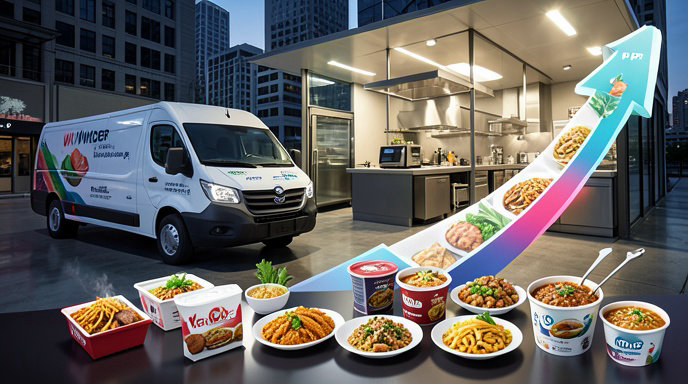
The company, founded by entrepreneur Marc Lore, has evolved from an ambitious “food hall on wheels” concept into a broader platform spanning meal preparation, delivery, digital ordering and food brands. Its reported IPO filing would test whether public-market investors are willing to back that vertically integrated strategy after a period of aggressive fundraising, acquisitions and expansion.
The filing’s reported arrival comes at a consequential moment for the delivery industry. Growth has matured across many major markets, consumers remain sensitive to delivery fees and inflation, and investors have become more focused on sustainable margins than on rapid order growth alone.
For Wonder, the public offering would provide capital and visibility—but also require the company to explain how its collection of businesses fits together and when the model can generate consistent profits.
From Mobile Kitchens to a Broader Food Platform
Wonder began with a distinctive proposition: bring restaurant-quality meals directly to consumers through mobile kitchens and centralized logistics. Rather than operating only as a marketplace connecting customers with independent restaurants, the company sought greater control over food preparation, branding and delivery.
That approach was designed to improve the customer experience while allowing Wonder to manage more of the economics of each order. The company has promoted a selection of restaurant and chef-created meals that can be ordered through its platform and delivered to households.
The strategy also creates more operational complexity. Wonder must coordinate food sourcing, preparation, packaging, routing, labor and customer service. In a marketplace model, many of those responsibilities are distributed among restaurants, couriers and third-party platforms. Wonder assumes more of them itself, potentially creating opportunities for higher quality and stronger brand loyalty but also increasing fixed costs.
Over time, the company has expanded beyond its original format. Its portfolio now reflects an effort to combine prepared meals, consumer packaged food, subscription offerings and delivery technology into a larger food ecosystem.
Acquisitions Have Expanded the Ambition
Acquisitions have been central to Wonder’s growth strategy.
The company acquired Blue Apron in 2023, adding a recognized meal-kit brand and a base of customers familiar with direct-to-consumer food subscriptions. The deal gave Wonder access to Blue Apron’s brand, recipes, customer data and fulfillment capabilities while broadening its reach beyond immediately prepared meals.
Wonder later agreed to acquire Grubhub from Just Eat Takeaway. The transaction significantly increased the scale and complexity of the company’s ambitions. Grubhub brought a large delivery network, relationships with restaurants and established consumer awareness in the U.S. market.
The combination creates the possibility of a more comprehensive food platform. Wonder can potentially use Grubhub’s ordering and delivery infrastructure to support its own brands, while its restaurant and meal offerings could add differentiation to Grubhub’s marketplace.
But the deal also raises integration questions. Grubhub’s marketplace model differs substantially from Wonder’s more controlled operating model. Bringing together technology systems, delivery networks, merchant relationships, employees and corporate cultures could take time and require substantial investment.
The acquisition also exposes Wonder to the challenges that have weighed on the broader delivery sector, including courier costs, restaurant commission disputes, discounting and intense competition for customers.
A Hybrid Business Model
Wonder’s business model sits between a restaurant operator, a delivery company, a digital marketplace and a food brand incubator.
Its vertically integrated operations could allow the company to control pricing, menus and preparation standards more closely than a traditional marketplace. In theory, that can support differentiated products and make it easier to bundle orders or encourage repeat purchases.
The model may also create operational efficiencies if Wonder can deliver multiple meals from the same facilities or route orders more effectively. A larger customer base could improve utilization of kitchens, drivers and distribution infrastructure.
However, vertical integration can magnify losses when demand is weak. Underutilized kitchens, excess labor capacity, food waste and inefficient delivery routes can quickly erode gross margins. The company must also balance convenience with pricing: customers may be willing to pay a premium for high-quality meals, but delivery charges and service fees can make orders expensive compared with cooking at home or picking up food locally.
Wonder’s prospects will therefore depend not only on revenue growth, but on the economics of individual orders and the degree to which customers order frequently enough to support the infrastructure.
The Competitive Landscape
Wonder is entering public markets in a sector populated by companies with far greater scale and more established consumer habits.
DoorDash remains the dominant U.S. delivery platform, with broad restaurant coverage and a growing presence in grocery, convenience and retail. Uber Eats benefits from its connection to Uber’s ride-hailing ecosystem and operates across numerous international markets.
Restaurants have also invested in their own digital ordering channels, while grocery chains, meal-kit companies and prepared-food providers compete for the same household spending. Consumers can choose among restaurant delivery, pickup, grocery delivery, subscription meal kits, ready-to-eat services and traditional dining.
Wonder’s response has been to emphasize control over the product itself. Instead of competing solely on delivery speed or the number of available restaurants, it has sought to offer a curated food experience supported by its own brands and operations.
That positioning could help Wonder stand out, particularly if its meals achieve strong repeat demand. Yet differentiation may be difficult to sustain if larger delivery companies add more exclusive restaurant partnerships, private-label food products or premium membership benefits.
The company must also determine how to manage the tension between its proprietary offerings and the open marketplace inherited through Grubhub. A broad selection can drive engagement, while owned brands may offer better control and potentially stronger economics.
What Investors May Examine
A public filing would give investors a much clearer view of Wonder’s performance than private-market fundraising announcements have provided.
Revenue growth will be important, but investors are likely to focus heavily on customer retention, order frequency, average order value and contribution margin. The relationship between marketing spending and customer acquisition will also matter. A business that grows only through discounts may struggle to demonstrate durable demand.
Investors will probably examine the profitability of Wonder’s core operations, the financial performance of Blue Apron and Grubhub, and the costs associated with integrating the businesses. They may also look for evidence that Wonder can achieve scale without continually increasing corporate overhead or capital spending.
Cash consumption will be another central issue. Food delivery requires investment in technology, facilities, drivers, marketing and customer incentives. If the company remains unprofitable, the IPO may be viewed partly as a source of funding for continued expansion rather than simply a liquidity event for existing shareholders.
The filing could also shed light on the company’s ownership structure, voting rights, executive compensation and any arrangements that give founders or early investors significant control. Those details often become important for investors assessing governance at founder-led technology companies.
The Road Ahead
Wonder’s IPO ambitions reflect a broader shift in how food-delivery startups are being evaluated. The era of raising capital primarily on the promise of rapid expansion has given way to a more demanding focus on operating discipline.
The company’s advantage is the breadth of its platform. It has a recognizable founder, a differentiated operating model, a meal-kit business and a major delivery marketplace. If those assets work together, Wonder could offer customers more ways to buy food while spreading technology and logistics costs across a larger business.
Its challenge is that breadth can become a liability if the pieces remain operationally or financially disconnected. The company will need to show that acquisitions are creating synergies rather than simply adding revenue, complexity and expenses.
Wonder’s public-market debut could therefore become a test of whether an integrated food platform can compete against both asset-light delivery marketplaces and specialized consumer food brands. Investors will be asking a straightforward question: can the company turn its ambitious collection of businesses into a repeatable, profitable model?
The reported IPO filing suggests Wonder believes it is ready to make that case. The public markets will decide whether the company’s next growth chapter looks like a scalable food-tech platform—or another expensive experiment in the pursuit of convenience.

Get All The Latest Updates Delivered Straight To Your Inbox For Free!