
Harbinger Raises $240 Million to Accelerate Electric Trucks and Military Driverless Vehicles
TL;DR
- Harbinger has raised $240 million, pushing its total capital raised above $650 million as it scales its electric-vehicle business.
- The Los Angeles startup is expanding beyond commercial trucks into emergency-response vehicles and defense applications.
- Harbinger is developing a driverless electric platform intended to support military logistics and autonomous operations.
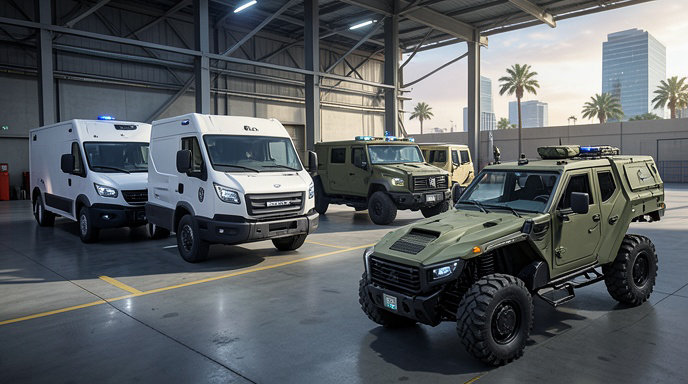
Harbinger, the Los Angeles-based electric-vehicle startup focused on medium-duty commercial vehicles, has secured $240 million in new funding as it prepares to expand production, broaden its vehicle lineup and enter the defense market.
The financing brings the company’s total capital raised to more than $650 million. Harbinger says the new funds will support the development and commercialization of its electric truck platform, emergency-response vehicles and autonomous systems designed for military applications.
The raise is a significant vote of confidence in a company attempting to tackle one of the more difficult segments of transportation electrification: medium-duty trucks that must carry heavy payloads, operate for long hours and meet demanding reliability requirements.
A Focus on Medium-Duty Electric Trucks
Harbinger was founded to build electric vehicles for commercial operators that are often underserved by passenger-car-focused EV manufacturers. Its platform is designed for medium-duty applications, including delivery trucks, service vehicles and other commercial fleets.
The company’s approach combines an electric chassis with software and vehicle architecture intended to support multiple body configurations. That flexibility allows the same underlying platform to be adapted for different customers, rather than requiring Harbinger to develop an entirely separate vehicle for every use case.
Medium-duty trucks are an attractive market for electrification because many operate on predictable routes and return to a depot at the end of the day. Fleet operators can potentially charge vehicles overnight or during scheduled downtime, while also reducing fuel and maintenance costs.
At the same time, the segment presents challenges that do not affect smaller passenger vehicles to the same degree. Trucks must provide sufficient range while carrying substantial loads, withstand frequent use and integrate with specialized equipment. Harbinger’s funding will help the company address those requirements as it moves from vehicle development toward broader deployment.
Moving Into Emergency and Specialty Vehicles
Harbinger is also applying its electric platform to emergency and specialty vehicles. These could include vehicles used by fire departments, medical-response organizations, utilities and other public agencies.
Electrification offers several potential advantages in these environments. Electric vehicles can provide instant torque, lower operating noise and onboard power for tools, communications equipment and other systems. They may also reduce local emissions in situations where vehicles spend long periods operating in populated areas or near emergency personnel.
However, emergency vehicles impose demanding requirements. They must be ready at all times, operate in difficult conditions and support equipment that can consume significant amounts of energy. Harbinger’s platform will need to balance battery capacity, payload, charging availability and operational resilience.
The company’s expansion into this category gives it a path to serve customers beyond traditional delivery and logistics fleets while using much of the same underlying electric-vehicle technology.
A New Defense Opportunity
The latest financing also marks a sharper push into defense. Harbinger is developing vehicles and systems for military customers, where electrification and autonomy are increasingly being evaluated as ways to improve logistics, reduce fuel dependence and limit risks to personnel.
Military operations often require large quantities of fuel to be transported, stored and protected. Electric vehicles could reduce the need for some fuel convoys, particularly for short-range logistics missions or operations near established bases. They can also operate more quietly than combustion-powered vehicles, an attribute that could be valuable in certain tactical environments.
Defense customers may also value electric platforms for their ability to provide mobile power. A truck equipped with a large battery could potentially support communications gear, sensors or other equipment when stationary, reducing reliance on separate generators.
The defense market nevertheless comes with its own technical and procurement hurdles. Vehicles must be rugged, repairable and capable of functioning in environments where charging infrastructure may be limited. Harbinger’s platform will need to demonstrate that electric propulsion can meet military requirements for range, payload, survivability and availability.
Developing a Driverless Military Platform
One of the company’s most ambitious projects is a driverless platform for military applications. The system is intended to enable autonomous or remotely supervised operation, potentially allowing vehicles to transport supplies without placing a driver in every vehicle.
Autonomous logistics could be useful for repetitive and hazardous missions, such as moving supplies between operating bases, carrying equipment through contested areas or following crewed vehicles in a convoy. A driverless truck could also be used for resupply missions where the risk to personnel is particularly high.
The technology will likely combine vehicle sensors, onboard computing, navigation software and remote-operations capabilities. Military deployment would require the system to function despite limited connectivity, changing terrain, poor weather and attempts to disrupt communications or navigation signals.
Harbinger’s work is part of a broader movement in the defense industry toward autonomous systems. Companies and military organizations are exploring uncrewed ground vehicles, aerial drones and robotic logistics platforms as tools that can extend operational reach while reducing exposure for service members.
From Startup Platform to Commercial Business
The new funding arrives as Harbinger works to transition from an engineering-led startup into a larger commercial vehicle manufacturer and technology supplier. That transition requires more than building prototypes. The company must establish production capacity, supply chains, service operations and customer support capable of meeting fleet buyers’ expectations.
Commercial fleet customers typically evaluate vehicles based on total cost of ownership rather than purchase price alone. Battery durability, charging costs, uptime, maintenance requirements and residual value all influence buying decisions.
Harbinger’s ability to win repeat orders will depend on whether its trucks can deliver reliable performance in real-world fleet operations. Demonstrating that performance could be especially important as operators weigh the upfront cost of electric trucks against potential savings in fuel and maintenance.
The company’s platform strategy may help it scale by allowing multiple vehicle types to share components, software and manufacturing processes. It may also give fleet operators a more consistent experience across delivery, service and specialty applications.
Funding Comes as EV Competition Intensifies
Harbinger is entering an increasingly competitive commercial EV market. Established truck manufacturers, electric-vehicle specialists and technology companies are all pursuing fleet customers with offerings that range from delivery vans to heavy-duty tractors.
The broader market has also faced pressure from high interest rates, uncertain demand, battery costs and the uneven rollout of charging infrastructure. Some fleet operators have slowed purchasing decisions while they assess vehicle economics and wait for more charging capacity.
Against that backdrop, the $240 million raise gives Harbinger additional financial room to continue development and pursue new customers. It also signals that investors see potential in a focused approach to commercial vehicles, particularly as regulations and corporate emissions targets encourage fleet electrification.
Defense applications could provide another avenue for growth, although government contracts generally involve long sales cycles, testing requirements and procurement processes that can differ substantially from commercial business.
What Comes Next
Harbinger’s next stage will be defined by execution. The company will need to expand production, validate its electric trucks with customers and turn its defense concepts into systems that can meet military standards.
The driverless platform will face an especially high bar. Autonomous military vehicles must be dependable in conditions that are more unpredictable than typical commercial routes, while also maintaining safe behavior when sensors, maps or communications are degraded.
If Harbinger succeeds, its technology could support a broad family of vehicles spanning commercial delivery, emergency response and military logistics. That would give the startup multiple routes to market while allowing it to reuse core investments in electric propulsion, vehicle controls and software.
The $240 million financing does not eliminate the challenges facing the company or the commercial-vehicle sector. It does, however, provide Harbinger with the resources to pursue a larger vision: electric trucks that serve everyday fleets, specialized vehicles for emergency operations and autonomous platforms capable of carrying out dangerous military missions without putting a driver behind the wheel.

Get All The Latest Updates Delivered Straight To Your Inbox For Free!