
Intrigued and Creeped Out: The Dual Nature of Amazon's Bee Wearable
TL;DR
- Amazon’s Bee wearable is evolving from a simple always-listening note taker into a more proactive AI assistant that can draft emails, surface patterns, and suggest actions.
- Users are drawn to the promise of an ambient “second brain,” but the device’s constant listening model continues to raise serious privacy and consent concerns.
- Bee says audio is processed in real time and not stored, yet the broader debate now centers on what people are comfortable letting an AI hear, infer, and remember.
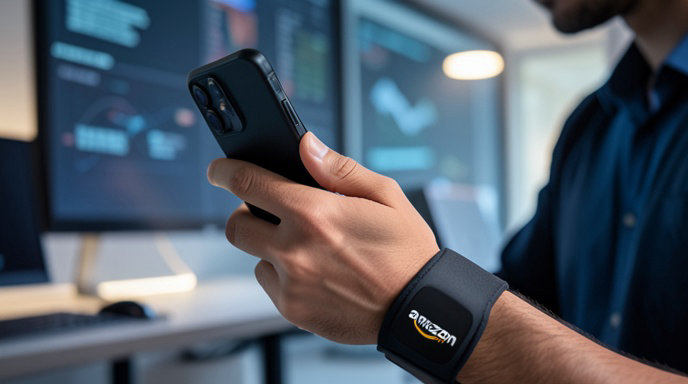
Amazon’s Bee wearable has quickly become one of the clearest examples of the promise-and-problem of consumer AI hardware. On one hand, it offers something people have wanted for years: a frictionless way to capture ideas, summarize conversations, and turn loose thoughts into useful next steps. On the other hand, its always-on nature can feel unsettling, especially in a world already uneasy about surveillance, data collection, and recording consent.
What started as a tiny $50-ish wearable that listens, transcribes, and summarizes has now grown into something more ambitious. Bee’s latest updates move the device beyond passive note-taking and toward a more agentic role, where it doesn’t just record your life but tries to help manage it.
From recorder to proactive assistant
Bee’s new features point to Amazon’s broader vision for ambient AI: a wearable that sits quietly in the background, absorbs context, and then acts on it. The company has rolled out several major updates for existing Bee hardware, including tools designed to make the device feel more like a personal assistant than a voice memo gadget.
One of the biggest additions is Actions, which connects Bee to a user’s email and calendar. The idea is simple but powerful: if you mention that you need to send an email or set up a meeting, Bee can help draft the message or create the next step. In practice, that turns casual conversation into a workflow.
Another feature, Daily Insights, looks for patterns in the data collected over time. Bee says it can identify trends in mood, behavior, and relationships, then surface observations a user may not have noticed themselves. In effect, it tries to act a little like a life coach, or at least like a system that keeps track of the emotional and social texture of daily life.
Voice Notes is a more straightforward quality-of-life feature. Users can press a button to capture a passing idea, a reminder, or a task before it disappears. Templates, meanwhile, helps summarize and reorganize larger chunks of information, such as lecture notes or meeting recaps.
The appeal of an ambient “second brain”
The excitement around Bee comes from a very real problem: people forget things. They miss follow-ups, lose track of commitments, and struggle to turn informal conversations into actionable memory. A wearable that automatically captures context and transforms it into summaries or to-dos is undeniably useful.
That usefulness is what makes Bee feel less like a novelty and more like the start of a new product category. It is not trying to replace a phone or smartwatch. It is trying to become an invisible layer of intelligence that lives alongside you all day.
For some users, that is the dream. Instead of manually taking notes, typing reminders, or reconstructing what was said in a meeting, Bee aims to quietly do the remembering. Its fans see it as a shortcut to better organization and less mental clutter.
Why the creep factor remains real
But the same qualities that make Bee compelling also make it hard to ignore. A device that can listen to conversations, analyze speech, and infer trends from everyday life naturally raises questions about privacy, consent, and boundaries.
The biggest concern is not just that Bee records, but that it changes the social dynamics of being around someone wearing it. Even if the wearer finds it helpful, everyone else in the room may feel differently. In a world where many people assume a conversation is private unless a phone is obviously out and recording, a subtle wearable can feel more intrusive.
This concern has only grown as Bee becomes more capable. A passive recorder is one thing. A device that can draft emails from what you said, identify relationship patterns, and suggest actions based on your personal life feels much more intimate.
Some observers see that as the natural evolution of AI hardware. Others see it as a line that blurs too quickly between convenience and surveillance.
What Bee says about privacy
Bee has consistently said it does not store audio recordings and that processing happens in real time. The company says audio is deleted after processing and that neither Bee nor Amazon has access to transcripts.
That privacy posture matters, especially in a market where trust is often as important as performance. Bee also uses a visible recording indicator, and users are meant to actively start or stop recording rather than rely on a fully silent always-on mode by default.
Still, the privacy discussion does not end there. Even if raw audio is not stored, the device still processes highly sensitive information. That means the practical concern shifts from “Is my conversation saved forever?” to “What does the system infer from what it hears, and how comfortable am I with that?”
There is also the issue of recording laws, which vary by jurisdiction. A device can be technically designed around privacy protections and still run into legal or ethical complications depending on where it is used and who is being recorded.
A new kind of wearable, and a new kind of discomfort
Bee is part of a broader wave of AI wearables that are trying to rethink what personal computing looks like. These devices do not ask for much interaction. They do not need screens. They are built around the idea that the future of AI is ambient, contextual, and conversational.
That design philosophy is exactly what makes them intriguing. It also explains why many people feel uneasy about them.
Unlike a smartwatch that counts steps or shows notifications, Bee enters more intimate territory. It listens to what you say, how you say it, and what your days look like over time. That makes it feel more personal than a phone app and more psychologically invasive than a typical gadget.
The result is a strange emotional split: Bee can sound incredibly useful in one moment and unnervingly invasive the next.
Amazon’s bigger bet on wearable AI
Amazon’s interest in Bee suggests the company sees wearables as a major future frontier for AI. Rather than building a chatbot that users visit occasionally, Amazon appears to want something that lives with the user, learns continuously, and eventually becomes proactive.
That vision fits the broader industry shift away from isolated prompts and toward systems that can anticipate needs. The goal is no longer just to answer questions. It is to notice patterns, suggest actions, and help execute them.
If Amazon gets this right, Bee could become a template for a whole class of consumer AI devices. If it gets it wrong, the product could become a cautionary tale about how fast convenience can collide with discomfort.
The bottom line
Bee is fascinating because it is both helpful and hard to ignore. It promises a more effortless way to capture life as it happens, then turns that capture into reminders, summaries, and suggestions. For busy users, that can feel transformative.
But it also forces a deeper question about the future of AI: how much of our lives do we want a wearable to hear, remember, and interpret?
That tension is what makes Bee such a compelling product. It is not just a gadget. It is a test of how much trust people are willing to hand over in exchange for convenience.

Get All The Latest Updates Delivered Straight To Your Inbox For Free!