
DoorDash Takes Flight: Launching Its Own Drone Delivery Service in the U.S.
TL;DR
- DoorDash has received FAA Part 135 air carrier certification, allowing it to run its own commercial drone delivery operation in the U.S. under the new DoorDash Air program.
- The move shifts DoorDash from relying mainly on partners to building an in-house drone fleet, positioning it more directly against rivals like Wing, Amazon Prime Air, and Zipline.
- For customers, the near-term impact is likely limited, market-by-market rollout rather than nationwide drone delivery on day one, with broader specs and deployment details expected later in 2026.
DoorDash gets the green light to fly
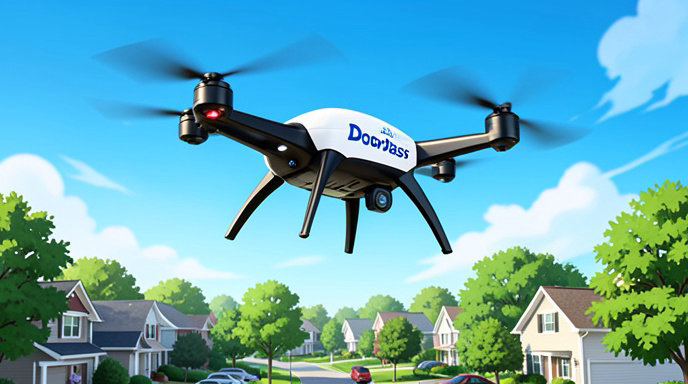
DoorDash has secured FAA approval to operate its own commercial drone delivery service, marking a major step in its push to automate more of the last mile. The company said its new program, DoorDash Air, earned Part 135 air carrier certification, the regulatory framework required for commercial drone package delivery in the U.S.
The approval matters because Part 135 is not a simple permit. According to the FAA, operators must go through a multi-stage certification process and meet requirements tied to safety, maintenance, airworthiness, and operational compliance before they can fly commercially. DoorDash said it completed the FAA’s five-stage evaluation process through DoorDash Labs, the company’s internal robotics and autonomy division.
What DoorDash Air changes
Until now, DoorDash has experimented with drone delivery through partnerships. With this certification, it can now operate its own drone fleet instead of depending entirely on third-party providers.
That shift gives DoorDash more control over:
- Fleet design and operations
- Delivery integration inside its app
- Scheduling and routing
- Long-term economics of aerial delivery
DoorDash said it plans to share more aircraft and rollout details later in 2026, and one report said commercial deliveries could begin this fall. Even so, the practical reality is that this is a regulatory launch, not an instant nationwide deployment.
Why the certification matters for the food delivery industry
Drone delivery has long been viewed as one of the most promising ways to reduce delivery times and expand service into areas that are difficult or expensive to cover with cars and couriers. The FAA’s own drone delivery guidance highlights that Part 135 operators must also address airspace authorization, local requirements, community notification, environmental review, and delivery infrastructure before operating at scale.
For DoorDash, owning the aerial logistics stack could help it:
- Cut delivery times on short routes
- Reduce dependence on human drivers for eligible orders
- Expand service in suburban or low-density areas
- Create a more flexible multi-modal delivery network
The broader industry implication is that drone delivery is moving from pilot projects to regulated commercial operations. That does not mean drones will replace drivers soon, but it does show that major platforms are now treating them as a serious operational tool rather than a novelty.
How this positions DoorDash against competitors
DoorDash is entering a field already crowded with serious players. Reports note that the company joins a small group of operators with this FAA designation, including names such as Wing, Amazon Prime Air, Flytrex, and Zipline.
That makes DoorDash’s move strategically important in two ways:
- Competitive parity: It prevents DoorDash from being left behind as rivals build drone-based logistics systems.
- Platform advantage: DoorDash can pair drones with its existing marketplace, merchant network, and delivery software.
One report also described DoorDash as moving away from its partnership model and into direct competition with other drone operators. In a market where speed, cost, and regulatory experience matter, owning the drone stack could become a meaningful differentiator.
What consumers may actually see
For consumers, the biggest question is whether this means drones will soon be dropping food at every doorstep. The answer is not yet.
FAA certification authorizes commercial operation, but it does not mean every address will immediately qualify. Delivery availability will still depend on factors such as:
- Local rollout plans
- Merchant participation
- Airspace and weather conditions
- Geographic eligibility
- Infrastructure readiness
In other words, customers are more likely to see limited pilot zones first, rather than universal access across all DoorDash markets.
That said, where it does become available, drone delivery could offer:
- Faster delivery for eligible small orders
- Less congestion-related delay
- Potentially more reliable ETAs in certain zones
- A new option for time-sensitive purchases
The bigger bet: autonomy in the delivery stack
DoorDash’s drone move fits a broader shift toward automation across logistics. The company has increasingly explored robotics and autonomous delivery as a way to improve efficiency and reduce the friction of the last mile.
The logic is straightforward: if a platform can dynamically decide whether a package should go by driver, sidewalk robot, or drone, it can potentially optimize for speed and cost in real time. That is the long-term promise of DoorDash Air, even if the near-term rollout remains narrow.
What happens next
The most important details to watch now are:
- Which markets DoorDash launches first
- What kind of drones it uses
- How quickly it expands beyond initial pilots
- Whether it keeps partnering with outside drone firms while scaling its own fleet
DoorDash has signaled that more technical and rollout information is coming later in 2026. Until then, the company’s FAA approval is best understood as a major regulatory milestone: DoorDash is no longer just testing the future of delivery from the ground. It is officially building it in the air.

Get All The Latest Updates Delivered Straight To Your Inbox For Free!