
OpenAI Unveils Its First Hardware Device: A Moving Companion Speaker
TL;DR
- OpenAI is preparing its first hardware device: a screenless, voice-first smart speaker designed by Jony Ive that functions as an always-on ChatGPT companion.
- Launch timeline targets late 2026 to early 2027, with prototypes already existing and production handled by Foxconn using Apple’s supply chain.
- The device will not replace your phone but work alongside it, featuring microphones, a built-in camera for object recognition, and advanced audio models for natural, interruptible conversations.
The Screenless Companion: OpenAI’s Hardware Ambitions Take Shape
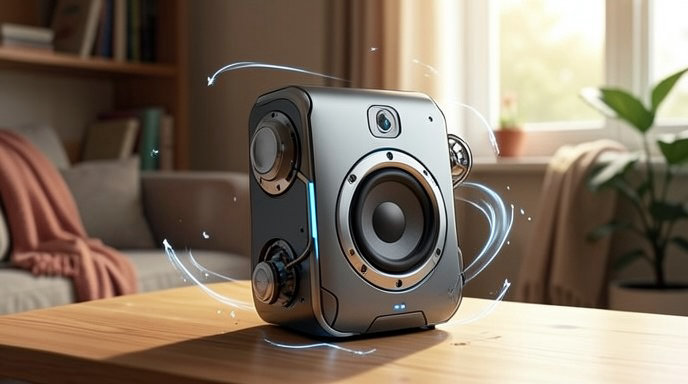
OpenAI is officially transitioning from a software-only AI leader to a hardware manufacturer, with its debut product set to be a compact, screenless smart speaker that brings the personality of ChatGPT into physical form. Unlike traditional smart speakers that rely on static displays or simple command lists, this new device is designed to be a "moving companion" that interacts through voice, vision, and mechanical movement, embodying the essence of an AI that is always present and context-aware.
A Design Vision Led by Jony Ive
The most significant factor driving the device’s identity is its design leadership by Jony Ive, the former Chief Design Officer of Apple who is renowned for the iPhone and iPod. OpenAI acquired Ive’s hardware company, IO, in a historic $6.5 billion deal in 2025, bringing 55 hardware and industrial design experts to the team to execute this vision.
The resulting device is described as palm-sized, roughly the dimensions of an old iPod Shuffle, and is light enough to be worn on a lanyard around the neck. It is completely screenless, featuring zero buttons, no touch interface, and no display, relying entirely on a voice-first interaction model. The design philosophy prioritizes minimalism and ubiquity, aiming to create a gadget that supplements rather than replaces smartphones and laptops.
Mechanical Movement and Physical Interaction
While early reports focused heavily on the audio capabilities, the device is engineered with mechanical elements for movement, distinguishing it from static speakers like the Amazon Echo or Apple HomePod. This physical mobility allows the device to "embody" ChatGPT, creating a unique companion experience where the AI can physically shift or orient itself during conversation to enhance the sense of presence.
The device integrates microphones and a built-in camera to perceive its surroundings. This camera capability enables the AI to identify objects and understand what is happening in a room, allowing it to tailor responses based on visual context. By combining audio input with visual data, OpenAI aims to create a "context-aware" assistant that gathers information from its environment to provide more accurate and personalized help.
Advanced Audio Models for Natural Conversation
The hardware is only half of the story; the device’s success depends on upgraded ChatGPT audio models expected to launch in early 2026. These new audio architectures are designed to facilitate more natural, emotive, and interruptible conversations, a critical feature for a device that acts as a constant companion.
Key improvements in the audio model include:
- Simultaneous speech: The ability for the AI to speak while a user is talking, simulating real human dialogue.
- Better interruption handling: The system can pause or adjust its response when a user interrupts, avoiding the "wall of text" feeling of older voice assistants.
- Emotive depth: Responses will feature greater accuracy and emotional depth, moving beyond robotic recitations to more engaging interactions.
These upgrades are intended to make the device feel less like a tool and more like a portable ChatGPT that is always on, capable of managing calendars, reading emails, taking meeting notes, and controlling smart home devices entirely hands-free.
Supply Chain and Manufacturing Strategy
OpenAI has leveraged its partnership with Ive to tap into Apple’s supply chain in China for production. The company has secured contracts with major assemblers Luxshare and Goertek, both known for producing components for Apple products, to supply speaker modules and other hardware.
The primary manufacturing partner for the device is Foxconn, the same company that mass-produces iPhones and other Apple hardware. This strategic move ensures that OpenAI can scale production rapidly; leaked internal conversations suggest the company aims to produce 100 million devices faster than any company has ever shipped a new product.
Launch Timeline and Market Expectations
The official launch is currently targeted for late 2026 to early 2027. While Sam Altman stated in November 2025 that prototypes already exist and the product should arrive in under two years, recent court filings spotted by Wired suggest the device may not ship before February 2027 at the earliest.
Despite potential delays, OpenAI remains "on track" for an official announcement or demo by late 2026. The device is positioned to add an estimated $1 trillion in value to OpenAI, representing a massive expansion of the company’s ecosystem.
A Family of Devices in the Future
This speaker is not expected to be OpenAI’s only hardware product. CEO Sam Altman has expressed a vision for a "family of devices" stemming from the partnership with Ive. Following the initial smart speaker, the roadmap includes:
- Smart AR glasses: Expected to launch around 2028.
- A wearable AI pin: Described as smaller than an iPod Shuffle with no screen, featuring only microphones and sensors.
- A digital voice recorder: Another potential product in the lineup.
These devices will all aim to serve as always-on AI companions, creating a seamless, screen-free ecosystem where AI is integrated into daily life through voice and vision rather than screens.
Privacy and Competition Risks
As OpenAI enters the hardware market, it faces significant challenges regarding privacy, hardware logistics, and competition. The inclusion of a camera and microphone in a wearable, screenless device raises questions about data collection and user privacy that the company must address. Additionally, the company must compete with established giants like Apple, Amazon, and Meta in the consumer hardware space, where hardware failures can be costly.
Despite these risks, the move represents a bold leap for OpenAI, merging its advanced AI technology with physical interaction to create a new category of personal computing. With Jony Ive’s design expertise and a supply chain built on Apple’s standards, the "moving companion speaker" aims to redefine how users interact with AI in the physical world.

Get All The Latest Updates Delivered Straight To Your Inbox For Free!