
OpenAI Challenges Apple's Trade Secret Claims in Court
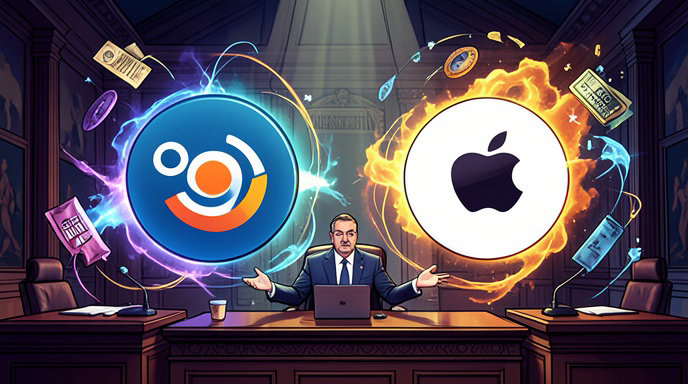
TL;DR
- OpenAI has formally rebutted Apple's lawsuit, asserting that the trade secret theft claims lack legal merit and that the company has "no interest" in other firms' proprietary information.
- Apple alleges institutional misconduct, claiming OpenAI hired former Apple employees who stole product designs, manufacturing processes, and supply chain strategies to accelerate its own consumer hardware push.
- The legal battle threatens OpenAI's IPO plans, as a prolonged court case could complicate the AI giant's financial roadmap while intensifying tensions between the two companies following their 2024 ChatGPT-Siri partnership.
Apple has filed a lawsuit against OpenAI accusing the AI firm of stealing trade secrets, but OpenAI has quickly issued a rebuttal denying the claims and challenging their legal validity. The dispute centers on allegations that OpenAI's Chief Hardware Officer, Tang Tan, and technical staff member Chang Liu—both former Apple employees—unlawfully acquired proprietary information to benefit OpenAI's nascent hardware business.
The Core of Apple's Allegations
Apple's lawsuit, lodged in the Northern District of California, describes a "coordinated pattern of misconduct at an institutional level" by OpenAI. The complaint alleges that OpenAI poached former Apple employees who retained company laptops and exploited security vulnerabilities to access internal systems after their departure. Specifically, Apple claims these individuals downloaded dozens of confidential hardware files, including product designs and manufacturing processes, and helped others evade Apple's exit checks.
The allegations extend beyond individual theft to broader corporate tactics. Apple asserts that OpenAI conducted "show and tell" interviews where candidates still employed by Apple presented proprietary information and used shared suppliers to replicate Apple's proprietary metal-finishing process. The filing states that OpenAI's hardware business now rests on "shakiest of foundations, rotten to its core by its illegal reliance on misappropriated trade secrets." Apple is seeking a jury trial, demanding that OpenAI destroy proprietary materials and redesign upcoming products to exclude Apple's technology.
OpenAI's Formal Rebuttal
In response to the lawsuit, OpenAI has firmly rejected Apple's accusations, stating that the claims lack legal merit. A spokesperson for OpenAI, Drew Pusateri, declared, "We have no interest in other companies' trade secrets," emphasizing the company's focus on building innovative technology that empowers people. The company's rebuttal challenges the validity of Apple's narrative, arguing that the allegations do not hold up legally and that OpenAI developed its technology independently.
OpenAI's stance highlights a significant shift in the relationship between the two tech giants. While the firms established a partnership in 2024 to integrate ChatGPT with Apple's Siri virtual assistant, the legal action marks a rapid decline in their collaboration. OpenAI's denial suggests that the company views the lawsuit as a strategic move by Apple to hinder its consumer hardware ambitions rather than a legitimate legal dispute over intellectual property.
Implications for the Tech Industry
This legal battle carries significant implications for both companies and the broader technology sector. For OpenAI, the potential of a prolonged legal battle could complicate its plans as it gears up for an initial public offering (IPO). The uncertainty surrounding the lawsuit may affect investor confidence and delay the company's financial roadmap. Additionally, if Apple succeeds in forcing OpenAI to redesign upcoming products, it could disrupt the AI firm's hardware strategy and market entry.
For Apple, the lawsuit underscores the intense competition in the consumer hardware space, particularly as AI companies increasingly seek to connect with consumers directly by bypassing other companies' devices. The case also highlights the growing tension between traditional tech giants and AI firms, as both sectors vie for control over the next generation of consumer technology. If the court finds that OpenAI misappropriated trade secrets, it could set a precedent for how AI companies handle intellectual property and employee recruitment in the future.
The Role of Former Employees
The lawsuit places significant focus on the actions of former Apple employees Tang Tan and Chang Liu. Tan, who served as Apple's vice president of product design before joining OpenAI as its Chief Hardware Officer, is alleged to have directed job candidates to conduct "show and tell" sessions with proprietary information. Liu, a technical staff member, is accused of unlawfully acquiring proprietary information through various tactics.
Apple's filing notes that more than 400 of its former workers are now at OpenAI, suggesting a broader trend of talent migration between the companies. The case raises questions about the ethics of hiring former employees from competing firms and the safeguards companies must implement to protect their trade secrets during the transition. As the legal proceedings continue, the outcomes could influence how tech companies manage employee departures and the integration of former staff into rival organizations.

Get All The Latest Updates Delivered Straight To Your Inbox For Free!