
Castelion Hits $13B Valuation to Mass-Produce Hypersonic Missiles and Disrupt Defense Primes
TL;DR
- Castelion has reportedly reached a $13 billion valuation after a massive new funding round, positioning the 2022-founded startup as one of the most valuable defense tech unicorns in the U.S.
- The company is pursuing a SpaceX-inspired strategy to mass-produce low-cost, rapidly iterable hypersonic missiles, directly challenging legacy primes like Lockheed Martin and Raytheon on speed and price.
- The breakthrough signals a major shift in the Pentagon's approach to deterrence, as the U.S. races to close the hypersonic gap with China and rebuild a scalable defense industrial base.
From Garage Startup to Defense Decacorn
In just under four years, Castelion has gone from an unknown El Segundo startup to a central player in America's next-generation weapons strategy. Founded in late 2022 by former SpaceX executives Bryon Hargis, Sean Pitt, and Andrew Kreitz, the company was built on a single, contrarian bet: that hypersonic weapons — long considered exquisite, expensive, and impossible to mass-produce — could be built like rockets.
This week, that bet appears to have paid off spectacularly. Castelion has secured a new mega-round that catapults its valuation to $13 billion, a staggering figure for a hardware company that only conducted its first flight tests last year. While the company has not publicly disclosed the full terms, reports indicate the round was led by existing backers including Andreessen Horowitz and Lightspeed Venture Partners, with participation from major late-stage investors now flooding into defense tech. The valuation places Castelion in the same elite tier as Anduril and SpaceX, and makes it one of the fastest defense startups in history to reach decacorn status.
The Mission: Affordable, Mass-Produced Hypersonics
For decades, hypersonic weapons — defined as systems capable of sustained flight above Mach 5 with atmospheric maneuverability — have been the ultimate military moonshot. The U.S. has spent billions on programs that produced a handful of exquisite prototypes, while China and Russia have moved faster to field operational systems.
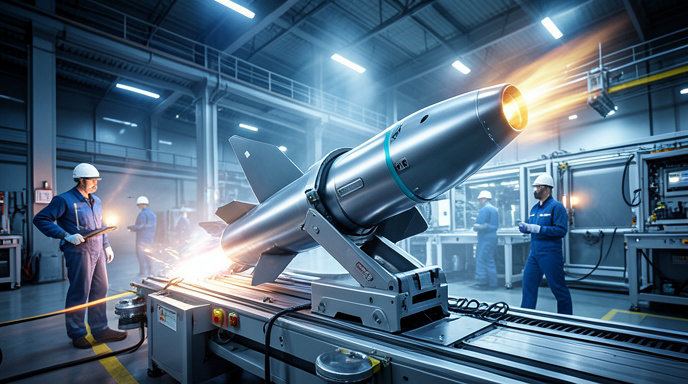
Castelion's mission is to completely invert that model. Instead of building a few perfect missiles at a cost of tens of millions per unit, the company wants to build hundreds, even thousands, of cheaper, "good enough" hypersonic systems that can be produced at scale.
Its flagship product family, including its Blackbeard ground-launched hypersonic strike system, is designed around commercial supply chains, vertical integration, and rapid hardware iteration. The company has been open about borrowing directly from SpaceX: test frequently, fail fast, and redesign in weeks rather than years. That approach was demonstrated in its rapid cadence of flight tests in the Mojave Desert throughout 2024 and 2025, where the company iterated through multiple vehicle generations in under 18 months.
Beating the Primes at Their Own Game — But Faster and Cheaper
The $13 billion valuation is not just a win for Castelion; it is a direct indictment of the traditional defense prime model. Legacy contractors like Lockheed Martin, Northrop Grumman, and RTX have dominated hypersonic development through cost-plus contracts that prioritize performance over producibility and can take a decade to deliver a deployable system.
Castelion, and a new wave of defense startups like Anduril and Hadrian, are selling the Pentagon something different: speed, cost, and scale.
By owning its manufacturing, 3D-printing key components, and avoiding the sprawling subcontractor networks that bloat prime programs, Castelion claims it can build hypersonic weapons at a fraction of the traditional cost and timeline. The Pentagon has taken notice. The company has already secured development and prototyping contracts with the U.S. Air Force and the Department of Defense's Defense Innovation Unit, and is widely seen as a frontrunner for large-scale production contracts as the military looks to stockpile hypersonic munitions for potential Indo-Pacific contingencies.
What This Means for U.S. Deterrence and the Industrial Base
The implications extend far beyond one company's balance sheet. The U.S. is currently facing a critical deterrence gap. Pentagon leaders have repeatedly warned that China has fielded hundreds of hypersonic weapons while the U.S. has fielded none at scale, and that America's defense industrial base is not equipped to produce the thousands of advanced missiles it would need in a protracted conflict.
Castelion's rise represents the Pentagon's most aggressive attempt yet to fix that. By anointing a venture-backed startup to build a core strategic weapon, the Department of Defense is betting that Silicon Valley's manufacturing playbook can rebuild the arsenal of democracy.
If Castelion succeeds in delivering affordable, mass-produced hypersonics, it will not only provide a credible deterrent against near-peer adversaries but also prove that the future of American military power will be built not just by century-old primes, but by fast-moving hardware startups. The $13 billion question now is whether the company can transition from rapid prototyping to true mass production — and deliver on the promise of hypersonics at scale.

Get All The Latest Updates Delivered Straight To Your Inbox For Free!