
Elon Musk's Focus Shift: Is Tesla Losing Its Automotive Edge?
TL;DR
- Elon Musk has increasingly used Tesla earnings calls to emphasize AI, robotaxis, and Optimus rather than the company’s car business, signaling a broader shift in strategy.
- Tesla is still selling more vehicles, but profits are being squeezed by heavy R&D and capital spending on autonomy, chips, factories, and robotics.
- The big question now is whether Tesla can remain a top EV maker while trying to become a physical AI company built around robots and self-driving systems.
Elon Musk's Focus Shift: Is Tesla Losing Its Automotive Edge?
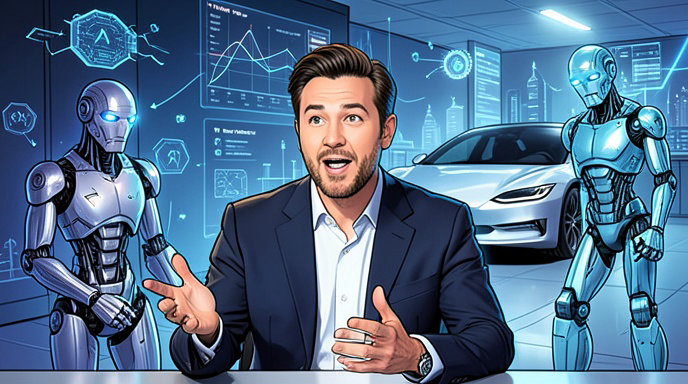
Over the past several years, Tesla earnings calls have sounded less like reports from a car company and more like pitch meetings for an AI-and-robotics platform. Musk has repeatedly steered investor attention toward robotaxis, humanoid robots, and custom AI hardware, framing them as the real drivers of Tesla’s future.
That shift is visible in the latest earnings coverage as well. Tesla’s second-quarter update highlighted strong vehicle deliveries, but the discussion quickly moved to capital spending, autonomy, robotaxis, and Optimus, with Musk and CFO Vaibhav Taneja emphasizing that the company is in a “massive capex year” that will extend for years.
From cars to robots
The clearest sign of Tesla’s changing priorities is how much space robotaxis and Optimus now take up on earnings calls. Tesla has said it is expanding robotaxi operations across multiple U.S. metro areas, while also pushing ahead with Optimus manufacturing plans and AI compute investments.
In Tesla’s Q4 2025 call, Musk said the company would convert Fremont production space previously used for Model S and Model X into an Optimus factory, with a long-term goal of eventually producing one million robots a year in that space. That is a striking statement for a company that built its identity on electric vehicles.
The car business is still strong, but the margins are under pressure
Tesla is not abandoning cars today. The company continues to report record or near-record vehicle deliveries in some quarters, and its automotive operations remain central to revenue. But the financial picture shows the cost of Musk’s broader ambition.
PBS reported that Tesla’s profits fell as the company increased R&D spending, even as car sales rose, with spending on research climbing sharply year over year. Axios likewise reported that Tesla plans to spend more than $25 billion on capital investments this year, with that pace expected to rise over the next two to three years as Tesla pours money into robotaxis, Optimus, semiconductors, solar manufacturing, and AI infrastructure.
That creates a classic tension for investors: Tesla’s core auto business still produces the cash, but the company is using more of that cash to build businesses that may not scale quickly or profitably.
Musk says the future is “physical AI”
Musk has increasingly described Tesla as more than an automaker. Recent earnings-call language has leaned heavily into “AI,” “robotics,” and “physical AI,” suggesting that Tesla’s mission is being reframed from selling EVs to building intelligent machines that move in the real world.
That is not just branding. Tesla’s spending priorities now include AI chips, factories, robot production lines, and autonomous driving systems. In practical terms, that means the company is reallocating attention and resources away from a pure automotive roadmap.
What this means for Tesla’s competitive position
The upside of Tesla’s strategy is obvious: if autonomy and humanoid robotics work at scale, the company could open entirely new markets far larger than cars alone. Tesla’s latest commentary suggests management believes those investments could produce extraordinary returns.
The risk is equally clear. A company can only divide attention so many ways before its core business starts to lose sharpness. Tesla still faces intense competition in EVs, pricing pressure, and the need to keep improving vehicle quality and affordability. If Musk spends more time on AI chips, robots, and robotaxis than on the automotive lineup itself, rivals could gain ground in the market that made Tesla famous.
Investors are left with a harder question
Tesla’s evolving story is no longer just about how many cars it ships. It is about whether the company can execute a once-in-a-generation pivot without weakening the very business that funded the pivot in the first place.
For now, Tesla appears determined to bet big on a future where cars are only one part of the business. Whether that becomes a masterstroke or a distraction will depend on whether its robotaxi and robotics ambitions can mature before the automotive edge starts to dull.

Get All The Latest Updates Delivered Straight To Your Inbox For Free!