
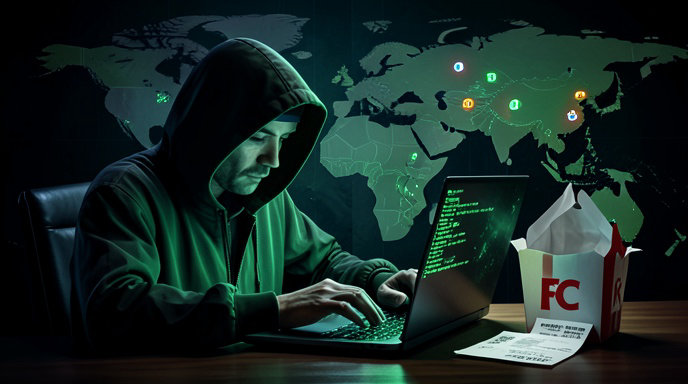
LightSpy Spyware Exposed: China-Linked Hackers Hit 13 Countries, KFC Order Unmasks Operator
TL;DR
- A China-linked threat actor used the LightSpy spyware to compromise victims across 13 countries, including the US, in a campaign targeting iOS and macOS devices.
- The operation was exposed after the operator made a critical mistake: ordering KFC delivery to their office using a real name and address, which allowed researchers to trace the activity to a specific Chinese tech company.
- LightSpy is a modular, feature-rich implant capable of stealing files, recording audio, capturing screenshots, and harvesting credentials from messaging apps.
The Slip That Sank a Spy Operation
Every intelligence operation has a golden rule: operational security. Keep your personal life separate from your work. One Chinese-linked hacker apparently missed that memo. A sprawling LightSpy spyware campaign that silently compromised devices across 13 countries came crashing down not because of a sophisticated counter-intrusion, but because an operator got hungry and ordered a bucket of fried chicken.
Cybersecurity researchers tracking the malicious infrastructure stumbled upon a trail of digital breadcrumbs that led directly to a KFC delivery order. The operator used their real name and office address for the food delivery, effectively handing investigators the keys to the entire operation. That single lapse in judgment allowed researchers to pivot from anonymous malware infrastructure to a physical office and a named employee at a specific Chinese company.
What Is LightSpy?
LightSpy is not your run-of-the-mill malware. It is a modular, advanced surveillance framework designed primarily for Apple devices—both iOS and macOS—though variants have been spotted on Android and Windows. The spyware operates with a command-and-control (C2) architecture that allows the operators to push new modules to infected devices on the fly.
Once implanted, LightSpy acts as a digital vacuum. Its core capabilities include:
- File Exfiltration: Silently uploading documents, photos, and databases from the target device.
- Audio and Video Recording: Activating the microphone and camera without user consent.
- Screen Capture and Keylogging: Recording keystrokes and taking screenshots of active applications.
- Messenger Hijacking: Extracting chat histories and credentials from popular apps like WhatsApp, Telegram, and iMessage.
- Location Tracking: Continuously monitoring the device’s GPS coordinates.
The modular design means the attackers can keep the initial payload small, then load only the specific spying tools needed for each victim. This makes detection harder and reduces the digital footprint left on the device.
The 13-Country Campaign
According to the latest findings, the LightSpy campaign was not a small, targeted operation. Researchers mapped infections across 13 countries, with a notable concentration in the United States. Other affected nations included India, Japan, South Korea, Germany, and several Southeast Asian countries.
The victim profile is telling. The spyware primarily targeted individuals involved in government, defense, journalism, and tech sectors. This suggests the campaign’s goal was strategic intelligence gathering rather than financial theft. The attackers were likely hunting for diplomatic communications, proprietary technology blueprints, or sensitive personal data that could be used for leverage.
The initial infection vector varied. Some victims were lured via malicious links in phishing emails. Others were compromised through what appeared to be legitimate software updates or fake apps distributed through third-party app stores. The spyware exploited known vulnerabilities in iOS and macOS to gain deep system access, often requiring no user interaction after the initial click.
The KFC Blunder: How Attribution Unfolded
The breakthrough came when researchers analyzed the C2 server certificates and domain registration details. While the infrastructure was heavily obfuscated, a single non-malicious request stood out. It was an API call to a food delivery service—specifically, KFC China.
By tracing that API call, researchers found the account associated with the order. The account was linked to a real phone number and a delivery address that turned out to be the office of a Chinese technology company. The name on the KFC order matched an individual who had administrative access to the LightSpy C2 panel.
Further investigation revealed that this individual was not just a low-level operator. The person had direct ties to the company’s management structure. The company, which has not been named publicly in the latest reports to allow for ongoing law enforcement actions, is believed to operate as a private surveillance vendor. It likely sells its spyware services to government clients, making it a contracted tool for state-sponsored espionage rather than a rogue hobbyist project.
This connection is a textbook example of a supply-chain attribution. The KFC order didn’t just reveal a name; it connected the malware to a corporate entity, and from there to the broader ecosystem of Chinese state-aligned cyber operations.
Why This Matters for Global Security
The LightSpy campaign is a stark reminder that attribution in cyberspace is often a matter of luck and sloppy hygiene, not just technical brilliance. For years, threat actors have operated under the assumption that using VPNs, encrypted channels, and anonymized payment methods is enough. This case proves that a single personal errand can unravel an entire intelligence-gathering apparatus.
For defenders, the lesson is twofold. First, the discovery of LightSpy’s full module library will allow security tools to detect and block this specific threat more effectively. Second, the exposure of the operator’s identity provides law enforcement with actionable leads for future takedowns or indictments.
For the victims across the 13 countries, the news is sobering. The spyware may have been operating for months or even years before discovery. The full extent of the data stolen—ranging from personal photos to classified government documents—remains unknown. Companies and government agencies in the affected regions are now being urged to conduct thorough audits of high-value targets’ devices for any signs of compromise.
The Bigger Picture: The Private Spyware Market
This incident also highlights the growing role of private companies in state-sponsored cyber espionage. LightSpy is not a tool built by a nation-state’s military unit; it is a commercial product. The KFC blunder reveals that the operators are not elite intelligence officers but private employees working for a corporation.
This commercialization of spyware is a double-edged sword. It allows smaller nations and non-state actors to access capabilities once reserved for major powers. It also creates a profit motive for the development of increasingly stealthy and aggressive malware. When a company’s revenue depends on successful infections, the pressure to evade detection grows, leading to an arms race between spyware vendors and security researchers.
What Happens Next?
Researchers who exposed the campaign have shared their findings with Apple and Google, allowing them to patch the exploited vulnerabilities. They have also provided threat intelligence to CERTs (Computer Emergency Response Teams) in the affected countries.
The operator who ordered the KFC is likely no longer in the same role. The company behind LightSpy will probably reorganize, change its infrastructure, and possibly rebrand. However, the core codebase is now in the public domain. Security firms have added signatures for LightSpy to their detection engines, making future deployments significantly riskier.
The most significant impact, however, is the psychological one. For the hacking team, the illusion of anonymity is shattered. For the victims, there is now a name and a face—or at least a corporate logo—behind the intrusion. And for the cybersecurity community, the KFC order serves as a humorous yet grim reminder that no amount of sophisticated code can fix a fundamental failure in human operational security.

Get All The Latest Updates Delivered Straight To Your Inbox For Free!