
Lucid Motors Delays Cosmos EV to 2027: What It Means for Affordable EVs and Robotaxis
TL;DR
- Lucid Motors has officially delayed its affordable Cosmos EV to the second half of 2027, citing a commitment to engineering refinement over rushing to market.
- CEO Silivo Napoli is pivoting investor focus toward the company's robotaxi partnership with Uber and Nuro, positioning autonomous ride-hailing as a nearer-term revenue driver.
- The delay raises broader questions about the affordability crisis in the EV sector, as rivals like Tesla and Rivian also struggle to deliver low-cost models profitably.
The Cosmos Slips: Why Lucid Is Pressing Pause on Its $30,000 Dream
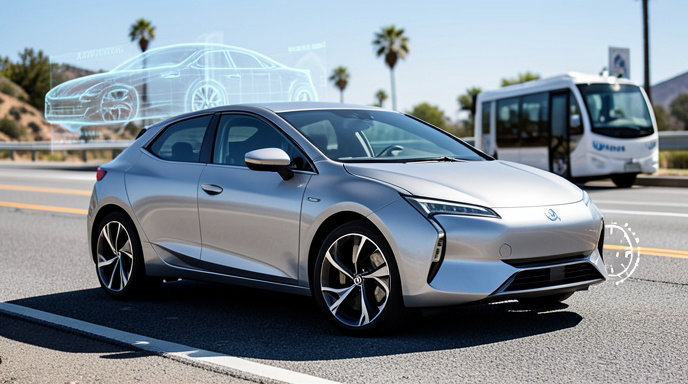
For years, Lucid Motors has been the darling of the luxury EV segment, wowing critics with the Air sedan's 500-mile range and sumptuous interiors. But the company's long-promised entry-level model—the Cosmos—was supposed to be its populist moment: a compact, sub-$30,000 EV designed to take the fight to Tesla's Model 2 and the Chevrolet Bolt. That moment, however, is now further away than ever.
In a surprise strategic announcement, CEO Silivo Napoli confirmed that the Cosmos has been pushed from its original late-2026 target to the second half of 2027. The reason, he insists, is not a supply chain hiccup or a cash crunch, but a deliberate choice to prioritize "engineering perfection over speed to market." In a company known for obsessive battery and powertrain design, the delay is being framed as a quality measure—but industry analysts see a more complex calculus at work.
The Robotaxi Pivot: Uber and Nuro Take Center Stage
The most striking part of Napoli's announcement was not the delay itself, but what he chose to highlight instead. The CEO spent considerable time outlining Lucid's deepened collaboration with Uber and autonomous delivery firm Nuro. Under the expanded agreements, Lucid will supply a fleet of modified Air vehicles for Uber's autonomous ride-hailing pilot programs in select U.S. cities, while Nuro will integrate Lucid's sensor suite and battery tech into its next-generation delivery bots.
This is a significant shift in narrative. Just two years ago, Lucid's stock pitch was all about the high-margin luxury sedan and the promise of the Cosmos as a volume play. Now, the company is repositioning itself as a mobility-tech provider, with robotaxi revenue projected to begin flowing as early as late 2026—a full year before the Cosmos hits showrooms. Napoli argues that the Uber and Nuro deals offer a "capital-light path to recurring revenue" without the massive manufacturing overhead of a budget car line.
Engineering Perfection or Margin Protection? The Real Reason for the Delay
While Napoli's rhetoric about "perfection" sounds noble, the financial reality is more uncomfortable. The Cosmos was originally conceived when lithium-ion battery prices were falling and Lucid's stock was trading at a premium. Today, the landscape has changed. Battery costs have plateaued, and the price war ignited by Tesla's aggressive cuts has squeezed margins across the industry.
Building a genuinely profitable EV at $30,000 is brutally difficult. Lucid, which still loses money on every vehicle it sells, cannot afford to repeat the mistakes of the Air launch—which suffered from quality issues and production ramp delays. By pushing the Cosmos to 2027, Lucid buys itself two critical years: time to mature its manufacturing processes, and time to see if the robotaxi partnerships can generate enough cash flow to subsidize a low-margin mass-market car.
Competitive Implications: Who Wins and Who Loses in the Budget EV Race
The Cosmos delay is a gift to Lucid's competitors, but it is not a universal win. For Tesla, which has also delayed its own $25,000 "Model 2" project, the news is a relief—it removes one more credible challenger in the affordable segment. However, it also reinforces a troubling narrative for consumers: the long-promised wave of cheap EVs is receding.
Hyundai and Kia, with the Ioniq 3 and EV3, are now the de facto leaders in the sub-$35,000 space, alongside Chinese brands like BYD that are not yet fully present in the U.S. market. Rivian, which recently announced its own budget R2 platform, is facing similar margin pressures. The broader implication is clear: the "affordable EV" is becoming a mirage for American buyers, as automakers realize that the cost of entry-level battery tech, advanced driver assistance, and crash safety standards make profitability elusive without massive scale.
A Broader Industry Slowdown? The EV Affordability Crisis Deepens
The Lucid announcement is not an isolated event. Recent months have seen Ford scale back its EV production targets, GM delay several entry-level Ultium models, and Mercedes abandon its dedicated budget EV platform entirely. The common thread is a realization that consumer demand for mass-market EVs is growing slower than expected, and that the infrastructure—charging, grid capacity, and repair networks—is still catching up.
Napoli's pivot to robotaxis may actually be a shrewd hedge against this slowdown. Autonomous ride-hailing does not require private ownership, and it can operate in dense urban corridors where charging infrastructure is already robust. By focusing on Uber and Nuro, Lucid is betting that the first profitable use case for EVs is not the garage, but the fleet yard.
What This Means for Buyers: Patience Is Not a Virtue
For consumers who were holding out for the Cosmos, the news is a disappointment. The 2027 timeline is optimistic; in the auto industry, a delay of this magnitude often leads to further slips. Potential buyers now face a choice: purchase a slightly used Tesla Model 3, settle for a Hyundai Kona EV, or wait another 18 months to see if Lucid delivers on its promise.
There is a silver lining, however. If Lucid's robotaxi fleet performs well, the company could generate the data and revenue needed to make the Cosmos a genuinely polished product—not just a cheap one. Napoli's "engineering perfection" mantra may be spin, but it also reflects a legitimate strategic insight: a botched launch of a budget car would be far more damaging to Lucid's brand than a late one.
The Road Ahead: Robotaxi Revenue Before Rideshare Revolution
The next 18 months will be critical. Lucid must prove that its Uber partnership can scale beyond pilot cities, that its Nuro delivery bots can operate profitably, and that its battery technology can endure the grueling duty cycle of a commercial fleet. If those milestones are met, the Cosmos delay will look like a masterstroke. If they fail, Lucid may find itself a niche luxury player with no path to volume—and a very expensive apology to its early reservation holders.
For now, the message from Napoli is clear: Lucid is no longer just a car company. It is a mobility platform that happens to make cars. Whether that vision resonates with investors and drivers alike will determine whether the Cosmos ever sees the light of day—or becomes another footnote in the difficult history of the affordable EV.

Get All The Latest Updates Delivered Straight To Your Inbox For Free!