
TikTok Under Fire as Senators Probe Secret Experiment Disabling Safety Safeguards for Engagement
TL;DR
- Senators from both parties are demanding answers from TikTok after internal documents reportedly revealed the company ran an experiment that disabled a safeguard designed to prevent users from being flooded with harmful content.
- The safeguard, designed to diversify users' For You feeds and break "rabbit holes" of potentially damaging videos, was allegedly turned off to measure whether engagement and watch time would increase.
- TikTok faces escalating political and regulatory pressure, with lawmakers and regulators warning the experiment could violate commitments on youth safety and fuel momentum for new federal tech legislation.
What Sparked the Outrage
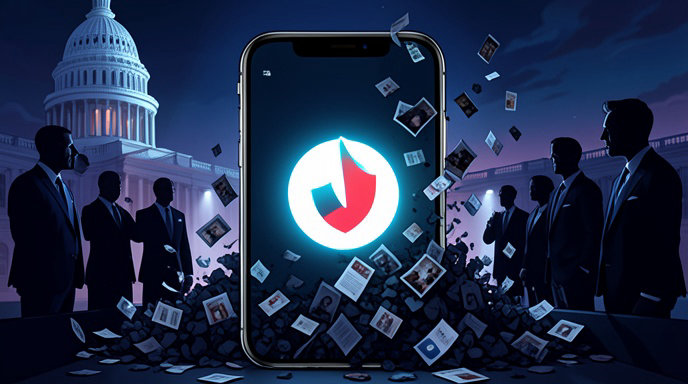
A bipartisan group of U.S. Senators is pressing TikTok for answers this week after reports surfaced detailing a secret internal experiment in which the platform intentionally disabled one of its core user safety systems.
According to documents and reporting reviewed by lawmakers, TikTok temporarily deactivated a safeguard that limits how often users are shown repetitive, potentially harmful content - such as videos related to extreme dieting, anxiety, depression, and other sensitive topics. The senators allege the company did so not to test safety improvements, but to measure the impact on user engagement metrics like watch time, scroll depth, and session length.
In letters sent to TikTok CEO Shou Zi Chew, lawmakers called the move "deeply troubling" and demanded a full accounting of who authorized the test, how many users were affected, and what the company learned from the results.
Inside the Secret Experiment
At the center of the controversy is a system TikTok has publicly described as a critical protection against content overload. Often referred to internally as a "diversity" or "anti-rabbit hole" safeguard, the tool is designed to intervene when the recommendation algorithm starts serving a user too many similar videos in a row.
For example, if a teen watches several fitness videos, the safeguard would intentionally inject different types of content into their For You Page to prevent them from spiraling into an endless feed of extreme weight-loss or body-image content. TikTok has previously pointed to this system as evidence that it takes proactive steps to protect mental health, especially for younger users.
The reported experiment allegedly involved turning that safeguard off for a segment of users to create a control group. According to the revelations, internal researchers then tracked whether users without the protection spent more time on the app. Lawmakers claim the data showed engagement did increase when the safeguard was disabled - suggesting the safety feature comes at a cost to the time users spend watching.
Engagement vs. Safety: Why TikTok Would Test the Limits
The alleged test highlights a central tension that has defined TikTok and other attention-based platforms for years: the conflict between user well-being and business incentives.
TikTok's powerful recommendation engine is its most valuable asset, keeping more than 170 million U.S. users scrolling. Longer watch time directly translates to more ad impressions and higher revenue. Any feature that intentionally interrupts engagement - even for safety reasons - can reduce those metrics.
Critics argue this creates a perverse incentive to weaken protections. By quantifying exactly how much engagement is lost due to safety interventions, the company could make product decisions that prioritize growth over health. Senators involved in the inquiry say the experiment suggests TikTok was willing to expose users to greater risk simply to understand the financial trade-off.
TikTok, for its part, has pushed back on that characterization. In a statement responding to the inquiry, the company said that A/B testing is a standard industry practice used to understand system performance and that any tests are limited in scope and time. The company maintains that user safety remains a priority and that its safeguards remain active for the broader community.
A Bipartisan Firestorm on Capitol Hill
The fallout has been swift and notably bipartisan. Members of the Senate Commerce Committee and the Senate Judiciary Committee, including lawmakers who have championed the Kids Online Safety Act (KOSA) and other child safety bills, have signed onto demands for a briefing and internal documents.
Lawmakers are asking TikTok to preserve all communications related to the experiment, disclose whether minors were included in the test group, and explain whether the findings influenced any subsequent product changes. Some senators have also called for the Federal Trade Commission to investigate whether the experiment violated prior commitments TikTok has made about protecting minors.
"This is not an abstract product decision. If you knowingly turn off a system designed to protect kids from harmful rabbit holes, you are knowingly putting kids in harm's way," one senator said in a statement accompanying the letter.
What Happens Next for TikTok
The probe adds to an already precarious regulatory environment for TikTok in the United States. The platform is still facing scrutiny over data privacy, its ties to parent company ByteDance, and compliance with a federal law requiring divestiture or a potential U.S. ban.
Now, the safety experiment has given new momentum to legislative efforts that had previously stalled. Supporters of KOSA and the Children and Teens' Online Privacy Protection Act say the revelations prove that voluntary self-regulation is insufficient and that platforms cannot be trusted to police their own safety trade-offs.
Regulators are also watching closely. Legal experts note that if the experiment included users under 18, it could draw attention from state attorneys general who have already launched investigations into TikTok's impact on youth mental health.
TikTok has been asked to respond to the Senate inquiry by the end of the month and to provide a staff-level briefing. Whether the company can satisfy lawmakers with explanations about standard testing procedures - or whether the episode triggers subpoenas, hearings, and renewed calls for regulation - will determine how deep the political damage goes.
For now, the episode has reignited a fundamental question about social media: when safety features hurt engagement, which one will platforms choose?

Get All The Latest Updates Delivered Straight To Your Inbox For Free!