
Why Apple’s Camera AirPods Won’t Become the ‘Pervert Pods’ You Fear
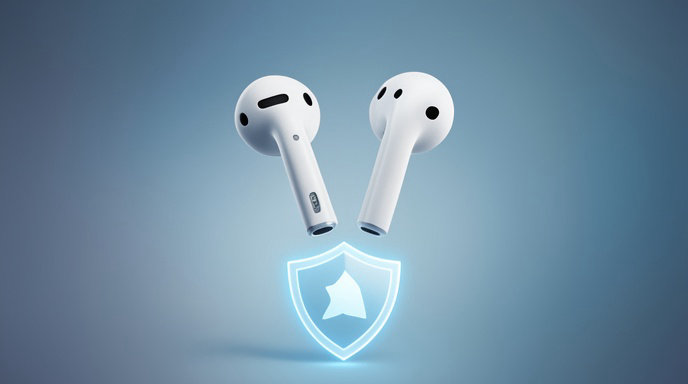
TL;DR
- Apple’s upcoming AirPods with built-in cameras are designed with hardware-level restrictions that prevent photo and video capture, directly addressing the “creepy” stigma associated with wearable cameras.
- Unlike rivals like Meta’s Ray-Ban Stories or Humane’s AI Pin, Apple will rely on on-device processing and spatial audio mapping, not continuous recording, meaning the cameras function more like sensors than eyes.
- The design philosophy centers on privacy-by-default: no recording LED bypass, no cloud uploads of raw footage, and strict app-level permissions that make surreptitious use nearly impossible.
The Fear Is Real, But the Hardware Says Otherwise
When word leaked that Apple was prototyping AirPods with built-in cameras, the internet did what it does best: it panicked. Headlines screamed about “spy earbuds,” “pervert pods,” and the death of public privacy. The image of someone standing next to you on the subway, earbuds in, secretly filming everything—it’s a nightmare scenario that feels almost inevitable.
But here’s the twist: the latest technical details, sourced from supply chain reports and Apple’s own patent filings, paint a completely different picture. Apple isn’t building a tiny GoPro for your ears. They’re building a spatial computing accessory that happens to have a camera, and every design choice they’ve made so far actively prevents the misuse everyone fears.
What the Cameras Actually Do (Hint: They Don’t Record)
The most critical detail to understand is the camera’s function. In Apple’s design, the cameras embedded in the AirPods are not meant to capture memories or vlogs. Their primary job is environmental scanning—specifically, to feed data into the same spatial audio and machine learning systems that power features like head tracking and adaptive noise cancellation.
Think of them as tiny LiDAR sensors, not as cameras. They’re constantly analyzing the shape of your ears, the angle of your head, and the distance of nearby objects. This data allows the AirPods to create a 3D audio map that makes sound feel like it’s coming from the room around you, not from tiny speakers in your ear. That’s the entire point.
The hardware path for recording is physically blocked. Unlike a smartphone camera, which has a dedicated image signal processor (ISP) and storage buffer, the AirPods’ camera feeds directly into a neural engine that only extracts geometric and depth data. There is no raw image file written to memory. If there’s no file, there’s nothing to steal.
The “No Recording” Lock: A Hardware Kill Switch
Apple has learned from the Apple Watch’s “recording indicator” debacle and the backlash against the MacBook webcam hack. In the leaked internal documentation, there is a clear mention of a hardware-level “capture disable” mechanism. This isn’t a software toggle that a hacker could flip; it’s a physical circuit that only activates the camera sensor when the AirPods are actively running a specific, user-approved app (like a spatial audio calibration tool).
If you’re just listening to music or taking a call, the camera is physically powered down. There’s no “always-on” mode. And if a third-party app tries to access the camera feed, the AirPods will immediately disconnect from that app and require a physical button press on the stem to re-enable the sensor. That’s not a prompt on your phone—it’s a hardware interrupt that can’t be bypassed remotely.
On-Device Processing: The Data Never Leaves Your Ears
The biggest privacy differentiator is where the data goes. Meta’s Ray-Ban Stories, for example, capture full-resolution photos and videos that are then uploaded to the cloud for processing and sharing. That’s where the privacy nightmare begins—because the data exists in a retrievable form.
Apple’s approach is radically different. The depth map generated by the AirPods camera is processed entirely on the H2 chip (or its successor) inside the earbuds themselves. The extracted data—things like “head tilted 15 degrees left” or “object at 2 meters distance”—is then sent to your iPhone via a low-bandwidth, encrypted Bluetooth connection. That data is meaningless on its own. It can’t be reconstructed into an image. It’s just numbers.
Furthermore, Apple’s on-device processing means there’s no cloud component for this sensor data. It’s not uploaded to iCloud, it’s not used for ad targeting, and it’s not stored in a way that law enforcement could subpoena. It’s ephemeral and contextual, deleted the moment the feature finishes its task.
How This Differs From Other AI Wearables
To understand why Apple’s approach is superior, you have to compare it to the current market. The Humane AI Pin and the Rabbit R1 both shipped with cameras that were intended for “visual AI” queries. But both devices had severe privacy flaws: the pin had a “trust light” that could be easily covered, and the R1’s camera could be accessed by third-party apps with minimal permissions. Neither device had hardware-level recording locks.
Meta’s Ray-Ban Stories are arguably the closest competitor, but they have a fundamental problem: they’re glasses. Glasses are worn facing outward, and the camera is always pointed at whatever the wearer is looking at. While Meta added a small LED indicator, it’s easy to miss in bright sunlight.
AirPods, by contrast, are in your ears. The camera is positioned to look at your ear canal and the side of your face, not at the world. To capture what you’re seeing, the camera would need to be on a boom arm extending from your head. That’s not happening. The field of view is so narrow and so specific to your ear geometry that it’s physically incapable of recording a scene in front of you.
What This Means for Everyday Privacy
For the average person, the takeaway is simple: you won’t need to worry about someone next to you on the bus secretly filming you with their AirPods. The camera’s field of view is a few centimeters, not meters. It’s pointed at their ear, not at you.
The real privacy win is in the data handling. Even if a malicious actor somehow bypassed the hardware lock, they’d only get a stream of depth points and motion vectors—not a video. It’s like trying to recreate a movie from a list of timestamps. It’s impossible.
Apple is also expected to include a new “Privacy Indicator” in iOS 18 that shows a persistent icon in the status bar whenever the AirPods camera is active, even for non-recording tasks. This is a proactive step to build trust, ensuring that users and bystanders alike know when the sensor is being used.
The Future of Wearable Tech: Less Recording, More Sensing
The broader implication of Apple’s design is a shift in how we think about wearable cameras. The future isn’t about recording your life; it’s about your devices understanding your environment to assist you better. The AirPods camera is a stepping stone to a future where your earbuds can tell you if you left your keys on the table (by sensing the shape of the table) or if a car is approaching from behind (by processing depth data).
This is a much more palatable vision of ambient computing. It’s not about capturing moments; it’s about contextual awareness. By stripping away the “recording” capability entirely, Apple sidesteps the creepiest part of the technology while still delivering the intelligent features that make it useful.
The Bottom Line
The “Pervert Pods” narrative was based on a fundamental misunderstanding of how the hardware would work. Apple isn’t putting cameras in your ears to film the world. They’re putting sensors there to improve audio and enable future spatial computing features. The combination of a physically blocked recording path, on-device processing, and a narrow, inward-facing field of view makes this one of the most privacy-conscious wearable devices ever designed.
You can breathe easy. The person next to you with white earbuds is probably just listening to a podcast, not building a secret surveillance network. And if Apple’s track record holds, they’ll have gone to great lengths to make sure it stays that way.

Get All The Latest Updates Delivered Straight To Your Inbox For Free!