
Apple CEO John Ternus Revives Steve Jobs 25-Year Strategy to Save the iPhone
TL;DR
- New Apple CEO John Ternus used the September 9, 2026 iPhone 17 keynote to declare the iPhone is not dying, but becoming the hub for Apple's AI future.
- His presentation directly echoed Steve Jobs' 2001 Digital Hub strategy, reframing the iPhone as the center of Apple Intelligence, wearables, and Vision devices.
- The debut signals a shift from Tim Cook's operational era to a product-first, engineering-led Apple focused on thin design, on-device AI, and ecosystem lock-in.
A CEO DEBUT UNDER PRESSURE
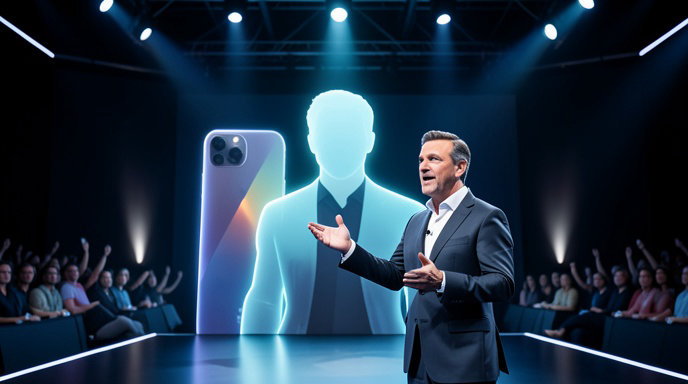
John Ternus did not ease into the job. Taking the stage at Steve Jobs Theater on Tuesday for the first time as Apple CEO, the longtime hardware chief faced the toughest question in tech: does the iPhone still matter?
After weeks of Wall Street chatter about stagnant sales, AI missteps with Siri, and competition from foldables and AI wearables, Ternus answered with a line that set the tone for the entire morning: The best future for AI is the device in your pocket.
It was confident, direct, and unmistakably personal. Where Tim Cook keynotes were measured and operational, Ternus was energetic and technical, diving into chip architecture, camera sensors, and materials in a way Apple fans have not seen from a CEO in over a decade.
The lineup itself did the talking: iPhone 17, the ultra-thin iPhone 17 Air replacing the Plus model, iPhone 17 Pro and Pro Max with a redesigned camera plateau, plus AirPods Pro 3 and Apple Watch Series 11. But it was Ternus's framing, not just the hardware, that made headlines.
WHY THE IPHONE NEEDED SAVING
The stakes could not have been higher. The iPhone still accounts for roughly half of Apple's revenue, yet upgrade cycles have stretched to record lengths. Critics have called recent models iterative, while Google, Samsung, and Chinese rivals have pushed harder on generative AI features and new form factors like folding phones.
Apple Intelligence, unveiled in 2024, also stumbled with delayed Siri upgrades and limited rollout. Heading into the 2026 event, analysts openly questioned whether Apple had lost its AI narrative and whether the iPhone could survive the shift to ambient computing.
Ternus confronted that criticism head-on instead of dodging it. He argued smartphones are not being replaced by AI glasses, pins, or chatbots, they are becoming more essential because they are the only trusted, private, always-with-you computer capable of running powerful AI.
THE 25-YEAR-OLD JOBS PLAYBOOK
That argument is where history came roaring back.
In January 2001, 25 years ago, Steve Jobs stood on stage at Macworld and unveiled what he called the Digital Hub strategy. The Mac was dying, critics said, crushed by Windows PCs. Jobs flipped the script, positioning the Mac not as a standalone computer but as the hub connecting the new explosion of digital cameras, camcorders, MP3 players, and eventually the iPod.
Ternus revived that exact logic almost beat for beat.
On Tuesday he described the iPhone as the AI Hub for a new explosion of devices: Apple Watch for health, AirPods for hearing and live translation, Vision Pro for spatial computing, and a coming wave of home devices. None of them need to replace the phone, he said, because the phone orchestrates them all with private, on-device intelligence powered by the new A19 and A19 Pro chips.
Even his language echoed Jobs. Jobs said in 2001 the Mac could become the center of your digital lifestyle. Ternus said in 2026 the iPhone is becoming the center of your intelligent lifestyle. The slide design, the hub-and-spoke graphic, even the pacing felt like a deliberate tribute.
INSIDE THE KEYNOTE MOMENT
The most talked-about moment came during the iPhone 17 Air unveiling. At just 5.5mm thin, it is Apple's thinnest iPhone ever and clearly Ternus's baby after years leading hardware engineering and the iPhone Air design push.
Holding it up, Ternus channeled Jobs's famous iPod reveal: A thousand songs in your pocket became a full Pro-class phone in a impossibly thin design. He stressed trade-offs Apple refused to make on battery life, camera quality, and durability thanks to titanium framing and the new C1X modem and N1 networking chip.
He then pivoted to Apple Intelligence, demoing on-device Live Translation on AirPods Pro 3 powered by the iPhone, contextual Siri that can act across apps, and Visual Intelligence for the camera. The message was clear: rivals need the cloud, Apple has the pocket supercomputer.
The crowd inside Apple Park reportedly gave him two standing ovations, a rarity for the typically restrained Apple event audience.
WHAT IT SIGNALS FOR APPLE'S NEXT ERA
Ternus's debut was more than nostalgia. It was a declaration of how Apple will be run differently.
First, product over operations. Ternus is an engineer, not a supply-chain master like Cook. His deep dive into thermal design, silicon, and lenses signals a return to a product-first Apple where the CEO is the chief demo officer.
Second, patience on AI. Rather than promising a chatbot to beat ChatGPT or Gemini, Ternus doubled down on private, on-device AI as Apple's differentiator. Apple is betting users will choose trust and battery life over raw cloud power, with the iPhone as the gatekeeper.
Third, ecosystem as moat. By reviving the hub model, Apple is telling investors it does not need to win every new category first. It just needs to make the iPhone indispensable to all of them, from watches to Vision to unannounced smart home hubs and glasses rumored for 2027.
Whether that 25-year-old strategy can work again in the AI age remains the big question. Jobs succeeded because the iPod and iTunes made the Mac relevant again. Ternus will need his own iPod moment, likely a breakout Apple Intelligence feature or a new wearable hit, to prove the iPhone hub is not just clever marketing.
For now, though, Apple has something it has lacked for the past year: a story. And its new CEO just told it with the confidence of a man who studied closely at the feet of Jobs, even if he never worked directly for him.
The Tim Cook era was about scaling Apple to 3 trillion dollars. The John Ternus era, if Tuesday was any indication, will be about making Apple feel hungry, thin, and insanely focused again.

Get All The Latest Updates Delivered Straight To Your Inbox For Free!