
Ex-Tesla Team Raises $12.5M as Atomic Puts Supply Chains on Autopilot with AI Agents
TL;DR
- Atomic, founded by former Tesla supply chain and autonomy engineers, has raised $12.5M in seed funding to build agentic AI for supply chain planning and procurement.
- Its platform deploys AI agents that forecast demand, manage purchase orders, and resolve disruptions autonomously, already in use by customers like DoorDash and HelloFresh.
- The raise signals a shift from dashboards to autonomous logistics, as enterprises look to AI agents to cut waste, costs, and stockouts.
From Tesla's Factory Floor to Founding Atomic
Atomic's origin story is familiar in Silicon Valley: a hard operations problem that software never quite solved. The startup was founded by a team of ex-Tesla engineers who spent years running procurement and production planning for vehicle and energy programs, where a single late part could stall an entire line.
That experience shaped Atomic's thesis. Traditional supply chain software tells human planners what might happen. Atomic wants AI agents to actually do the work - placing orders, rebalancing inventory, and negotiating trade-offs in real time.
The company has now raised $12.5M in seed funding to scale that vision. The round brings Atomic's total backing to early-stage institutional capital aimed at hiring engineers and expanding deployments with large food, retail, and logistics customers.
How The Agentic Platform Works
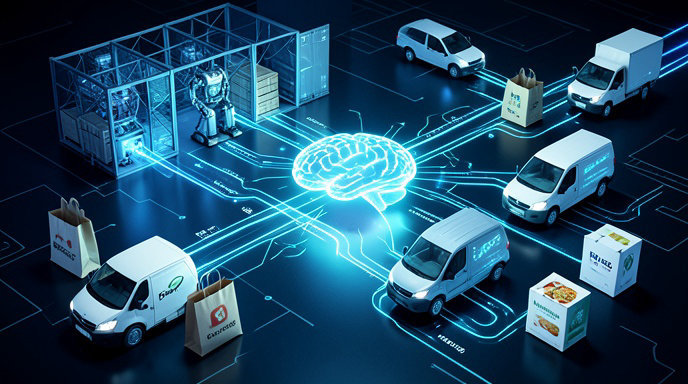
At its core, Atomic is not another dashboard. It is a system of specialized AI agents that sit on top of a company's ERP, WMS, and procurement tools.
Demand Forecasting Agent: Continuously ingests sales history, seasonality, promotions, and external signals like weather to predict what will be needed, down to the SKU and location level.
Procurement and Planning Agent: Converts forecasts into purchase orders and replenishment plans, automatically adjusting for lead times, minimum order quantities, shelf life, and supplier constraints.
Disruption Response Agent: Monitors for delays, shortages, and demand spikes, then proposes or executes fixes - shifting inventory between warehouses, splitting orders across suppliers, or expediting shipments.
Atomic says humans stay in the loop with guardrails and approval thresholds. Low-risk, repetitive decisions are fully automated, while high-value or high-risk moves are flagged for review. Every action is logged with reasoning, giving planners an audit trail instead of a black box.
Why DoorDash and HelloFresh Are On Board
Atomic's early traction is what sets it apart. The startup names DoorDash and HelloFresh as enterprise users, two companies where supply chain mistakes are expensive and highly visible.
For HelloFresh, the challenge is perishability. Over-order and fresh ingredients spoil. Under-order and meal kits can't ship. Atomic's agents help balance that knife's edge by tying demand forecasts directly to procurement, reducing both food waste and stockouts.
For DoorDash, the problem is scale and speed. With thousands of partners, stores, and DashMarts to keep stocked, manual planning doesn't scale. Automating replenishment and supplier coordination lets operations teams manage by exception rather than chasing spreadsheets.
In both cases, Atomic claims customers have seen double-digit reductions in waste and stockouts, plus hundreds of planner hours saved per month.
What The $12.5M Will Fund
The fresh capital will be used to expand Atomic's engineering team in the Bay Area and accelerate product development around supplier collaboration and autonomous sourcing.
Key priorities include deeper ERP integrations with SAP, Oracle NetSuite, and Coupa, more robust multi-agent orchestration for global networks, and new capabilities for supplier negotiation and invoice reconciliation.
The company also plans to grow its go-to-market team as it moves from pilot deployments to multi-year enterprise contracts in grocery, food delivery, CPG, and manufacturing.
What It Signals For Autonomous Logistics
Atomic's raise is part of a much larger wave: the shift from predictive analytics to agentic execution in the supply chain.
For a decade, enterprises invested in visibility tools that flagged problems but left the fixing to humans. Now, with labor shortages, tariff volatility, and margin pressure, there is growing appetite to let AI agents take action directly.
Investors are betting that procurement and planning - rule-heavy, data-rich, and chronically understaffed - are ideal for agents. If Atomic succeeds, the role of the supply chain planner could evolve from order-chaser to exception manager, supervising fleets of AI agents much like Tesla supervisors oversee Autopilot.
The roadblocks remain real: data quality, ERP messiness, and trust in autonomous purchasing. But with marquee customers and fresh funding, Atomic is making a strong case that supply chains are ready to go on autopilot.

Get All The Latest Updates Delivered Straight To Your Inbox For Free!