
FedEx Places $300M Order for 2,000 Harbinger Electric Trucks in Biggest Deal Ever
TL;DR
- FedEx has ordered 2,000 electric medium-duty delivery trucks from California startup Harbinger in a $300 million deal, the largest order in Harbinger's history.
- The trucks, built on Harbinger's American-made electric stripped chassis, will help FedEx accelerate toward its goal of an all-electric pickup-and-delivery fleet by 2040.
- The deal cements Harbinger as a breakout player in commercial EVs and arrives amid reports the startup is preparing for a potential IPO.
A $300 Million Vote of Confidence
FedEx is going big on electric delivery.
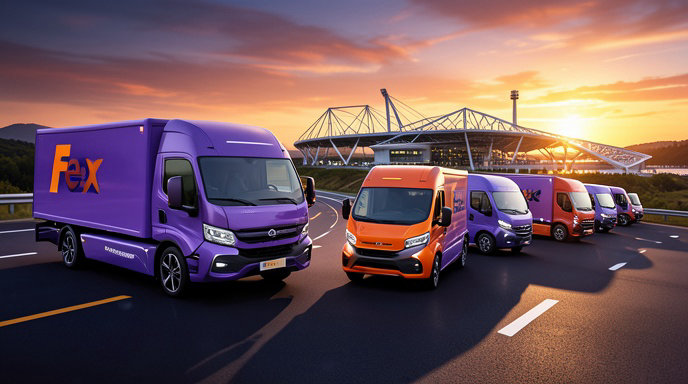
The shipping giant has placed a $300 million order for 2,000 all-electric trucks from Harbinger, a Garden Grove, California-based commercial EV startup. It is by far the largest order Harbinger has ever received and one of the biggest single commitments to electric medium-duty trucks in U.S. logistics history.
The order centers on Harbinger's electric stripped chassis, which will underpin Class 5 walk-in step vans custom-built for FedEx Express pickup-and-delivery routes. While neither company has disclosed the full delivery timeline, production is expected to ramp through Harbinger's California manufacturing operation, with initial deployments focused on high-density urban routes where stop-and-go electric operation delivers the biggest savings.
For FedEx, which operates one of the world's largest private fleets with more than 200,000 vehicles globally, 2,000 trucks is still a fraction of the total. But the scale and dollar value send a clear signal: fleet electrification is moving from pilot programs to full procurement.
Why FedEx Chose Harbinger
FedEx has tested nearly every electric van on the market, from BrightDrop Zevo models to Ford E-Transits and Rivian vans. Harbinger won out for the medium-duty segment for three key reasons: cost, performance, and American manufacturing.
Harbinger designs its chassis from the ground up for commercial use, rather than retrofitting a diesel platform. Its in-house battery system, e-axle, and steering-by-wire controls are built to deliver up to 200 miles of range on a typical delivery duty cycle, with 800V fast-charging capable of adding significant range during a lunch break depot stop.
Crucially for a price-sensitive fleet buyer, Harbinger claims its vehicles achieve price parity with diesel at scale while cutting fuel and maintenance costs by up to 50% over the vehicle's life. All major components are sourced and assembled in the U.S., making the trucks IRA-compliant and eligible for federal commercial clean vehicle incentives — a major factor in the $300 million math.
FedEx has also emphasized serviceability. Harbinger's chassis uses a simplified architecture with far fewer moving parts than a diesel, plus telematics and over-the-air diagnostics designed for large fleet operators that need maximum uptime during peak season.
What This Means for FedEx Fleet Electrification
The Harbinger deal is a cornerstone of FedEx's sustainability roadmap. The company has pledged to achieve carbon-neutral operations by 2040, with a target for 100% of new pickup-and-delivery vehicle purchases to be battery-electric by 2030, leading to an all-electric parcel fleet by 2040.
Until now, progress has been incremental — a few hundred BrightDrop vans here, charging depots in California and New York there. A 2,000-truck commitment changes the pace.
Medium-duty step vans are the workhorses of FedEx Express, running predictable, return-to-base routes of 100 to 150 miles per day that are ideal for electrification. By electrifying this segment first, FedEx can cut tailpipe emissions, reduce exposure to diesel price volatility, and gather real-world data on charging infrastructure, route planning, and grid loads before scaling further.
Analysts say the deal will also pressure rivals UPS and Amazon, both of which have made their own massive EV bets, to accelerate medium-duty deployments.
Inside Harbinger's Rapid Rise
For Harbinger, founded in 2021 by former Canoo, Faraday Future and QuantumScape veterans, the FedEx order is transformative.
The startup has spent the past three years quietly building a vertically integrated manufacturing model in Southern California, producing its own battery packs, chassis, and powertrain rather than relying on third-party suppliers. That strategy helped it secure early customers like Bimbo Bakeries USA, THOR Industries, and commercial dealers, plus more than $160 million in venture funding to date.
The FedEx order dwarfs all previous ones combined and provides multi-year production visibility — exactly what investors want to see from a commercial EV maker after the bankruptcies of Arrival, Lordstown Motors, and Electric Last Mile Solutions.
It also arrives at a pivotal moment. Multiple reports in recent weeks have suggested Harbinger is exploring a public listing as soon as 2027, either via a traditional IPO or SPAC merger, to fund expansion into higher-volume production. A $300 million anchor order from a blue-chip customer like FedEx would dramatically strengthen that case.
The Future of Electric Commercial Vehicles
The FedEx-Harbinger deal reflects a broader shift in the electric truck market. After years of hype around electric pickups and semis, the real near-term growth is in medium-duty commercial vehicles — the Class 4 to 6 box trucks, step vans, and shuttle buses that power e-commerce and last-mile delivery.
That segment was long ignored by major automakers, leaving an opening for startups like Harbinger, Xos, and Rizon. With e-commerce volumes still climbing and cities from Los Angeles to New York tightening emissions rules for delivery fleets, demand is surging.
Challenges remain, particularly around depot charging buildout, grid capacity, and upfront vehicle cost. But at roughly $150,000 per vehicle before incentives, the FedEx deal suggests the economics are finally working at scale.
If Harbinger can deliver 2,000 reliable, serviceable trucks on time, it will not just electrify thousands of FedEx routes — it will prove that purpose-built American electric chassis can compete head-to-head with diesel. And that could open the floodgates for the next wave of fleet orders.

Get All The Latest Updates Delivered Straight To Your Inbox For Free!