
Meta Partners With MacroCycle to Launch First Commercial Plastics Recycling Plant
TL;DR
- Meta has signed a multi-year offtake and financing deal with MacroCycle to anchor funding for its first commercial-scale plastics recycling factory.
- MacroCycle uses a low-energy solvent-based process to recycle PET and polyester textiles into virgin-grade chemicals with up to 80% lower emissions.
- The partnership signals a new Big Tech playbook for Scope 3 emissions, turning data center and hardware supply chains into drivers for circular plastics.
The Deal At A Glance
Meta is stepping beyond carbon offsets and into circular materials. Under the new agreement, Meta will provide upfront funding and commit to purchasing recycled materials from MacroCycle's first commercial factory, giving the startup the bankable demand it needs to break ground.
While neither company disclosed the full financial terms, the structure is described as a blended offtake plus pre-purchase agreement. In practice, that means Meta's money helps de-risk construction, and in return Meta secures long-term access to low-carbon, recycled PET for its hardware, packaging, and data center supply chains.
For MacroCycle, a young MIT spinout, the backing is transformative. First-of-a-kind recycling plants are notoriously hard to finance, and a creditworthy buyer like Meta can unlock additional project debt and equity. Construction on the debut plant is expected to accelerate with commercial operations targeted in the next 18 to 24 months.
Why Meta Wants Recycled Plastic
Meta doesn't make plastic, but it uses a lot of it. From server racks, cable trays, and cooling components in its hyperscale data centers to packaging for Quest headsets, Ray-Ban Meta glasses, and other consumer hardware, plastics are embedded across its Scope 3 footprint.
The company has pledged to reach net zero across its value chain in 2030 and has already contracted massive amounts of clean power and carbon removal. Materials are the next frontier. Virgin PET and polyester are petroleum-derived and carbon-intensive to produce, and traditional mechanical recycling often degrades quality to the point it can't be used in high-performance applications.
By locking in chemically recycled, virgin-grade PET, Meta can cut the embodied carbon of its products without compromising performance, while also generating verifiable avoided-emissions and plastic-diversion impacts to report against its sustainability goals.
How MacroCycle's Technology Works
MacroCycle's edge is selectivity and energy efficiency. Instead of melting down mixed plastic waste or using high-heat depolymerization, the company uses a proprietary low-temperature solvent process to break down PET bottles, trays, and crucially, polyester textiles.
The process dissolves and purifies polyester waste, separating out dyes, additives, and contaminants like cotton blends or labels, and recovers the core monomers for making new, virgin-quality PET. The company says its approach uses up to 80% less energy and produces significantly lower emissions than making virgin polyester from fossil fuels.
That textile angle matters. Polyester is the world's most-used fiber, yet less than 15% of textile waste is recycled, with most downcycled or landfilled. MacroCycle claims its technology can handle colored, blended, and contaminated fabrics that mechanical recyclers reject, opening up a massive untapped feedstock from fast fashion and post-consumer apparel.
Inside The First Commercial Factory
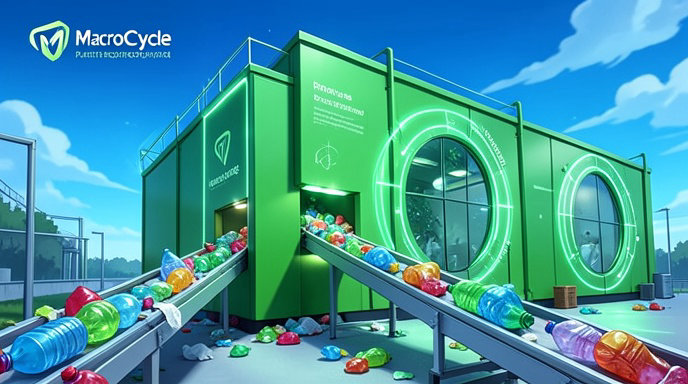
MacroCycle's first commercial plant is designed to prove the technology at meaningful scale. Early pilot operations in Massachusetts have processed tons of waste per year for brand testing. The commercial facility is planned to scale that to tens of thousands of tons annually of waste PET and polyester textiles.
The site will take in baled bottles, manufacturing scrap, and used garments, and output purified recycled monomers and pellets ready to drop into existing PET supply chains for packaging, textiles, and electronics components.
For project financiers, Meta's commitment is key. Offtake agreements provide predictable revenue that makes it easier to secure loans and final investment decisions. MacroCycle has said it plans to follow with a network of larger plants co-located near waste hubs and manufacturing partners.
What It Means For Sustainable Plastics
The deal is a validation moment for advanced recycling. The sector has faced skepticism after several high-profile pyrolysis startups failed to scale or missed climate claims. Solvent-based PET recycling is viewed by many analysts as more promising because it targets a clean, well-understood waste stream and produces a like-for-like replacement for virgin resin.
Big buyers are now stepping in where venture capital left off. Similar to how Microsoft, Google, and Amazon used advance market commitments to jumpstart carbon removal and sustainable aviation fuel, Meta's move creates a demand signal that could pull the entire circular plastics market forward.
If successful, it could help close the price gap between virgin and recycled PET, encourage better textile collection infrastructure, and give consumer brands a scalable source of food-grade and fiber-grade recycled material that doesn't rely on oil.
Big Tech's Evolving Climate Playbook
Meta's partnership fits into a broader shift in Silicon Valley climate strategy. After years focused almost exclusively on renewable electricity for data centers, tech giants are now tackling embodied carbon in concrete, steel, and plastics driven by the AI building boom.
Google has invested in low-carbon concrete and plastics collection programs, Microsoft has funded circular electronics initiatives, and Amazon has pushed recycled packaging at scale. Meta itself has backed carbon removal startups and geothermal power. Adding advanced recycling to that portfolio shows how Scope 3 pressure and incoming extended producer responsibility rules in the U.S. and EU are pushing tech firms to own their material footprints.
Challenges Still Ahead
Hurdles remain. Permitting, feedstock aggregation, and cost control for first-of-a-kind plants are notoriously difficult. MacroCycle will need to prove it can secure consistent volumes of waste textiles at low cost, maintain high yields, and compete with cheap virgin plastic, especially when oil prices dip.
Transparency will also be critical. Environmental groups have urged Big Tech to publish full lifecycle analyses for advanced recycling deals to confirm real emissions cuts and avoid greenwashing. Both Meta and MacroCycle say third-party verified lifecycle data and chain-of-custody tracking will be part of the project.
If they deliver, however, the model could be replicated quickly. A successful first plant backed by a tech anchor tenant would make it far easier to finance plants two, three, and ten — turning yesterday's bottles and t-shirts into tomorrow's data centers and devices.

Get All The Latest Updates Delivered Straight To Your Inbox For Free!