
Poseidon Aerospace Raises $60M to Launch First Pilotless Cargo Test Flight
TL;DR
- Poseidon Aerospace has raised $60M in new funding to prepare for its first pilotless test flight of its autonomous cargo aircraft, bringing its total raised to date to over $100M.
- The startup aims to slash middle-mile air freight costs by up to 60% with a clean-sheet, fully autonomous aircraft designed for remote and regional routes without onboard pilots.
- With certification efforts underway with the FAA and early commercial partners signed, Poseidon plans to move from test flights in late 2026 to initial commercial operations by 2028.
The $60M Runway to First Flight
Poseidon Aerospace is going all-in on pilotless cargo. The Los Angeles-based startup confirmed Tuesday that it has closed $60M in new funding to push its autonomous freight aircraft through its most critical milestone yet: a first full-scale pilotless test flight expected in the coming months.
The round was led by a prominent Silicon Valley venture firm with participation from existing aerospace-focused backers and strategic logistics investors, according to the company. Poseidon declined to disclose its valuation, but said the fresh capital brings its total funding to more than $110M since its founding in 2021.
CEO and co-founder Maya Chen said the money will be used almost entirely for flight test, manufacturing scale-up, and certification. "This isn't a research project anymore. This is about putting iron in the air and proving autonomy works at cargo scale," Chen said in an interview.
Why Autonomy, Why Cargo First
Unlike air taxi startups chasing passenger markets, Poseidon has focused exclusively on middle-mile cargo — the 200 to 800-mile routes that move packages between regional hubs for FedEx, Amazon, DHL and others.
It's a deliberate choice. Cargo avoids the regulatory and public trust hurdles of carrying people, while tackling an industry squeezed by pilot shortages, aging feeder fleets like the Cessna 208 Caravan, and rising operating costs.
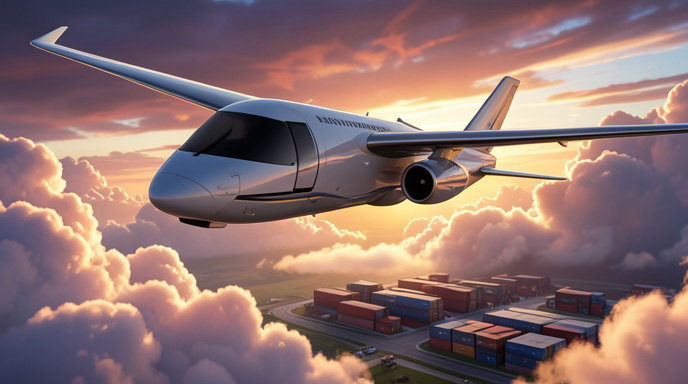
Poseidon's aircraft, dubbed the PA-1 Trident, is a clean-sheet design built around autonomy from day one. No cockpit, no windows, no pressurization for humans. Just 2,500 pounds of payload capacity, a 900-nautical-mile range, and a large nose-loading cargo door optimized for standard LD3 containers and pallets.
The company claims its direct operating cost will be under $1,200 per flight hour — roughly 60% lower than comparable crewed turboprops — thanks to removing the pilot, higher utilization rates of up to 18 hours per day, and simplified maintenance.
Inside the Autonomy Stack
At the heart of the PA-1 is Poseidon's Atlas autonomy system, a triple-redundant suite of sensors, flight computers, and AI-based detect-and-avoid.
The system fuses radar, lidar, electro-optical cameras, and ADS-B data to navigate uncontrolled airfields and congested regional airspace without human intervention. Takeoff, en-route navigation, landing, and taxi are all handled autonomously, with a remote operations center monitoring multiple aircraft at once at a ratio the company hopes will eventually reach one operator to twelve planes.
"Full autonomy is the only way the unit economics work," said CTO Daniel Okafor, a former General Atomics and Wisk engineer. "Remote piloting still leaves you paying for a pilot per plane. We eliminate that bottleneck."
Poseidon says it has already logged more than 4,000 hours in simulation and 300 hours on its subscale demonstrator, including fully automated landings on short gravel strips.
What Investors Are Betting On
For investors, the thesis is simple: e-commerce air freight is booming, but the feeder fleet is collapsing.
More than 60% of the world's regional cargo aircraft are over 30 years old, and operators are struggling to hire pilots for low-margin, overnight routes. Poseidon pitches itself as a drop-in replacement that can operate from 2,500-foot runways, at night, in poor weather, without crew rest limitations.
The startup has also leaned into defense interest. Last year it won a $9.5M U.S. Air Force AFWERX contract to explore autonomous resupply missions, and sources say the new round includes strategic capital tied to logistics and defense.
Still, the risks are real. Autonomous aviation remains unproven at commercial scale, and competitors including Xwing, Reliable Robotics, and Pyka are racing for the same market with different approaches to retrofitting versus clean-sheet designs.
The Road to Certification and Commercial Rollout
The next 18 months will make or break Poseidon.
The company is pursuing FAA Type Certification under Part 23 with an autonomy supplement, while working in parallel on a beyond-visual-line-of-sight exemption for its test campaign at Mojave Air and Space Port. It said it has completed the FAA's G-1 issue paper stage and is now in detailed compliance planning.
If the upcoming pilotless test flight — a 45-minute loop with takeoff, waypoint navigation, and autonomous landing — succeeds, Poseidon plans to build three more conforming aircraft in 2027 for a 500-flight test program.
On the commercial side, Poseidon claims letters of intent for 120 aircraft from three regional carriers and a major freight forwarder, with first deliveries targeted for late 2028 pending certification. It is also building a 120,000-square-foot production facility in Long Beach designed for an initial rate of 50 aircraft per year.
"We know certification is the long pole," Chen said. "But cargo is where autonomy will first scale and make money. Our job now is to fly, prove safety, and show operators a path to profitable pilotless operations."

Get All The Latest Updates Delivered Straight To Your Inbox For Free!