
Tesla Cybercab Hits the Road and Hits a Snag in Autonomous Future
TL;DR
- Tesla's purpose-built Cybercab has finally been spotted testing on public roads around Austin and Giga Texas, marking a shift from closed-course testing to real-world validation.
- An early production and deployment snag — tied to low-volume manufacturing, two-seater design limitations, and heightened regulatory scrutiny — is slowing Tesla's ambitious robotaxi rollout timeline.
- The stumble puts pressure on Tesla's AI-first autonomy strategy as rivals like Waymo and Zoox scale up, underscoring that the future of transportation will be decided as much by software reliability and regulation as by vehicle design.
A Long-Awaited Debut Leaves the Test Track
After almost two years of concept videos, factory glimpses, and controlled-track teasers, Tesla's Cybercab is finally out in the wild.
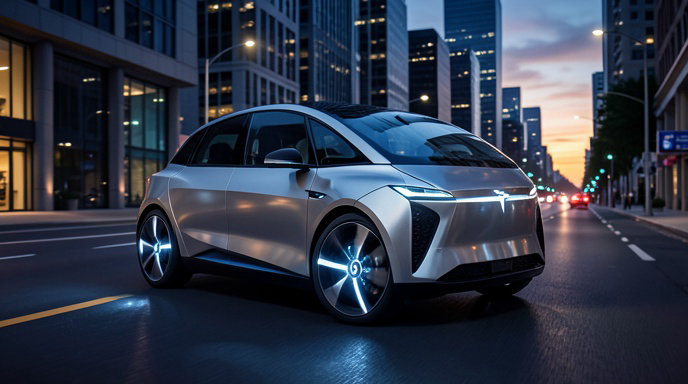
In recent weeks, multiple sightings of the gold, butterfly-door, steering-wheel-less coupe have surfaced on public roads near Giga Texas in Austin. The vehicles, operating with onboard safety monitors in the passenger seat, represent the first sustained public-road testing of Tesla's purpose-built robotaxi.
As highlighted in TechCrunch Mobility, this is a critical psychological and technical milestone. Until now, Tesla's much-hyped robotaxi service in Austin has relied almost entirely on modified Model Y SUVs with safety drivers. The Cybercab, with no steering wheel, no pedals, and no rear seats, is Tesla's bet that autonomy doesn't need to retrofit a human car — it needs its own form factor.
CEO Elon Musk has long framed the Cybercab as the centerpiece of Tesla's next chapter, with a target price under $30,000 and volume production originally slated for 2026. Seeing it navigate intersections, parking lots, and highway feeders is the first tangible proof the program is moving forward.
The Snag Slowing the Rollout
The debut, however, came with an asterisk.
Tesla has acknowledged that Cybercab production at Giga Texas is starting far slower than planned, with early builds essentially hand-assembled for testing and validation rather than rolling off an automated line. The company's unboxed manufacturing process — designed to radically cut costs — is reportedly still being debugged.
At the same time, regulators are watching closely. The National Highway Traffic Safety Administration continues to probe Tesla's Full Self-Driving (Supervised) and robotaxi operations following incidents involving unexpected braking and intersection behavior. Any expansion using a vehicle with no manual controls faces an even higher bar for federal exemptions and state permits.
Then there's practicality. The Cybercab's strict two-seat, two-door layout with minimal cargo space has raised questions from fleet operators and ride-hail analysts about luggage, airport runs, accessibility, and family use — all core robotaxi use cases that rivals with five-seat Jaguar I-Paces and Toyota Highlanders already handle.
In short: Tesla can build a futuristic robotaxi, but building thousands of them safely, legally, and profitably is proving harder than expected.
What This Means for Tesla's Robotaxi Ambitions
For Tesla, timing is everything. The company launched its Austin Robotaxi pilot in June 2025 to great fanfare, then expanded to the Bay Area, but it still operates in limited geofenced zones with safety monitors and a fraction of the ride volume of Waymo, which now logs hundreds of thousands of paid driverless trips per week.
The Cybercab was supposed to be the accelerant — a cheap, scalable vehicle that would let Tesla flood zones with capacity and undercut Uber and Lyft on cost per mile. A slow ramp pushes that vision from late 2026 into 2027 and beyond, giving competitors more time to lock in city partnerships, airport access, and rider loyalty.
It also raises the stakes for Tesla's next earnings calls and its planned Cybercab mass-production update. Investors bought into the idea that Tesla would pivot from a car company to an autonomy platform. Any delay forces Tesla to keep leaning on Model Y-based robotaxis, which are more expensive to build and don't deliver the same wow factor or long-term margins.
Still, TechCrunch Mobility notes this isn't a death knell. Limited public-road testing is exactly how Waymo, Cruise, and Zoox all started — slow, supervised, and snag-filled before scaling. If Tesla can work through manufacturing kinks and prove unsupervised safety data, a delayed Cybercab could still be disruptive.
AI in the Driver's Seat
Beyond Tesla, the Cybercab saga highlights a larger shift: transportation is becoming an AI problem first and a hardware problem second.
Tesla is betting its end-to-end neural network approach, trained on billions of miles of fleet video, can generalize faster than rivals' lidar-heavy, HD-map-dependent stacks. The Cybercab has no lidar, no radar redundancy in its current test form — just cameras and AI compute. If it works, it scales cheaply. If it fails edge cases, the setbacks are highly public.
Across the industry, AI is now shaping everything from dispatch and dynamic pricing to predictive maintenance and in-cabin personalization. Waymo is leaning on Google DeepMind's foundation models for reasoning, Uber is integrating autonomous partners into its AI routing engine, and Chinese players like Baidu Apollo and Pony.ai are pushing aggressively overseas.
The Cybercab hitting public roads — and immediately hitting a snag — is a perfect snapshot of that moment: AI has made driverless cars genuinely viable, but real-world deployment still collides with manufacturing reality, regulation, and human expectations of safety.
The Road Ahead
Expect the next few months to be defined by incremental progress rather than a grand unveiling. More Cybercab sightings, small fleet expansions in Austin, updated safety reports, and likely a revised production timeline from Tesla.
The autonomous future is no longer a question of if, but of who gets there at scale first — and whether a bold, two-seat, $30,000 robot with butterfly doors can survive contact with potholes, regulators, and passengers with suitcases.
For now, the Cybercab is finally on the road. Staying on the road is the harder part.

Get All The Latest Updates Delivered Straight To Your Inbox For Free!