
inDrive to Test Pony.ai Robotaxis in Kazakhstan in 2027 With Nvidia Tech
TL;DR
- inDrive will begin testing Pony.ai autonomous robotaxis in Astana, Kazakhstan in the first half of 2027, marking its first major move into driverless ride-hailing.
- The project pairs Pony.ai's autonomous driving system with Nvidia's computing platform and inDrive's ride-hailing network, with testing initially supervised with safety drivers.
- Kazakhstan was chosen for its supportive regulation, harsh-weather testing conditions, and inDrive's strong regional foothold as it looks to challenge Uber and Yandex in the robotaxi race.
A New Front in the Robotaxi Race
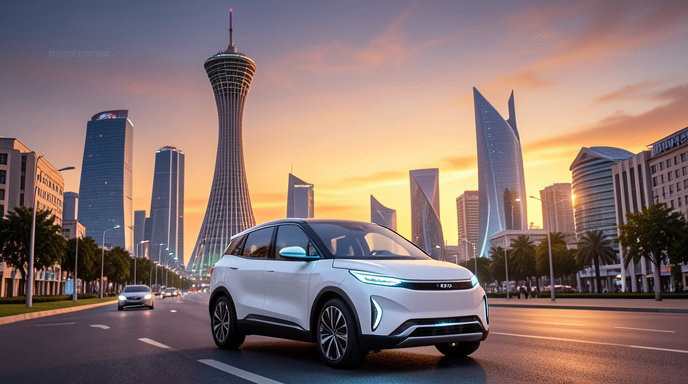
Ride-hailing company inDrive is gearing up to bring driverless cars to Central Asia. The company confirmed plans to begin testing autonomous robotaxis developed by China's Pony.ai in Astana, Kazakhstan in the first half of 2027.
The pilot will start small, with a fleet of autonomous vehicles operating in defined zones of the Kazakh capital, formerly known as Nur-Sultan. The tests will initially include safety drivers behind the wheel, with the goal of moving toward fully driverless commercial service if regulatory approvals and performance benchmarks are met.
For inDrive, which was founded in Yakutsk, Russia and now headquartered in Mountain View, California, the move marks a bold expansion beyond its human-driven, bid-based ride-hailing model into the high-stakes world of autonomy.
Inside the inDrive, Pony.ai and Nvidia Partnership
The initiative centers on a three-way collaboration. Pony.ai will supply its seventh-generation autonomous driving system, inDrive will integrate the vehicles into its ride-hailing platform for dispatch, routing, and customer interface, and the fleet will run on Nvidia's automotive computing technology.
Pony.ai, which is backed by Toyota and has robotaxi operations in Beijing, Shanghai, Guangzhou and Shenzhen, has been rapidly expanding its international partnerships in 2025 and 2026. The company went public on Nasdaq in late 2024 and has since pushed to license its technology to ride-hailing platforms rather than operating all fleets itself.
Nvidia's role is critical. Its DRIVE Thor and DRIVE Orin platforms provide the onboard AI compute that powers Pony.ai's perception, planning and mapping stack. Nvidia has become the de facto chip provider for nearly every major robotaxi player, from Waymo and Zoox to WeRide and Pony.ai itself, and the Astana project further cements its infrastructure position.
inDrive said the vehicles will be connected to its existing app, allowing users in Astana to request a robotaxi option alongside standard rides. Pricing, fleet size, and exact service areas have not yet been disclosed.
Why Kazakhstan, and Why Astana?
Choosing Astana is a strategic departure from the usual robotaxi testing hubs of San Francisco, Dubai, or Singapore. But inDrive executives say Central Asia makes sense.
First, regulation. Kazakhstan has been actively courting autonomous vehicle investment, creating sandbox regimes for testing in Astana and Almaty as part of its broader digitalization push. Compared to the patchwork of U.S. state rules or EU safety approvals, Astana offers a faster path to on-road pilots.
Second, conditions. Astana is one of the world's coldest capitals, with winter temperatures dropping to -30°C (-22°F), icy roads, and low-visibility snowstorms. If Pony.ai's system can handle Astana in February, the logic goes, it can handle almost anywhere. Summer brings the opposite challenge, with heat, dust, and wide, fast-moving boulevards.
Third, home-field advantage. While Uber dominates in the U.S. and Europe and DiDi leads in Latin America, inDrive is a powerhouse across Kazakhstan, Uzbekistan, and neighboring markets. Kazakhstan is one of inDrive's largest markets globally, with high brand recognition and deep relationships with city authorities. Launching there lets it test autonomy where it already has drivers, riders, and operational teams.
What It Means for the Uber Rivalry and Robotaxi Expansion
The announcement puts inDrive in direct competition with Uber's autonomy strategy. Uber, which abandoned its own self-driving program in 2020, has returned to robotaxis through partnerships, offering Waymo rides in Austin, Atlanta and Phoenix, and deals with Pony.ai, WeRide, Baidu's Apollo Go, and Nuro for other markets.
inDrive is taking a similar asset-light approach — don't build the cars yourself, partner with those who do — but is doing it in a region where Uber has far less leverage. Uber operates in Kazakhstan but trails both inDrive and Yandex Go by a wide margin. A successful robotaxi launch could help inDrive defend that lead and export the model to other emerging markets in Africa, Latin America, and Southeast Asia where it operates in over 40 countries.
It also signals a second wave of robotaxi expansion. After years focused on the U.S., China, and the Gulf, autonomous companies are now looking to Central Asia, the Middle East, and Africa for growth. Pony.ai has already announced collaborations in South Korea, the UAE, and Qatar. Adding Kazakhstan gives it a proving ground in Eurasia and a partner with a massive emerging-market footprint.
Challenges Ahead
Plenty of hurdles remain before Astana residents can hail a driverless ride. Winter testing will stress sensors, batteries, and braking systems. Public trust, insurance frameworks, and data-localization rules in Kazakhstan will need to be resolved. And inDrive will need to prove unit economics in a price-sensitive market known for low fares and its signature negotiate-your-fare model.
Neither company has said when fully driverless, paid rides might begin, only that 2027 testing is the first step toward evaluating commercial deployment.
But the message is clear: the robotaxi race is no longer just Waymo vs. Tesla vs. Chinese giants in megacities. With Nvidia chips under the hood and Pony.ai software behind the wheel, inDrive wants to make Astana the unlikely next testbed for the future of autonomous mobility.

Get All The Latest Updates Delivered Straight To Your Inbox For Free!