
How Startups Win Customers Without Going Viral: Lessons from TechCrunch Disrupt
TL;DR
- Winning early customers comes from solving one painful problem exceptionally well for a narrow, high-intent audience rather than chasing broad virality.
- Authentic community building beats hype: founders win by showing up where users already gather, co-creating with them, and turning early adopters into evangelists.
- Sustainable growth requires obsession with retention and word-of-mouth loops — fast feedback cycles, human support, and metrics that measure love, not just downloads.
Stop Chasing Views, Start Chasing Love
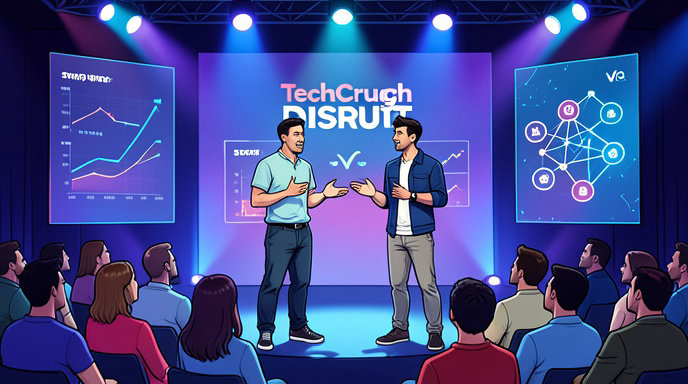
At TechCrunch Disrupt 2025 in San Francisco, the loudest growth advice wasn't about going viral at all. During a packed breakout session on winning early customers, two founders and one early-stage VC dismantled the myth that startups need a TikTok moment or Product Hunt spike to survive.
Instead, their shared playbook was refreshingly unsexy: find 100 people who desperately need what you're building, serve them obsessively, and let them do the marketing for you.
The message landed at a time when many founders are exhausted by hype cycles. With AI startups launching daily and acquisition costs soaring, sustainable, community-led traction is back in vogue.
Find Your 100 True Fans First
The panelists agreed on one starting point: narrow down, don't scale up.
Rather than launching broadly, successful early-stage startups pick a beachhead — a specific sub-community, job title, or workflow where the pain is acute. One founder described spending weeks in Discord servers, Slack groups, and niche Reddit threads just listening before writing a line of marketing copy.
The tactic is simple but powerful: identify high-intent users who are already hacking together a solution. If you can replace their spreadsheet, manual workaround, or five-tool stack with something 10x easier, they don't need to be convinced — they need to be found.
Do Things That Don't Scale
If virality is about broadcasting to millions, the Disrupt playbook is about whispering to dozens.
Tactics shared from the stage included:
- Founder-led onboarding: Getting on Zoom for the first 200 customers to watch them use the product live.
- Concierge MVPs: Manually doing the work behind the scenes to deliver magic before automating it.
- Building in public with context: Not just posting metrics, but sharing customer problems, failed experiments, and roadmap decisions to invite collaboration.
One founder noted that their first 50 enterprise pilots came from direct, personalized outreach and warm introductions — not content virality. Personal Loom videos, tailored teardowns, and showing up at small industry meetups outperformed any viral post by 20 to 1.
Community Is a Product, Not a Channel
The biggest takeaway was the redefinition of community. It's not a Discord server you spin up after launch. It is the go-to-market strategy itself.
Authentic community building, according to the panel, means co-creation. Invite early users into a private beta group, give them direct access to founders and engineers, ship their feature requests in days not months, and publicly credit them.
The VC on the panel added an investor lens: startups with an owned community — whether that's 500 active members in Slack, 2,000 newsletter superfans, or a cadre of power users on X — are far more resilient during market downturns. They don't pay to re-acquire attention every week. They retain it.
That retention flywheel looks like this: solve a core job -> deliver an aha moment in minutes -> offer human support -> ask for feedback -> ship fast -> turn happy users into referral engines.
Retention Is the New Growth
Perhaps the most contrarian advice was to ignore top-of-funnel vanity metrics entirely for the first year.
Instead of tracking downloads or impressions, the speakers urged founders to track love metrics: Week-4 retention, Net Promoter Score, daily or weekly active usage among core cohorts, and unsolicited referrals.
One founder shared that they killed a feature that drove 40% of signups because those users never stuck around. They doubled down on a less-sexy workflow that retained 70% of users after three months. That cohort eventually drove 80% of revenue through expansion and word-of-mouth.
The VC echoed this: When I diligence seed startups now, I don't ask about your viral coefficient. I ask: who would riot if you shut down tomorrow? If you can't name 50 people, you don't have product-market fit yet.
Beyond the Hype Cycle: A Sustainable Playbook
The session closed with a checklist for founders tired of chasing algorithms:
- Pick a painful, frequent problem for a specific tribe.
- Meet them where they already hang out — online and offline.
- Onboard manually and learn faster than anyone else.
- Build feedback loops into the product itself.
- Optimize for retention and referrals before pouring fuel on acquisition.
In a post-viral era, winning doesn't mean being seen by everyone. It means being indispensable to someone. As one panelist put it: Virality rents you attention. Community owns it.

Get All The Latest Updates Delivered Straight To Your Inbox For Free!